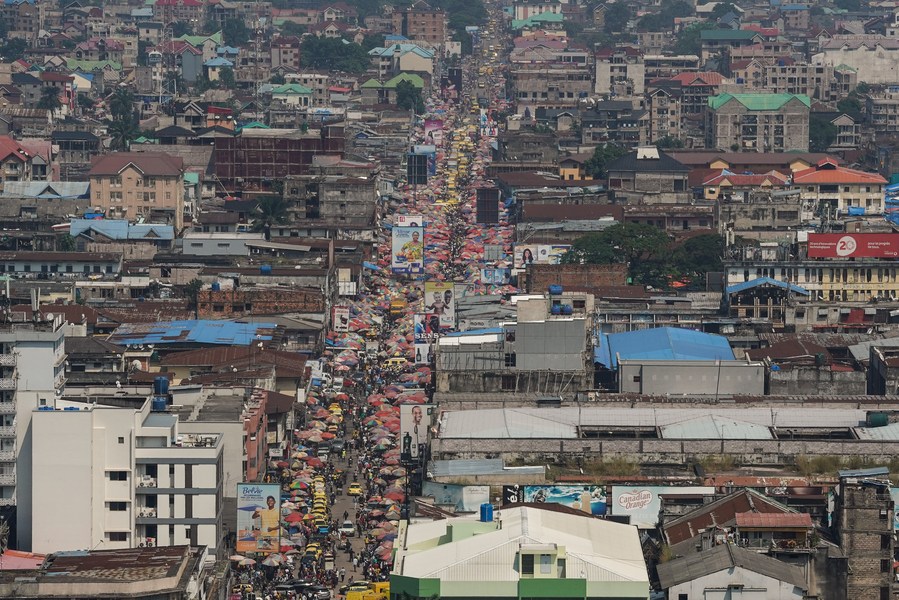
With a population exceeding 100 million people and one of the continent’s largest economies by geographic scale, the Democratic Republic of the Congo, or commonly known as the DRC, represents a vast but largely untapped fintech frontier.
Historically, the country’s financial sector has been characterised by limited banking penetration and a heavy reliance on cash transactions. In fact, studies suggest that around 85 per cent of Congolese remain unbanked and most transactions are still conducted in cash.
Yet in recent years, digital financial services have begun to gain momentum. Mobile money platforms, digital payment solutions and a growing number of fintech startups are gradually reshaping how financial services are delivered across the country.
In 2026, the DRC’s fintech ecosystem remains in its formative stage. But the convergence of mobile connectivity, digital economic reforms and entrepreneurial innovation suggests that one of Africa’s largest fintech markets may be slowly emerging.
Financial Inclusion and the Mobile Money Revolution

The foundations of the Congolese fintech ecosystem lie in the rapid expansion of mobile money services.
Traditional banking infrastructure remains limited across much of the country, particularly outside major cities such as Kinshasa and Lubumbashi. As a result, mobile financial services have become the primary gateway through which millions of Congolese access financial tools.
The country’s mobile money market is dominated by telecommunications operators including Vodacom M-Pesa, Airtel Money and Orange Money, which allow users to transfer funds, pay bills and receive remittances directly through mobile wallets.
Vodacom’s M-Pesa platform alone recorded more than 6.4 million active users in 2024, highlighting the scale of mobile financial adoption in the country.
Despite this progress, the market remains underpenetrated. Mobile financial services usage currently stands at roughly 25 per cent of the population, leaving substantial room for future growth.
For fintech companies, this gap between financial access and mobile connectivity represents a significant opportunity. Across Africa, mobile money has already demonstrated how digital financial services can expand financial inclusion rapidly by enabling payments, savings and transfers through basic mobile phones rather than traditional bank accounts.
The DRC is increasingly following that trajectory.
Digital Economic Transformation and the Fintech Opportunity
Fintech development in the DRC is also closely tied to broader digital economic transformation initiatives.
The Congolese government has begun implementing ambitious programmes aimed at strengthening digital infrastructure and expanding the digital economy. One initiative includes a €8 billion national digital and infrastructure plan designed to modernise connectivity and digital services across the country.
These investments aim to expand broadband infrastructure, improve digital government services and support the growth of technology-driven sectors such as fintech.
A key element of this strategy is the development of a national interbank payment platform, expected to launch in 2026, which will enable fintech companies to connect with the banking system and facilitate digital transactions more efficiently.
Such infrastructure is critical for fintech growth. Digital payment systems, interoperability frameworks and national payment switches allow fintech startups to integrate with financial institutions and mobile money platforms, creating a more cohesive digital financial ecosystem.
In addition, digital skills initiatives – including programmes aimed at training up to 250,000 young people in digital technologies – seek to strengthen the country’s innovation ecosystem and cultivate the next generation of technology entrepreneurs.
Fintech Startups and Emerging Players
Alongside telecommunications providers and banks, a growing number of fintech companies are beginning to shape the DRC’s digital finance ecosystem.
Industry estimates suggest that between 40 and 50 fintech startups and digital financial platforms are currently operating in the country, focusing on areas such as payments, remittances, digital banking and financial infrastructure.
Several emerging players illustrate the diversity of the Congolese fintech ecosystem.
One example is MaishaPay, a digital payment platform that enables businesses to accept payments from multiple mobile money providers – including M-Pesa, Airtel Money and Orange Money – through a unified interface.
Another notable player is VaultPay, a digital banking platform designed to provide Visa cards and mobile-based financial services to Congolese consumers who previously lacked access to traditional banking infrastructure. International fintech firms are also beginning to enter the Congolese market. In 2025, Nigerian fintech company Nomba expanded into the DRC with remittance services targeting the country’s largely cash-based economy.
Meanwhile, digital payments giant Visa launched Visa Pay, a mobile payment solution designed to facilitate account-to-account transfers and digital payments across the Congolese financial system.
These initiatives illustrate how the Congolese fintech ecosystem is increasingly attracting both local entrepreneurs and international financial technology companies.
Payments Innovation and Financial Infrastructure
Another important development in the Congolese fintech ecosystem is the emergence of payment interoperability solutions.
Partnerships between financial institutions, fintech firms and global payment networks are helping bridge the gap between mobile money platforms and traditional banking systems. For example, a partnership between Onafriq and Visa aims to connect card payments with mobile money services, enabling seamless transactions across banks and telecom networks.
Such innovations are particularly important in markets like the DRC, where multiple mobile money providers operate simultaneously. Interoperability between payment systems can reduce transaction costs, improve financial access and enable fintech startups to build new services on top of existing financial infrastructure.
DRC with a futuristic vision
The Democratic Republic of the Congo’s fintech ecosystem in 2026 remains in its early stages.
Digital infrastructure gaps persist, startup ecosystems are still developing and access to investment capital remains limited compared with Africa’s leading fintech hubs.
Yet the country’s underlying fundamentals are compelling.
A population exceeding 100 million people, rising mobile connectivity and growing demand for financial services create significant opportunities for digital financial innovation.
Mobile money adoption is expanding. Payment interoperability initiatives are improving financial infrastructure. And both local entrepreneurs and international fintech companies are beginning to explore the Congolese market.
The DRC may not yet be a fintech powerhouse.
But with one of the largest untapped digital finance markets on the continent, it has the potential to become one of Africa’s most important fintech frontiers.
And in emerging fintech ecosystems, that is often where transformation begins.
The post The Democratic Republic of the Congo (DRC)’s Fintech in 2026 appeared first on The Fintech Times.