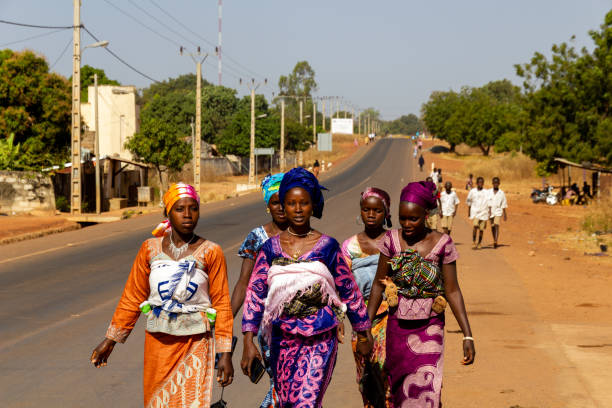
In many ways, The Gambia represents one of the most compelling fintech frontiers in Africa. This is not because of scale but rather of potential.
At present, the country’s fintech ecosystem remains small, yet it is increasingly shaped by digital transformation efforts, mobile-first financial services, and a growing recognition of fintech’s role in economic development.
According to the World Bank, with a population of approximately 2.7 million and GDP estimated at around $2.8 billion, the Gambia’s economy is driven by agriculture, tourism, and , like many developing economies, remittances. These structural characteristics help understand the trajectory of its fintech sector.
Financial services, inclusion and digital economic development
In terms of the financial services sector, the country’s sector remains underdeveloped, with limited banking penetration and a strong reliance on cash. The sector is regulated by the Central Bank of The Gambia (CBG), which has taken steps to modernise payment systems and encourage digital financial services.
Financial inclusion remains a key challenge. According to the World Bank Global Findex, a significant portion of the population remains unbanked, particularly in rural areas. Barriers include low income levels, limited financial literacy, and geographic constraints. Women and informal sector workers are disproportionately affected.
The country’s digital economy ambitions are embedded within its National Development Plan (NDP) and subsequent digital strategies, which prioritise ICT infrastructure, financial inclusion, and public sector digitisation.
Despite its challenges, mobile penetration has exceeded 100 per cent, while internet usage continues to grow steadily, supported by investments in broadband and mobile networks. These developments are laying the foundation for digital financial services to expand.
Importantly, digital transformation in The Gambia is closely tied to financial inclusion goals. Government and development partners, including the World Bank and the African Development Bank, have supported initiatives to digitise payments, improve financial access, and modernise the nation’s financial system.
For instance, The CGB developed its first ever financial inclusion strategy in 2022, aiming to boost inclusion. The strategy was developed with UN Capital Development Fund, European Union (EU) and Alliance for Financial Inclusion (AFI).
Also this year, The CBG launched the Payment Systems Advisory Committee (NPSAC), a step aimed at strengthening the country’s digital payment infrastructure.
An emerging fintech ecosystem

The Gambia’s fintech ecosystem is still in its early stages, with an estimated 10–20 fintech firms operating in the country as of 2026. These firms are primarily focused on payments, remittances, and basic financial services.
The ecosystem is supported by a mix of local entrepreneurs, telecom operators, and international development organisations. While small, it is gradually expanding as awareness and demand for digital financial services increase.
There is no standalone national fintech strategy at present. However, fintech development is embedded within broader financial inclusion and digital economy initiatives led by the CBG and government ministries.
Fintech solutions has potential as a result and, like much of Africa, mobile money is playing a role in it.
How popular is it? Last year, according to the CBG, there were 4.5 million registered accounts and, of these, 2.4 million were active; the country has a population of only 2.8 million people.
Mobile network operators play a central role in the ecosystem, offering mobile money services that enable users to send, receive, and store funds digitally. These platforms are increasingly being used for remittances, bill payments, and merchant transactions. Mobile money services, agent networks, and digital wallets are expanding access points, while digital credit solutions have the potential to support small businesses.
Mobile money in The Gambia is dominated by operator-led services like QMoney (QCell) and AfriMoney (Africell). Other fintechs in the country include the likes of Wave, Nafa and APS Wallet.
Banks are also beginning to digitise their services, introducing mobile banking apps and agent banking models to extend their reach beyond urban centres.
Much of the support of mobile money has been market driven but also there has been pushes from the telecoms and support with regulatory reforms that have made it popular in the country.
The future of fintech in The Gambia will depend largely on infrastructure and policy execution. Expanding internet access, improving financial literacy, and strengthening regulatory frameworks will be critical. At the same time, the country has an opportunity to leapfrog traditional financial systems by adopting mobile-first and digital solutions.
Whilst still nascent, The Gambia has a trajectory that is pushing for inclusion and digitalisation.
The post The African Nation of The Gambia’s Fintech Landscape in 2026 appeared first on The Fintech Times.