The following is the fintech and wider digital and economic development of the African nation of Malawi in 2026.
Malawi’s fintech story in 2026 is one of incremental transformation—quiet, often overlooked, yet increasingly consequential. In a low-income, largely agrarian economy, digital financial services are not merely a convenience; they are becoming a critical tool for inclusion, resilience and economic participation.
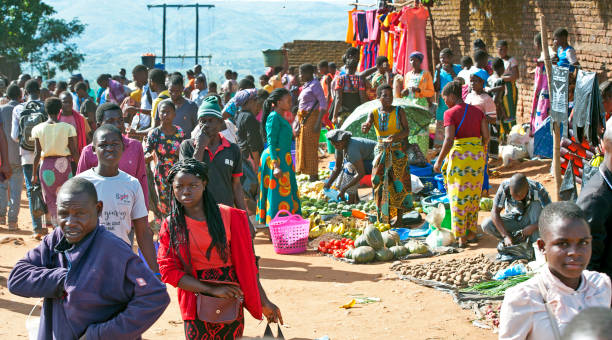
With a population of over 22 million people, Malawi’s economy nonetheless remains relatively small. Its gross domestic product (GDP) is only around $16billion. It is heavily reliant on agriculture (notably tobacco, tea and sugar) alongside services and a modest industrial base. It is one of the poorer economies of Africa, with a GDP per capita of $650.
Digital economic transformation
Malawi’s digital transformation is driven by necessity rather than scale. With a predominantly rural population and limited physical infrastructure, digital technologies are increasingly seen as a way to overcome structural barriers.
Government strategies, aligned with broader development frameworks notably the country’s economic development strategy called Malawi 2063 Vision, have prioritised expansion of mobile and broadband connectivity, digitisation of public services and payments, and promotion of digital financial inclusion.
Mobile penetration has reached approximately 70 per cent, while internet penetration remains lower at around 30 per cent, though steadily rising.
Given the fact that Malawi is a low-income nation, there is support from institutions such as the World Bank and United Nations Capital Development Fund (UNCDF). Organisations such as those have focused on building digital ecosystems that enable micro and small and medium enterprises (MSME) growth, rural inclusion and financial access.
Financial services sector
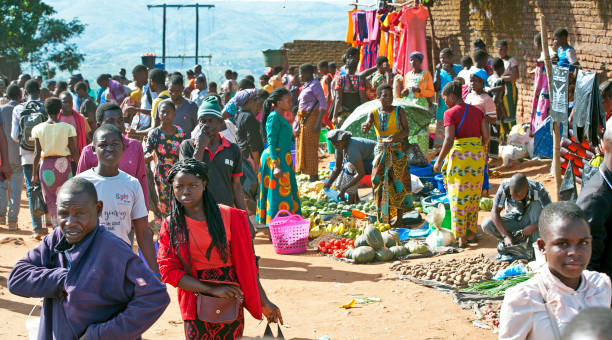
Malawi’s financial services sector has historically been characterised by limited access, particularly in rural areas. However, digital financial services are reshaping the landscape, especially mobile money.
Mobile money platforms have become the primary entry point into financial services. This shift reflects a broader regional trend, where mobile-first models are bypassing traditional banking infrastructure. This is a trend seen across much of wider sub-Saharan Africa.
Despite the challenges of Malawi, digital plays potential in its economic development. This has seen the likes of the Reserve Bank of Malawi (RBM), the country’s central bank, play an important role in supporting this transformation when it can.
First off, the country has begun modernising its national payments system. The RBM has worked to enhance interoperability between banks and mobile money operators, improving efficiency and reducing transaction costs.
In addition, Malawi has advanced several key things pertaining to digital finance. First, its national payment switch has been a focus, enabling integration across financial institutions and supporting digital payments expansion. Second, regulatory frameworks for mobile money and fintech has been a priority, seeing the RBM strengthen licensing and oversight of electronic money issuers and payment service providers. This is ensuring stability and consumer protection.
The overarching theme behind recent activities has been Malawi’s National Strategy for Financial Inclusion (NSFI) III (2024-2028), which is aiming to increase formal financial service access to 95 per cent of adults by 2028. This aims to be done by mainly leveraging fintech to enhance mobile money, digital payments, and rural financial services. The strategy focuses on bridging the rural-urban divide, supporting women-owned businesses, and enhancing financial literacy to foster economic resilience and growth
Financial inclusion and fintech
One can see why the country needs a financial inclusion strategy through on-the-ground statistics. Financial inclusion in Malawi remains limited. Estimates suggest that only 25 per cent of adults have access to a formal bank account, while a significantly larger proportion uses mobile money services.
Like in other parts of the developing world, both the excluded and the included, there remains gap in terms of the financial engagement of people. This also applies in Malawi. Especially in credit, insurance and savings, the engagement of people in Malawi overall remains limited.
The country’s financial hub is Blantyre, the commercial capital, alongside Lilongwe as the administrative centre. One of the largest banks is National Bank of Malawi, which plays a central role in expanding both traditional and digital financial services.
For instance, the bank has Mo626 Digital+ App, which is a comprehensive mobile banking app available on the App Store and Google Play, enabling instant transfers, bill payments, and mobile phone top-ups. It even does diaspora banking, as there are many Malawians abroad, giving them the opportunity to register using international numbers and manage accounts.
Other players – both in financial services and in telecoms – that are actively promoting fintech and wider financial digital services include the likes of Airtel Money Malawi and FDH Bank.
Malawi’s fintech ecosystem is still in its early stages, with an estimated 20 fintech and digital financial service providers, primarily focused on payments and mobile money.
An example of a fintech in the country is TNM Mpamba, which is a leading mobile money service enabling payments, transfers and financial inclusion.
These players highlight a key feature of Malawi’s fintech landscape: telecom-led innovation supported by banks, rather than a large, independent startup ecosystem.
Conclusion: inclusion through persistence
Malawi’s fintech journey is gradual but meaningful. In 2026, digital financial services are expanding access and reducing barriers, particularly for rural populations. While challenges remain, the country is steadily building a more inclusive financial system. This demonstrates that even small, incremental gains can drive meaningful change in economic participation over time. For Malawi, this is a prime example of its ambitions towards digital inclusion for all as part of its wider economic development.
The post The Fintech Landscape of Malawi in 2026 appeared first on The Fintech Times.