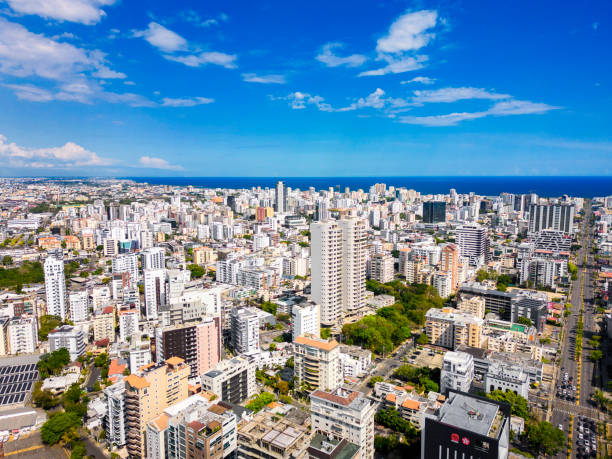
The Dominican Republic, the Caribbean nation of around 11.5 million inhabitants, has a growing fintech and wider digital ecosystem as part of its economic development. How is that like in 2026?
The Dominican Republic has, in recent years, quietly but convincingly positioned itself as one of the Caribbean’s most compelling digital economies. While much of the regional narrative has focused on smaller island states experimenting with fintech at the margins, the Dominican Republic has taken a more deliberate path. The Spanish-speaking nation is leveraging scale, institutional strength, and policy direction to build something more enduring.
Overview of the country
It begins, as it often does, with the economy itself. With a gross domestic product (GDP) now estimated around $130billion, breaking that into GDP per capita that is around $12,000.
The Dominican Republic sits in a different tier to many of its Caribbean peers. Tourism remains a cornerstone, but it is no longer the whole story. Remittances, construction, financial services, and a steadily diversifying services sector have created a more balanced economic base – one that lends itself naturally to digital expansion.
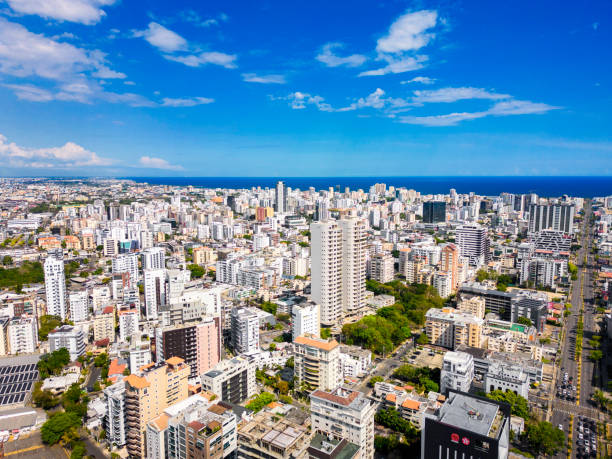
Santo Domingo anchors this evolution. It is here, in the country’s financial and commercial centre, that institutions such as Banco Popular Dominicano have played a quiet but decisive role. Rather than resisting fintech disruption, much of the Dominican banking sector has absorbed and integrated it. This is creating a hybrid model where incumbents and innovators increasingly operate in tandem.
The growing fintech ecosystem
This is perhaps what defines the Dominican fintech ecosystem in 2026: not its size alone, though an estimated of up to 90 fintech firms is notable, but its composition. Payments, lending, remittances, and insurtech are no longer isolated verticals. They are interconnected layers of broader financial architecture that is gradually becoming more digital, more accessible, and more responsive to consumer needs.
An example of a fintech is Qik, the country’s first neobank. This was launched by Banco Popular in 2022 and rapidly has brown from an app to a standalone digital bank with over 600,000 customers. Other examples include BlueWallet (bitcoin), PrestamistApp (loans), and Azul (payments).
Payments, as in most emerging markets, have been the entry point. The shift towards digital transactions has accelerated steadily, driven by rising smartphone penetration and changing consumer behaviour. Yet what distinguishes the Dominican Republic is the institutional response. The Banco Central de la República Dominica (English: Central Bank of the Dominican Republic) has not simply observed this transition. It has shaped it. Through the modernisation of the national payments system and the development of real-time infrastructure, it has laid the groundwork for a more interoperable and efficient financial ecosystem.
Financial and digital exclusion and opportunities remain to address gaps
Still, progress is not uniform. Cash remains deeply embedded in segments of the economy, particularly within informal sectors. Financial inclusion, while improving, reflects this unevenness. As of last year, 65 per cent of adults hold formal financial accounts, according to the World Bank Findex. That figure signals progress, but also points to the work still to be done. This is noticeable in particular with extending services to rural communities and lower-income groups.
Here, fintech has found its most meaningful role. Mobile-first platforms, simplified onboarding processes, and digital remittance solutions are beginning to close long-standing gaps. In a country where remittances account for a significant share of GDP, the digitisation of these flows is not merely a convenience; it is an economic lever.
The broader digital transformation agenda reinforces this trajectory. Government-led initiatives, including the Digital Agenda 2030, have prioritised connectivity, digital literacy, and public sector modernisation. Supported by institutions such as the Inter-American Development Bank and the World Bank, these efforts are gradually reshaping the operating environment in which fintech firms function.
Equally important is the emergence of ecosystem infrastructure. The Asociación Dominicana de Empresas Fintech (AdoFintech – or English: Dominican Fintech Association) has become a focal point for collaboration, bringing together startups, regulators, and financial institutions in a way that was largely absent just a few years ago. This kind of institutional coherence is often overlooked, but it is essential in moving from fragmented innovation to sustained growth.
And yet, for all its progress, the Dominican Republic’s fintech ecosystem remains a work in progress. Regulatory frameworks are evolving, but not always at the pace of innovation—particularly in areas such as open banking and digital assets. Access to growth capital remains uneven, limiting the ability of local fintechs to scale regionally. Meanwhile, the persistence of informality continues to shape both demand and adoption patterns.
What is increasingly clear, however, is that the country has moved beyond its early-stage phase. The Dominican Republic is no longer simply building a fintech ecosystem. It is refining one. The emphasis is shifting from expansion to integration, from access to usability, from innovation to impact. In that sense, the Dominican Republic offers a useful counterpoint to the broader fintech narrative. It is not a story of explosive growth or disruptive startups dominating the landscape. It is a story of steady alignment – between policy, infrastructure, and market demand.
The post Fintech Landscape of the Dominican Republic in 2026 appeared first on The Fintech Times.