
The following looks at the fintech, digital and wider economic development of the European nation of Estonia.
Estonia’s fintech narrative cannot really be separated from Estonia’s national story. In many countries, fintech arrived after the banking sector had already matured. In Estonia, digital finance grew alongside the creation of a digital state.
That distinction matters. Estonia is not simply a small Baltic country with a handful of interesting startups. It is one of the clearest examples globally of how public digital infrastructure, identity systems, entrepreneurship and financial technology can reinforce one another.
After regaining independence in 1991, Estonia had to rebuild its institutions, economy and global identity. Rather than replicate legacy administrative models, it chose a digital-first approach. That decision has shaped almost every part of its modern economy, from tax filing and business registration to banking, payments and cross-border entrepreneurship.
Today, Estonia is a high-income European Union (EU) and eurozone economy, with key sectors including ICT, financial services, logistics, electronics, energy, wood products, business services and digital government solutions. According to the World Bank, Estonia’s gross domestic product (GDP) per capita is above $29,000, while the Organisation for Economic Co-operation and Development (OECD) highlights the country’s advanced digital public services, strong education outcomes and innovation-driven economy.
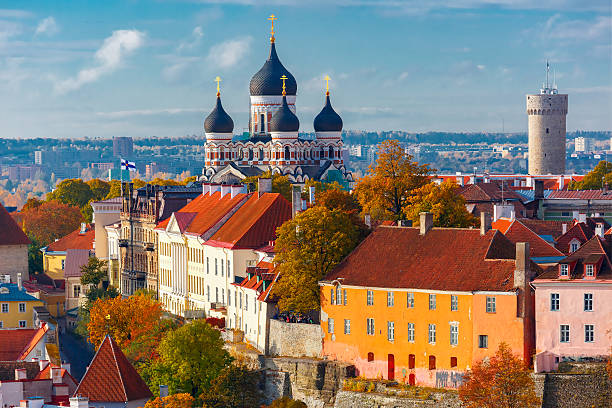
Tallinn, the capital, remains the country’s financial and technology centre. It is home to major banks, fintech firms, startup communities and public-sector digital institutions. Traditional financial institutions such as LHV Bank, Swedbank Estonia and SEB Estonia remain important to the banking sector, but the country’s fintech identity has increasingly been shaped by startups, software platforms and international digital entrepreneurs.
The best-known part of Estonia’s digital economy is its e-Residency programme. Launched in 2014, e-Residency allows non-Estonians to obtain a government-issued digital identity and remotely establish and manage an EU-based company. According to the official e-Residency dashboard, Estonia now has more than 140,000 e-residents and over 41,000 companies established by e-residents.

This is not just a branding exercise. Last year, e-residents established 5,556 companies, a 15 per cent increase from 2024, while the programme generated nearly €125million in direct state revenue, up 87 per cent year on year, according to Estonia’s e-Residency programme. For a country of around 1.4 million people, that is a powerful example of digital public infrastructure becoming an exportable economic asset.
Fintech has been one of the natural beneficiaries of this model. Estonia’s ability to let entrepreneurs start, administer and scale companies remotely has made it attractive for founders building payments, regtech, crypto, accounting, identity, compliance and software-as-a-service solutions. The result is a fintech ecosystem that is much more international than the country’s small domestic population might suggest.
The wider startup ecosystem also helps explain Estonia’s fintech strength. Startup Estonia describes the country as a startup and deeptech ecosystem designed to help companies build and scale from Estonia. The country’s global reputation was strengthened by earlier technology success stories such as Skype, Wise and Bolt, which helped create a founder culture, investor networks and engineering talent pool that newer fintechs continue to benefit from.
In financial services, Estonia’s market is sophisticated but compact. Bank account penetration is high, digital banking is widely used and consumers are accustomed to online services. Therefore, as with other advanced Nordic-Baltic economies, fintech is less about basic financial inclusion and more about speed, trust, cross-border access and digital efficiency.
Payments are central to this. Estonia participates in the eurozone, meaning its payments landscape is shaped by broader European infrastructure and regulation. Eesti Pank (the Bank of Estonia) has been actively engaged in discussions around the future of payments, including the digital euro. The central bank has described the digital euro as a potential euro-area payment solution and a backup option that could improve Estonia’s crisis readiness if bank payment services were disrupted.
This speaks to a wider Estonian concern: resilience. Because Estonia is so digital, cybersecurity and system continuity are not abstract issues. They are national priorities. The country’s fintech ecosystem therefore operates in an environment where trust, secure digital identity and resilience are central to public policy.
Regulation has also become more important, particularly as Estonia has historically been active in areas such as crypto-assets, virtual asset services and digital company formation. Like other EU member states, Estonia is now operating under wider European frameworks such as MiCA, DORA, PSD2 and future open finance reforms. These frameworks will likely increase compliance obligations, but they may also strengthen market credibility and help serious fintech firms scale across the EU.
Estonia’s fintech ecosystem includes a mix of internationally known companies and specialist providers. Wise, although now headquartered in London, has Estonian roots and remains one of the most globally recognisable fintech success stories associated with the country. Veriff, founded in Estonia, has become a major digital identity verification company serving financial services and online platforms globally. Montonio provides payment and checkout solutions for merchants, while companies such as Salv focus on financial crime prevention and anti-money laundering collaboration.
Other Estonian fintech and fintech-adjacent firms operate across payments, crypto infrastructure, accounting, lending, identity, compliance and embedded finance. Fintech Baltic’s 2025 overview of Estonian fintech companies highlights the continued diversity of the ecosystem, with firms spanning payments, infrastructure, investment and business finance solutions.
What makes Estonia different is that fintech does not feel detached from the rest of the economy. It sits within a broader architecture of e-government, digital signatures, data exchange and online company administration. The e-Estonia platform summarises this national proposition as a digital society built around public-sector innovation and exportable digital know-how.
This creates a strong environment for fintech experimentation. A founder can incorporate a company online, access digital public services, operate within the EU market and build products for international clients from a small but highly connected country. That is a powerful proposition, especially for B2B fintech, regtech and software-driven financial services.
However, Estonia’s advantages also bring challenges. The domestic market is small, which means many fintech companies must internationalise almost immediately. Access to later-stage capital can be more limited than in larger European hubs such as London, Berlin, Paris or Amsterdam. Talent competition is also intense, particularly as Estonian engineers and founders are attractive to global technology firms.
There are reputational and regulatory challenges too. Estonia’s early prominence in crypto and virtual asset services required tighter supervision and more robust compliance expectations. As EU regulation becomes more demanding, the country must balance innovation with financial integrity.
Yet this is also where Estonia’s long-term fintech credibility may strengthen. Markets that combine digital ease with serious regulation are likely to be better positioned than those relying only on speed or regulatory arbitrage.
Ultimately, Estonia’s fintech story is about scale without size. It shows that a small country can build global relevance by investing in digital infrastructure, trust, identity and entrepreneurship.
For Estonia, fintech is not a side sector. It is part of a wider national model – one where the state itself became digital, entrepreneurs became global by default, and financial technology became a natural extension of how the country chose to compete in the world.
The post Fintech and Wider Digital Ecosystem of the Baltics: Estonia in 2026 appeared first on The Fintech Times.


