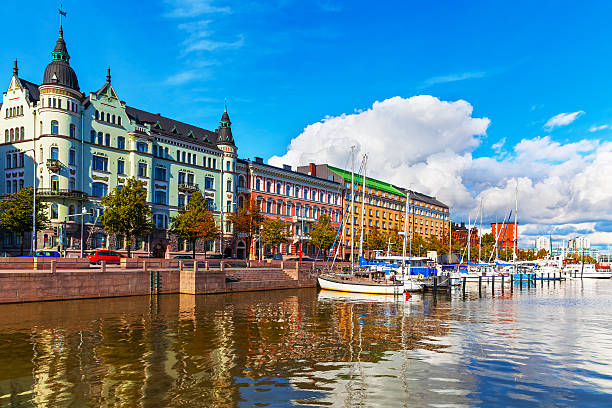
The following looks at the fintech, digital and wider economic development of the Scandinavian nation of Finland in 2026.
While many countries are still discussing digital transformation, Finland has spent much of the last decade embedding it into everyday life. From digital public services and advanced telecommunications to cashless payments and artificial intelligence, the Nordic nation of over 5.6 million people has built an economy where technology is no longer a separate sector but an integral component of how society functions.
This environment has provided fertile ground for fintech. Yet Finland’s fintech story differs from many emerging markets. Unlike countries where fintech has primarily evolved to address financial exclusion, Finland’s ecosystem has largely focused on improving efficiency, enhancing customer experiences and creating innovative financial products within an already highly developed financial system.
As Europe enters a new phase of digital finance, open banking and AI-driven financial services, Finland is increasingly positioning itself as one of the continent’s most sophisticated fintech hubs.
The country’s broader economic foundations provide a strong starting point. Finland remains one of Europe’s most advanced economies, with key sectors including technology, telecommunications, manufacturing, forestry, clean energy, financial services and life sciences. According to the World Bank, Finland’s gross domestic product (GDP) per capita exceeds $56,000, while the Organisation for Economic Co-operation and Development (OECD) highlights the country’s strengths in innovation, education and digitalisation.
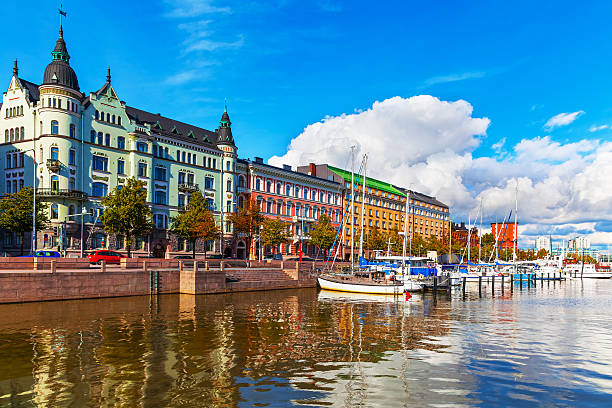
Helsinki serves as Finland’s financial and innovation centre, hosting many of the country’s leading banks, fintechs and venture capital firms. Major financial institutions include OP Financial Group, Nordea Finland and Danske Bank Finland.
Rather than beginning with fintech itself, it is worth understanding Finland’s broader digital society. According to the European Commission (EC)‘s Digital Economy and Society Index and the country’s own digitalisation strategies, Finland consistently ranks among Europe’s leaders in digital skills, connectivity and online public services.
This high level of digital readiness has created an environment where consumers readily adopt online banking, mobile payments and digital identity solutions. In fact, cash usage has steadily declined for years. The Bank of Finland, the country’s central bank, notes that card payments and digital transactions now dominate retail payments, making Finland one of Europe’s most cash-light economies.
As a result, fintech firms entering the Finnish market do not need to convince consumers to embrace digital finance. Instead, they compete on convenience, integration, speed and innovation.
One of the biggest catalysts behind Finland’s fintech growth has been open banking. The implementation of PSD2 transformed how financial institutions share data and interact with third-party providers. Finland was particularly well-positioned to benefit because consumers were already accustomed to digital banking and trusted online services.
Industry organisation Fintech Farm Helsinki has noted that open banking helped accelerate innovation across payments, lending, wealth management and personal finance services.
This regulatory environment has enabled a growing number of Finnish fintech firms to emerge. Finland hosts more than 200 fintech and insurtech companies spanning payments, wealthtech, regtech, digital lending, embedded finance and financial infrastructure.
Several Finnish fintech firms have gained international recognition. Perhaps the best-known is Holvi, which provides digital banking and financial management services for freelancers and SMEs. Another notable player is Enfuce, a rapidly growing payments technology company specialising in card issuing and payment processing across Europe.
The payments sector has become particularly important. Companies such as Mash operate in digital consumer finance and payments, while firms like FinanceKey focus on treasury and cash management solutions. Together, these companies demonstrate how Finnish fintech is increasingly serving both consumers and businesses.
Artificial intelligence (AI) is also becoming a growing focus. Finland has long positioned itself as a leader in AI adoption and digital innovation. The government’s AI programmes and technology strategies have encouraged businesses across sectors, including financial services, to explore automation, predictive analytics and personalised financial products. Business Finland continues to support innovation and internationalisation initiatives that include fintech and AI-driven ventures.
Meanwhile, sustainability is emerging as another distinctive feature of Finland’s fintech ecosystem. Given the country’s strong commitment to environmental goals and green transition policies, financial institutions and fintech firms are increasingly integrating environmental, social, and governance (ESG) considerations into investment products, lending decisions and reporting frameworks.
The Finnish financial sector is also benefiting from broader Nordic cooperation. The Nordic region has become one of Europe’s most integrated digital finance markets, with cross-border collaboration occurring across payments, digital identity and financial infrastructure. This creates opportunities for Finnish fintechs to scale beyond a relatively small domestic market.
One example is MobilePay, which merged with Norway’s Vipps to create a unified Nordic payments platform serving millions of users across the region.
Regulation continues to play an important role. The Finnish Financial Supervisory Authority (FIN-FSA) oversees the sector and works within wider European regulatory frameworks including PSD2, MiCA, DORA and future open finance initiatives.
Like many European regulators, the FIN-FSA faces the challenge of supporting innovation while maintaining consumer protection and financial stability. As fintech models become increasingly complex and AI becomes more deeply integrated into financial services, regulatory oversight will likely become even more important.
The Bank of Finland has also actively participated in discussions around the future of digital payments and the potential introduction of a digital euro. The central bank argues that maintaining access to secure public money in an increasingly digital economy remains a strategic priority.
Despite its strengths, Finland faces several challenges. The domestic market is relatively small, meaning fintech firms often need to internationalise early in their growth journeys. Competition for technology talent remains intense, particularly as global firms increasingly recruit Finnish software engineers and developers.
Investment conditions have also become more selective following the broader slowdown in venture capital activity across Europe. While Finland continues to attract funding, startups are facing greater pressure to demonstrate profitability and sustainable growth.
Nonetheless, the country retains significant competitive advantages. High digital literacy, strong institutions, trusted public services, advanced banking infrastructure and a culture of innovation continue to support fintech development.
What makes Finland particularly interesting is that fintech does not operate in isolation. It forms part of a wider ecosystem that includes AI, digital identity, cybersecurity, clean technology and advanced software development. These sectors increasingly overlap, creating opportunities for new business models and cross-sector innovation.
Ultimately, Finland’s fintech evolution is not defined by disruption for disruption’s sake. Instead, it reflects a broader national approach that values efficiency, trust, technological excellence and long-term sustainability.
As Europe’s financial sector continues to evolve, Finland appears well positioned to remain at the forefront of digital finance. Not because it is the largest market, but because it has successfully combined innovation, infrastructure and institutional trust into a foundation that many countries are still trying to build.
The post Fintech Landscape Scandinavia: Finland in 2026 appeared first on The Fintech Times.