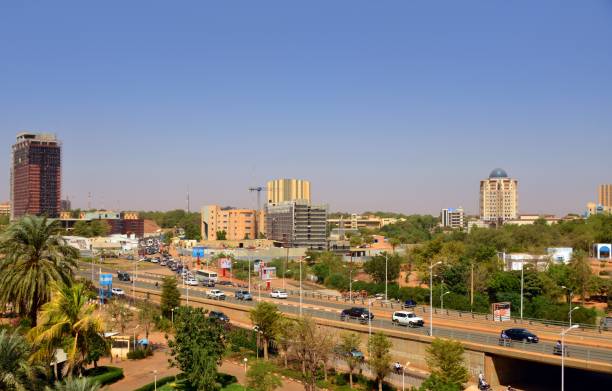
Niger’s fintech story begins with a difficult reality: distance, informality and fragility shape how money moves.
As one of the world’s most landlocked and geographically vast countries, Niger faces structural challenges that many larger fintech ecosystems rarely confront. Communities are dispersed across desert and semi-arid regions, rural livelihoods dominate much of the economy and physical financial infrastructure remains limited outside the main urban centres.
This means fintech in Niger is not about building a startup scene to rival the Africa Big-Four fintech hubs – Egypt, Nigeria, South Africa and Kenya. It is about something more fundamental: whether digital finance can help people access basic services, receive payments, save securely, support small businesses and participate more fully in the formal economy.
In this sense, Niger’s financial technology opportunity is a development story before it is a technology story.
The country’s economic foundations remain narrow but important. Niger’s economy remains heavily dependent on agriculture, while poverty and humanitarian pressures continue to shape the wider development environment. Niger’s gross domestic product (GDP) per capita stood at around $735 in 2024, underlining the country’s low-income status and the scale of its development challenge.
Agriculture remains the backbone of the economy. An International Monetary Fund (IMF) selected issues report noted that agriculture employs around 80 per cent of the population and contributes roughly 40 per cent of GDP.
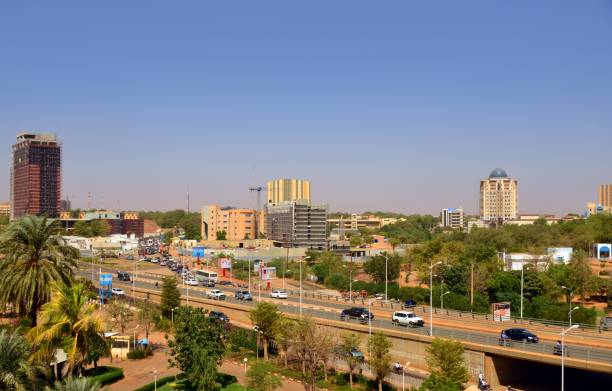
Alongside agriculture, Niger’s economy is supported by livestock, uranium, oil, gold, trade and public-sector activity. Niamey serves as the country’s capital and principal financial centre, while the country’s banking sector includes foreign institutions with a local Niger presence such as Bank of Africa Niger, Ecobank Niger, Orabank Niger and Banque Atlantique Niger.
Yet the formal financial system remains relatively shallow. For many Nigeriens, particularly those in rural communities, cash remains the dominant financial tool. Distance to bank branches, low-income levels, limited documentation, digital literacy barriers and weak connectivity all constrain the use of formal financial services.
This is where mobile money becomes central. Across West Africa, mobile money has become one of the most important tools for expanding financial access. Niger is part of the West African Economic and Monetary Union (WAEMU), meaning its monetary and financial regulatory environment is shaped by the Central Bank of West African States (BCEAO). This regional framework matters because fintech development in Niger is not only a national question; it is also linked to payment reforms across the wider WAEMU bloc.
The financial inclusion gap remains stark. Niger has one of the lowest levels of account ownership in Sub-Saharan Africa, citing account ownership at around 14 per cent. The World Bank’s Global Findex database remains the leading global source for tracking account ownership, mobile money usage and digital payment adoption across countries.
For a country such as Niger, this low level of formal financial inclusion explains why fintech could be transformative if deployed carefully.
A mobile wallet can reduce the need to travel long distances to make payments. A digital transfer can help families receive money more quickly. A merchant payment system can help small businesses build transaction histories. Digital savings products can improve household resilience. Government-to-person payments, if digitised effectively, can help deliver social assistance more transparently and efficiently.
However, these benefits depend on trust, infrastructure and regulation.
The BCEAO has been pushing payment modernisation across WAEMU. In 2024, it issued Instruction No. 001-01-2024, requiring payment service providers operating in the union to obtain licences. Following the transition period that ended on 1 May last year, several fintech institutions were officially approved to offer digital payment services across WAEMU.
This is significant for Niger because a stronger regional licensing framework can help create more reliable, regulated and interoperable digital financial services. It can also help reduce the risks associated with informal or poorly supervised providers.
Another important regional development is the BCEAO’s interoperable instant payment system, known as PI-SPI. PI-SPI was designed to modernise payments across WAEMU by enabling instant transactions 24/7 between banks, e-money institutions and approved microfinance institutions.
For Niger, interoperability could be particularly valuable. If mobile wallets, banks and microfinance institutions can transact more seamlessly with one another, users may benefit from lower costs, greater convenience and stronger confidence in digital payments.
The mobile money landscape itself is linked closely to telecommunications. Operators such as Airtel Niger and Zamani Telecom have played important roles in expanding mobile connectivity and digital services. In many low-income markets, telecom-led mobile money ecosystems have often reached populations that banks struggled to serve.
Yet Niger’s connectivity challenges remain substantial.
Digital financial services require more than phones. They require reliable networks, affordable data, electricity access, agent liquidity, consumer awareness and functioning identification systems. Without these foundations, mobile money can remain concentrated in urban areas rather than reaching the rural populations that need it most.
Security and political instability also affect the sector.
Niger has faced significant political and security pressures in recent years, including the July 2023 military takeover and ongoing insecurity linked to Sahelian extremist violence. These developments have affected investor confidence, donor engagement and regional relations. For fintech and digital finance providers, instability can complicate expansion, compliance, risk management and customer acquisition.
At the same time, fragile environments often make digital finance even more necessary.
Humanitarian assistance, displaced populations and cross-border movements create demand for faster, safer and more traceable payment systems. The World Bank notes that as of the end of last year, nearly three million people in Niger needed humanitarian assistance, including refugees and internally displaced persons. In such a context, digital payments can support aid delivery, although implementation must be sensitive to access, identity and protection concerns.
Microfinance also remains important. In countries where commercial banking penetration is limited, microfinance institutions can serve as a bridge between informal finance and the formal financial system. If connected to interoperable digital payment infrastructure, microfinance providers could play a stronger role in rural credit, savings and merchant finance.
Niger’s fintech ecosystem itself remains small. It does not yet have the depth of markets such as the Big Four. However, that should not be interpreted as a lack of opportunity. Rather, the opportunity lies in practical, inclusion-focused solutions: mobile money, agent banking, digital microfinance, remittances, merchant payments, agricultural finance and government payments.
Agriculture is particularly important. Because so much of Niger’s population depends on farming and livestock, fintech solutions that support rural value chains could have outsized impact. Digital payments for agricultural produce, weather-linked insurance, input financing, savings tools and livestock-related payments could all contribute to improving resilience and productivity over time.
Remittances are another area where digital finance may help. Nigerien households receive money from family members working elsewhere in West Africa, North Africa and Europe. Lower-cost digital remittance channels could improve household welfare, especially if linked to mobile wallets or regulated payout networks.
The broader African payments landscape may also influence Niger’s future. The Pan-African Payment and Settlement System (PAPSS) aims to make cross-border African payments faster and cheaper by reducing reliance on external settlement systems. PAPSS was being promoted as a tool to support intra-African trade and small and medium enterprise (SME) payments, although it still faces infrastructure and integration challenges.
For landlocked economies such as Niger, improved cross-border payments could eventually support trade with neighbours and reduce friction for small businesses.
Still, the road ahead is not straightforward. Digital finance can deepen inclusion, but it can also create new risks. Fraud, scams, weak consumer protection and poor digital literacy can undermine trust quickly. Regulators, telecom operators, banks and fintech providers will need to invest in education, dispute resolution and cybersecurity if adoption is to grow sustainably.
Affordability is equally important. If fees are too high, low-income users may continue relying on cash. If agents lack liquidity, customers may lose confidence. If women face barriers to mobile phone ownership or identification, digital finance may reinforce existing inequalities rather than reduce them.
This is why Niger’s fintech future must be designed around inclusion from the beginning. The country does not need fintech that simply serves urban elites. It needs digital finance that works for farmers, traders, women entrepreneurs, displaced communities, young people and microbusinesses.
Ultimately, Niger’s fintech story is still in its early stages. The country faces some of the toughest development conditions in the world, from poverty and insecurity to climate vulnerability and low financial inclusion.
Yet those same challenges make digital finance potentially important. In the case of Niger, fintech is not about glamour, valuation or disruption. It is about access. It is about whether technology can help move money more safely, cheaply and efficiently across a difficult landscape. In the heart of the Sahel, that may be one of the most important financial innovations of all.
The post Building Inclusion with Fintech: Niger’s Digital Finance Challenge appeared first on The Fintech Times.