
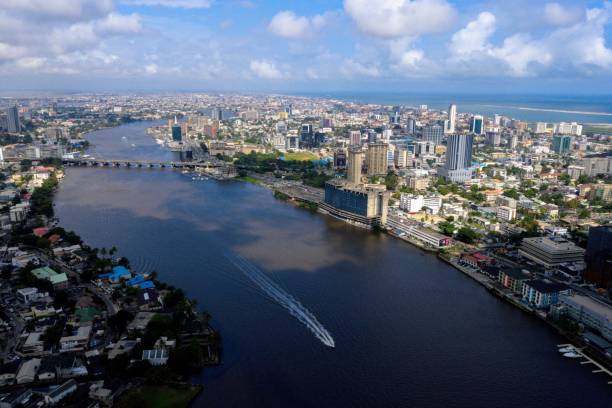
The following is a fintech and wider digital economic development view of the African nation of Nigeria in 2026.
Few countries have influenced the global fintech conversation as profoundly as Nigeria.
Across Africa, many of the products and business models now taken for granted – mobile wallets, digital banks, embedded finance, agency banking, instant payments and fintech unicorns – either emerged in Nigeria or reached commercial scale there first. What began as a response to gaps in traditional banking has evolved into one of the world’s most dynamic financial technology ecosystems.
Today, however, Nigeria’s fintech story is entering a different phase.
The conversation is no longer centred solely on startup valuations or venture capital investment. Instead, attention is shifting towards infrastructure, regulation, interoperability and how digital finance can support Africa’s largest economy over the coming decade.
It hold a Big Four status in Africa, a term I and others used to refer to the largest players in Africa. Nigeria is that alongsides Kenya, South Africa and Egypt.
That evolution reflects the maturity of the ecosystem, something previously highlighted in my last overview of Nigeria back in 2024.
Nigeria had already established itself as Africa’s fintech leader through companies such as Flutterwave, Paystack, Interswitch, Moniepoint, PalmPay, Paga, OPay and Kuda. The article also noted the rapid growth of agency banking, mobile payments and the Central Bank of Nigeria reforms that laid the foundation for today’s digital financial ecosystem. Those structural developments continue to shape Nigeria’s fintech trajectory.
Nigeria’s economic scale explains why.
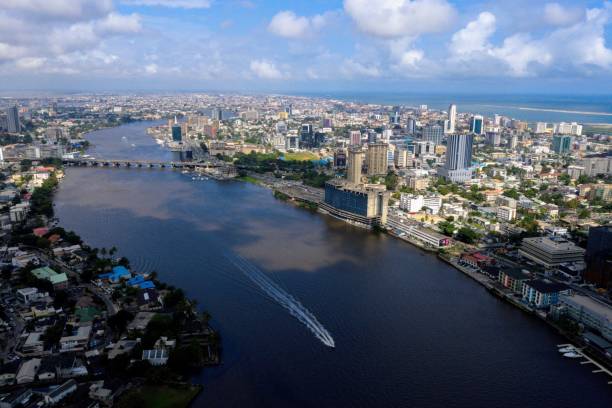
According to the World Bank, Nigeria remains Africa’s largest economy by gross domestic product (GDP) and its most populous nation, with more than 230 million people. GDP per capita is approximately $1,600, while Lagos has emerged as one of Africa’s foremost financial and technology centres. The economy is supported by oil and gas, financial services, telecommunications, agriculture, manufacturing, entertainment, trade and a rapidly expanding digital economy.
Yet Nigeria’s significance extends beyond its domestic market. The country’s fintech innovations increasingly influence payment systems, regulatory thinking and financial inclusion strategies across Africa. Many Nigerian fintech companies now operate internationally, while investors continue to view Nigeria as one of the continent’s leading innovation hubs.
Payments remain the engine of this growth. The Nigeria Inter-Bank Settlement System (NIBSS) has become one of the world’s busiest real-time payment infrastructures. According to the Central Bank of Nigeria’s 2025 Fintech Report, the NIBSS Instant Payment platform processed almost 11 billion transactions during 2024, more than doubling volumes recorded just two years earlier.
This scale matters because payment infrastructure forms the foundation upon which much of Nigeria’s fintech ecosystem has been built.
The companies mentioned earlier like Interswitch have transformed how individuals and businesses send, receive and manage money. Rather than replacing banks, many have become essential infrastructure providers connecting merchants, consumers and financial institutions.
The role of agency banking has been equally significant. Across urban neighbourhoods and rural communities alike, agent networks have extended financial services far beyond traditional bank branches. For millions of Nigerians, the first interaction with formal financial services has occurred through a neighbourhood agent rather than inside a bank.
This expansion has played a major role in improving financial inclusion. Yet Nigeria’s next challenge is different.
Despite the extraordinary growth in digital payments, significant sections of the population remain outside the formal financial system. The Central Bank’s Fintech Report estimates that around 26 per cent of Nigerian adults remain financially excluded, with exclusion rates considerably higher in rural communities and parts of northern Nigeria.
Closing that gap will require more than payment apps. Digital identity, affordable internet access, financial literacy, interoperable payment systems and accessible credit will all play important roles.
Regulation is therefore becoming increasingly important. The Central Bank of Nigeria has gradually shifted from supervising an emerging industry to managing one of Africa’s largest digital financial ecosystems. Recent policy priorities include accelerating open banking, strengthening digital identity integration, improving credit infrastructure and expanding regulatory engagement with fintech firms.
Open banking may prove particularly transformative. Nigeria was one of the first African countries to establish a regulatory framework for open banking, creating opportunities for secure data sharing between banks and licensed third-party providers. If implementation continues successfully, open banking could support more personalised financial products, improve SME lending and encourage greater competition across financial services.
Artificial intelligence (AI) represents another frontier. Banks and fintech firms are increasingly deploying AI to strengthen fraud detection, customer support, credit assessment and compliance. The Central Bank has also identified responsible AI adoption as one of the strategic priorities for Nigeria’s next phase of fintech development.
This reflects the increasing sophistication of the ecosystem. Nigeria is no longer focused solely on digitising payments. It is increasingly exploring how technology can improve the entire financial value chain.
Small businesses stand to benefit significantly. Nigeria’s millions of small and medium enteprises (SMEs) often face difficulties accessing affordable credit despite generating substantial economic activity. Digital transaction histories, open banking data and alternative credit models could help narrow this financing gap while enabling more businesses to participate in the formal economy.
Cross-border payments present another major opportunity. As the African Continental Free Trade Area (AfCFTA) expands, demand for faster and cheaper regional payment systems will continue to grow. Nigerian fintech companies, many of which already operate across multiple African markets, are well positioned to support this transformation.
The regulatory environment continues to evolve alongside the market. Recent reforms have strengthened agent banking, while policymakers continue refining licensing frameworks and payment regulations to balance innovation with financial stability.
Challenges nevertheless remain. Macroeconomic volatility, currency pressures, cybersecurity risks and infrastructure gaps continue to affect businesses operating within the sector. Access to growth-stage capital has also become more selective following the global slowdown in venture funding.
Competition is intensifying as well. This goes with the other Big-Four nations but also other emerging players such as Morocco, whom are strengthening their own fintech ecosystems, while international technology companies continue expanding across Africa.
Yet Nigeria retains important structural advantages. Its large domestic market, entrepreneurial culture, deep technology talent pool and increasingly sophisticated payments infrastructure provide a strong platform for continued innovation.
Perhaps most importantly, Nigeria has moved beyond proving that fintech works. The next stage is demonstrating that digital finance can become long-term national infrastructure – supporting commerce, expanding financial inclusion, improving government services and enabling broader economic development.
That transition may ultimately prove more significant than the startup boom that first brought Nigeria international recognition.
Nigeria’s fintech success was built through innovation, entrepreneurship and regulatory evolution. Today, those foundations are supporting a broader ambition: creating one of the world’s most advanced digital financial ecosystems.
For Nigeria, fintech is no longer simply a fast-growing sector of the economy. It is increasingly becoming part of the country’s economic architecture – connecting consumers, businesses, governments and financial institutions in ways that will shape not only Nigeria’s future, but the future of digital finance across Africa.
The post The Fintech Ecosystem of Nigeria in 2026 appeared first on The Fintech Times.

