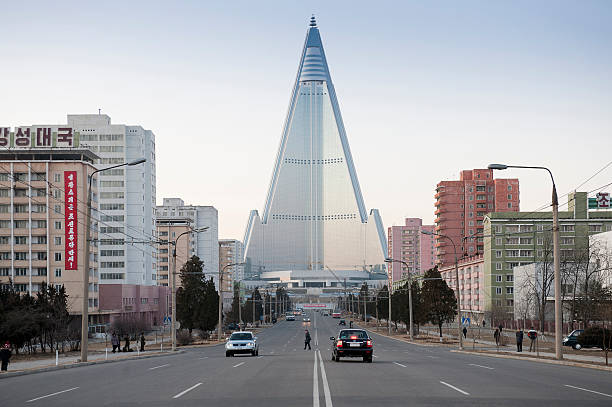
The following is an analysis of the fintech, digital and wider economic development of the most isolated nation on Earth – North Korea.
North Korea is the last country most people would associate with fintech. It is one if the most isolated countries in the world.
It has no venture capital ecosystem, no private digital banks, no startup accelerators and no internationally connected financial technology sector. International sanctions, state ownership of the economy and near-total isolation from the global financial system mean the country’s financial landscape operates under conditions unlike almost anywhere else in the world.
Yet digital finance is beginning to appear – albeit in a form that bears little resemblance to fintech elsewhere.
In most countries, fintech is associated with greater competition, improved access, consumer choice and innovation. In North Korea, digital financial tools are more likely to reinforce the priorities of the regime: control, surveillance, administrative efficiency and visibility over economic activity.
This distinction is essential. The Democratic People’s Republic of Korea is ruled by one, if not, the world’s most repressive political systems. Economic activity is tightly constrained, information is controlled and ordinary citizens have very limited financial freedom. In such an environment, digital payments cannot be understood simply as a convenience. They must also be understood as tools that may allow the state to monitor transactions, influence behaviour and reduce the anonymity that cash still provides.
Reliable economic data on North Korea remains extremely limited. Neither the World Bank nor the International Monetary Fund (IMF) publishes comprehensive economic statistics for the country because of the lack of official reporting. Independent estimates suggest gross domestic product (GDP) per capita remains among the lowest in Asia, while the economy depends on mining, manufacturing, agriculture, military production and limited trade with a small number of partners. It even exports its own workers to work across various construction projects as a way for the regime to earn cash.

The country’s financial system reflects this isolation. Commercial banking plays only a limited role compared with market economies. Due to years of sanctions and isolation none of the things like Visa, Mastercard and SWIFT exist there. Instead, financial activity remains overwhelmingly domestic, cash-heavy and heavily controlled by the state.
This has not prevented technological change. Over the past several years, evidence has emerged that electronic payments are becoming more visible inside North Korea, particularly in Pyongyang. According to analysis by 38 North, several domestic electronic wallet applications now allow users to make QR-code payments, purchase tickets, settle utility bills and conduct other transactions using locally developed smartphone applications.
In ordinary circumstances, such developments might be viewed as progress. In North Korea, the interpretation is more troubling.
Earlier attempts to encourage cashless payments relied primarily on domestic debit cards such as Narae and Jonsong, both of course linked to state-controlled banking institutions. However, public confidence in banks remained weak following the controversial 2009 currency redenomination, which wiped out savings and deepened distrust of the formal financial system. For many North Koreans, cash has remained not only a payment method but also a form of protection from state intrusion.
Digital payments could weaken that protection. Recent reporting from 38 North indicates that mobile payment applications – including Samhung, Manmulsang and other locally developed electronic wallets – have become increasingly visible in urban areas. Users can scan QR codes to purchase goods and services, while merchants are being encouraged, and in some cases required, to accept electronic payments under revised legislation governing electronic payment systems.
The regime’s motivation is therefore unlikely to be purely economic modernisation. Electronic payments can help the state improve tax collection, monitor private market activity and reduce the use of cash in informal commerce. This matters because informal markets have long played a critical role in helping ordinary citizens survive shortages and state failures. Greater digitisation may make those activities more visible to authorities.
This creates a deeply pessimistic fintech model. There are no independent fintech entrepreneurs competing to serve consumers. There are no private investors funding innovation. There is no meaningful consumer protection framework comparable to those in open financial systems. Instead, digital finance appears to be developing within a state-controlled architecture where the primary beneficiary may be the regime rather than the user.
Despite these developments, North Korea remains isolated from the global financial system. International sanctions continue to restrict access to banking networks, foreign investment and modern financial infrastructure. Foreign payment providers cannot operate freely, while domestic platforms remain disconnected from global commerce. This severely limits the potential for fintech to improve prosperity in any meaningful way.
Cybersecurity adds another darker dimension. North Korea has repeatedly been accused by governments and international organisations of using sophisticated cyber operations to steal cryptocurrency and target digital asset platforms abroad. While this is separate from domestic electronic payments, it has made the country one of the most concerning actors in global digital finance.
This contrast is striking. Domestically, digital payments may increase state control over citizens. Internationally, cyber-enabled financial activity has been linked to sanctions evasion and illicit fundraising. In both cases, technology is not being used to expand economic freedom. It is being used to strengthen a regime operating outside many international norms.
For ordinary citizens, the benefits are likely to remain limited. Digital wallets may make some transactions more convenient in Pyongyang and other urban centres, but access will remain shaped by privilege, geography, smartphone ownership and political trust. Rural communities are unlikely to benefit equally. Those already marginalised by the system may see little improvement.
More importantly, convenience may come at the cost of privacy. In an authoritarian economy, a digital payment record is not simply a receipt. It can become a data trail. It can reveal what people buy, where they transact, how often they spend and which merchants they interact with. In a country where political loyalty and social control are central to governance, that information could be powerful.
Artificial intelligence (AI), open banking, embedded finance and venture-backed fintech – themes shaping the industry elsewhere – remain largely irrelevant in North Korea’s domestic context.
The country’s digital finance agenda appears more narrowly focused on electronic payments, administrative monitoring and the gradual formalisation of economic activity under state supervision.
Ultimately, North Korea is unlikely to become a fintech market in any conventional sense. Its isolation, sanctions, repression and centrally planned economic model make meaningful financial innovation almost impossible. Digital payments may expand, but they are unlikely to produce the kinds of consumer empowerment seen in more open economies.
For North Korea, fintech is not a story of inclusion or entrepreneurship. It is a story of controlled modernisation.
The regime may adopt digital financial tools not because they empower citizens, but because they help the state see more, manage more and control more. That makes North Korea’s digital finance journey one of the bleakest examples of how fintech can develop when technology is separated from openness, trust and freedom.
The post North Korea and Fintech Overview in 2026 appeared first on The Fintech Times.