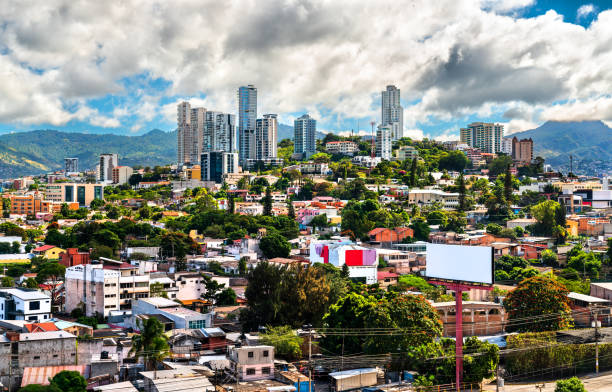
The following is an overview of the fintech ecosystem and its relation to wider economic development of the Central American nation of Honduras in 2026.
Honduras’ fintech story begins far beyond its borders. Every month, money earned in the United States, Spain and elsewhere is sent back to Honduran families. These remittances pay for food, housing, education, healthcare and small business activity. In many households, they are not extra income. They are the financial foundation.
That makes Honduras different from many fintech markets. Here, the most important question is not whether the country can create a large startup ecosystem overnight. It is whether digital finance can transform the money already flowing through the economy into broader financial inclusion, better savings, more formal payments and stronger support for small businesses.
According to the World Bank, Honduras’ gross domestic product (GDP) stood at over $37billion in 2024, while GDP per capita was approximately $3,143. The economy is supported by agriculture, textiles, maquila manufacturing, remittances, trade, tourism, construction and services. Tegucigalpa serves as the political capital, while San Pedro Sula remains a major commercial and industrial centre.
As mentioned, Remittances are central to this picture. World Bank data shows that personal remittances represented 25.7 per cent of Honduras’ GDP in 2024. The International Monetary Fund (IMF) similarly noted that remittances reached nearly 26 per cent of GDP in 2024, underlining how important diaspora income has become to the country’s macroeconomic stability.
This creates a major opportunity for fintech. If remittances arrive only as cash, their wider financial impact is limited. If they can be connected to digital wallets, savings accounts, merchant payments, insurance and credit histories, they can become a gateway into the formal financial system.
That is the real promise of fintech in Honduras. Financial inclusion remains uneven. Many Hondurans have access to some financial services, but usage is often limited by informality, income levels, documentation, trust and geography. For rural households and informal workers, traditional banking can still feel distant or expensive. Digital finance can help narrow that gap if products are affordable, simple and reliable.
The country’s payment infrastructure is gradually evolving. A 2024 Alliance for Financial Inclusion case study noted that Honduras’ automatic clearing house allows instant payments between bank accounts, while regulators and industry stakeholders have been discussing broader access for fintech and mobile financial services providers. The same study highlighted ongoing conversations around open banking and a potential fintech law through the Financial Innovation Table led by the Banco Central de Honduras (English: Central Bank of Honduras) and the Comisión Nacional de Bancos y Seguros (English: National Banking and Insurance Commission).
This matters because payment rails determine how far fintech can go. Digital wallets, mobile apps and merchant tools all depend on reliable settlement systems. Without interoperability, users can end up trapped inside fragmented platforms. With interoperability, money can move more easily between banks, wallets, businesses and consumers.
Banks are already important digital players. Institutions such as Banco Ficohsa, BAC Honduras, Banco Atlántida and Banpaís provide much of the country’s formal financial infrastructure. Their digital banking channels are increasingly important as consumers become more comfortable with mobile transfers, bill payments and online services.
Fintech activity is also emerging around payments and mobile wallets. TENGO, for example, has developed a digital wallet and payment platform in Honduras. In 2024, TENGO announced a partnership with Visa and Ficohsa that allowed users to instantly receive Ficohsa Visa prepaid cards through the TENGO app, supporting digital transactions, remittances, bill payments and purchases from smartphones.
This type of model is particularly relevant for Honduras. A mobile wallet linked to remittances and prepaid cards can help users transition from cash withdrawal to digital usage. It can also support people who may not yet qualify for traditional banking products but still need safe and convenient ways to transact.
Small businesses are another key part of the story. Honduras has a large informal and microenterprise sector. Many merchants still rely heavily on cash, which limits record-keeping and access to finance. Digital payments can help small businesses build transaction histories, accept customers beyond cash, manage working capital and eventually access formal credit.
The maquila and manufacturing sector also creates fintech opportunities. As Honduras remains an important textile and apparel production hub, payroll digitisation, supplier payments and small and medium enterprise (SME) finance could become more relevant. Digital financial tools can support workers, subcontractors and small service providers connected to larger industrial value chains.
Agriculture should not be overlooked either. Coffee, bananas, palm oil and other agricultural products remain important to exports and rural livelihoods. Farmers and cooperatives could benefit from digital payments, crop financing, mobile-based insurance and better links to buyers. However, rural connectivity and financial literacy will determine how quickly such solutions can scale.
Women’s financial inclusion is especially important. The AFI case study on Honduras focused on the role regulators can play in closing the gender gap in financial inclusion, noting the need for more inclusive digital financial services and stronger data-driven policy approaches. For fintech to matter, it must reach women entrepreneurs, rural women and remittance recipients, not just urban consumers.
There are challenges. Cash remains deeply embedded in daily life. Many people distrust formal institutions. Internet access and smartphone affordability vary by income and location. Cybersecurity and fraud risks are growing as more people use digital channels. Consumer protection must therefore evolve alongside innovation.
Regulation will also be decisive. A clearer fintech framework could encourage investment while protecting users. Open banking, if introduced carefully, could support better credit scoring, account aggregation and more competition. But weak oversight could expose consumers to predatory lending, data misuse or unreliable providers.
Honduras’ fintech future will therefore depend on balance. The country needs innovation, but it also needs trust. It needs new players, but also strong supervision. It needs digital adoption, but not at the expense of those who still rely on cash.
Ultimately, Honduras’ fintech opportunity is less about technology itself and more about what technology can unlock.
Remittances already bring billions into the country. The challenge is turning those flows into deeper financial participation. SMEs already drive much of daily commerce. The challenge is giving them digital tools to grow. Families already manage complex financial lives. The challenge is making those lives less costly and more secure.
For Honduras, fintech will not transform the economy overnight. But if digital payments, remittances, wallets and inclusive regulation come together, financial technology could help turn one of the country’s defining economic realities – money sent from abroad – into a stronger foundation for domestic financial inclusion and growth.
The post The Fintech Landscape of Central America: Honduras in 2026 appeared first on The Fintech Times.