
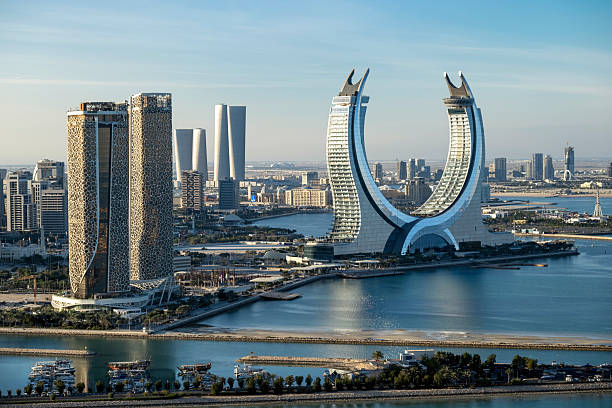
The following looks at the fintech and wider digital economic development of the State of Qatar in 2026.
Qatar’s fintech ambitions have evolved considerably over the past few years. While the country’s financial sector was once viewed primarily as supporting one of the world’s wealthiest hydrocarbon economies, it is increasingly positioning itself as a regional innovation hub where digital finance, artificial intelligence and financial services play an important role in economic diversification.
This transformation forms part of the wider Qatar National Vision 2030 and the Third National Development Strategy, both of which seek to reduce dependence on oil and gas by developing knowledge-intensive industries. Fintech has become a key pillar of that transition.
Via the International Monetary Fund (IMF), Qatar’s economy is expected to reach approximately $217.4billion, with gross domestic product (GDP) per capita exceeding $72,000, maintaining its position among the highest-income countries in the world. Doha remains the country’s financial centre and capital city (the vast majority of people in Qatar live there). Doha is anchored by institutions including Qatar National Bank (QNB), Commercial Bank Qatar, Dukhan Bank and the Qatar Financial Centre (QFC).
Regulation continues to drive innovation

Rather than allowing innovation to develop organically, Qatar has adopted a regulator-led approach to fintech development.
The Qatar Central Bank (QCB) continues implementing its fintech strategy, which aims to position Qatar as one of the region’s leading financial technology ecosystems. The strategy focuses on digital payments, open banking, Islamic fintech, regulatory innovation, cybersecurity and talent development while supporting Qatar National Vision 2030..
The QFC remains central to this strategy by attracting international fintech firms through its common law legal framework, business-friendly regulatory environment and accelerator programmes. Alongside the Qatar FinTech Hub (QFTH), it continues to support start-ups developing solutions across payments, digital banking, wealth management and regtech.
Payments and digital banking gather pace
Qatar has one of the highest banking penetration rates in the Middle East, meaning fintech growth is less about basic financial inclusion and more about improving customer experience, efficiency and digital services.
Digital payments continue to expand rapidly through contactless transactions, QR-code payments and mobile wallets. The QCB has prioritised modernising the national payments infrastructure while encouraging innovation from licensed payment providers.
Open banking is also gradually reshaping the market, enabling banks and fintech companies to securely share customer data-with customer consent-to deliver more personalised financial products and improve competition across financial services. These developments are laying the foundations for embedded finance and digital-first banking experiences.
A growing fintech ecosystem
Qatar’s fintech ecosystem has expanded considerably since 2024, with the number of fintech companies more than doubling compared with 2020. The sector now spans digital payments, lending, wealth management, insurtech, regtech and Islamic finance, reflecting growing investor confidence in the country’s innovation agenda.
Companies including SADAD Payment Solutions, CWallet, Dibsy and SkipCash are helping digitise merchant payments and financial services, while international firms continue establishing regional operations through the QFC. Qatar’s growing Islamic finance sector is also creating opportunities for Sharia-compliant digital banking and investment platforms, an area where the country is seeking to establish regional leadership.
Fintech supports economic diversification
The role of fintech in Qatar increasingly extends beyond financial services.
Digital finance is supporting entrepreneurship, small and medium enterprises (SMEs) and foreign investment, complementing broader government initiatives to diversify the economy. For instance, last year Invest Qatar (the country’s foreign direct investment (FDI) promotional agency (IPA)) launched a $1billion incentive programme that includes dedicated support for technology companies, financial services and fintech firms establishing operations in Lusail and across the country. The programme reflects Qatar’s ambition to become a regional destination for digital industries.
Meanwhile, Qatar continues investing heavily in artificial intelligence, cloud computing, cybersecurity and digital infrastructure, creating an ecosystem where fintech companies can scale alongside broader digital transformation initiatives.
Looking ahead
Qatar’s fintech sector has matured from an emerging ecosystem into an increasingly strategic component of the country’s economic diversification agenda. Backed by strong regulation, world-class digital infrastructure and sustained public investment, the country is steadily building a financial ecosystem that extends well beyond hydrocarbons.
Although its domestic market is relatively small, Qatar is increasingly positioning itself as a regional platform for fintech innovation, Islamic finance and cross-border financial services. Despite the challenges 2026 has plagued much of the Middle East, nonetheless, if current momentum continues, Qatar’s greatest contribution may not be the size of its fintech market, but its ability to serve as a launchpad for financial innovation across the Gulf and beyond.
The post Qatar: Building a Global Fintech Hub Beyond Hydrocarbons appeared first on The Fintech Times.

