
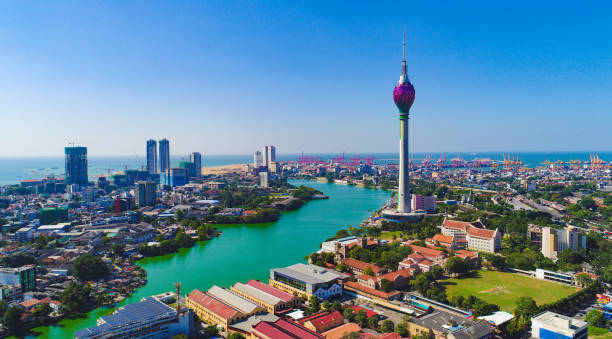
The following showcases the 2026 developments of fintech and wider digital in South Asian nation of Sri Lanka.
Economic crises leave behind more than debt. They also weaken confidence: in institutions, in the currency and, sometimes, in the financial system itself. Sri Lanka has spent much of the period since 2022 attempting to restore that confidence following the most severe economic crisis in its post-independence history.
By 2026, shortages and long queues no longer define everyday life as they once did. Economic growth has returned, inflation has moderated from its crisis-era highs and foreign-exchange reserves have improved. Nevertheless, the recovery remains incomplete, while many households continue to feel the effects of higher taxes, living costs and reduced purchasing power.
This gives fintech a particular role in Sri Lanka. Its value is not simply about making payments more convenient. Digital finance can help lower transaction costs, bring more activity into the formal economy and create a clearer connection between citizens, businesses and institutions.
According to the International Monetary Fund (IMF), Sri Lanka’s economy grew by five per cent last year, although growth is expected to slow to approximately three per cent this year. The country’s nominal gross domestic product (GDP) is projected to exceed $100billion, while GDP per capita is expected to remain above $4,500.
Colombo remains the country’s financial and commercial centre. Major institutions include the state-owned Bank of Ceylon and People’s Bank, alongside Commercial Bank of Ceylon, Hatton National Bank and Sampath Bank.
Sri Lanka’s economy is supported by services, manufacturing, agriculture, tourism, apparel exports and remittances. Its large overseas workforce is particularly important, with money sent home providing households with income while contributing foreign currency to the wider economy.
The recovery is becoming increasingly digital
During the economic crisis, Sri Lanka’s difficulties were highly visible. Fuel, medicine and imported goods became scarce. Power cuts disrupted households and businesses. The collapse of foreign-exchange reserves contributed to currency depreciation and rapidly rising prices.
Fintech could not resolve these structural problems. However, the crisis demonstrated why efficient financial infrastructure matters. When households and businesses are under pressure, delays, high transaction costs and dependence on physical cash create additional burdens.
Sri Lanka entered the crisis with several important pieces of digital-payment infrastructure already in place. Since then, the challenge has been to encourage more people and merchants to use them consistently.
In January last year, the Central Bank of Sri Lanka launched a national digital-payments promotion campaign under the theme “Shaping the Future through Digital Transactions.” The initiative sought to increase awareness and adoption among businesses, public institutions and consumers.
The central bank continued these efforts during this year through regional programmes, including a digital-payments campaign in Trincomalee aimed at government officials, businesses and members of the public.
These campaigns reflect an important reality. Building payment infrastructure is only one part of digital transformation. People must also understand it, trust it and see a reason to change established behaviour.
Sri Lanka already has the payment rails

Sri Lanka’s digital-finance advantage is that it does not need to begin from zero.
LankaPay, the country’s national payment network, provides much of the infrastructure connecting banks, financial institutions, merchants and customers. Its services include the Common Electronic Fund Transfer Switch, JustPay, LANKAQR and the Sri Lanka Inter-bank Payment System.
The Common Electronic Fund Transfer Switch, commonly known as CEFTS, supports real-time transfers between participating financial institutions around the clock. This means customers do not have to wait for traditional banking hours or lengthy settlement periods when transferring money.
JustPay, meanwhile, allows customers to link a bank account to a participating mobile application or online merchant and make payments directly from that account.
Together, these systems help create the foundation for a more integrated domestic payment environment. LankaPay stated in late 2024 that transactions processed through its digital services exceeded 100billion Sri Lankan rupees (shy of $300million) per day, illustrating the growing economic importance of the network.
One QR code rather than many
One of Sri Lanka’s most visible payment initiatives is LANKAQR.
The system created a national standard for QR-code payments, reducing the need for merchants to display separate codes for different banks or payment providers. Customers can use participating applications to scan the same standardised QR code and make a payment.
For large retailers, accepting cards or digital payments is relatively straightforward. The greater opportunity lies with smaller merchants, informal businesses, market traders and service providers that may not want the cost or complexity of conventional point-of-sale equipment.
A printed QR code can provide a much simpler entry point. This matters for Sri Lanka because small and medium-sized enterprises account for a substantial share of employment and commercial activity. Greater digital-payment adoption could help these businesses reduce cash-handling costs, establish transaction histories and eventually gain better access to formal financing.
It could also support tax collection and economic formalization – although these benefits may create reluctance among businesses accustomed to operating primarily in cash.
Fintech is expanding beyond transferring money
Sri Lanka’s consumer-facing fintech market now includes digital banking, mobile wallets, payment gateways, lending platforms and buy-now-pay-later services. They include:
- FriMi, developed by Nations Trust Bank, combines account opening, payments, transfers and other banking functions within a mobile application. It illustrates how established banks have used fintech-style services rather than leaving digital innovation entirely to start-ups.
- Genie, backed by Dialog, allows customers to manage payments and other financial services through a mobile platform.
- PayHere provides online-payment infrastructure for businesses, allowing merchants to accept digital payments through websites, applications and payment links.
- Mintpay has brought the buy-now-pay-later model into the Sri Lankan market, enabling eligible consumers to divide purchases into instalments. This can provide flexibility, although the growth of digital credit also makes affordability checks and consumer protection increasingly important.
Other firms, including DirectPay, iPay and UPay, reflect a market in which banks, telecommunications providers and independent technology companies increasingly overlap.
Sri Lanka’s ecosystem remains smaller and less heavily funded than those of India or Singapore. Nevertheless, industry databases identified more than 160 fintech ventures operating in the country by 2026, although definitions of what qualifies as a fintech vary considerably.
Innovation needs room but also boundaries
The Central Bank of Sri Lanka launched its fintech regulatory sandbox framework in 2020, providing a controlled environment in which eligible firms could test innovative products and business models.
The sandbox was an important signal that the regulator recognised the need for experimentation. However, the next stage requires more than permitting pilot projects. Sri Lanka needs clear and predictable rules covering digital lending, electronic know-your-customer processes, data sharing, cybersecurity and consumer redress.
The country has also previously examined the potential for open banking. A workable framework could allow consumers to share their financial data securely with authorised providers, encouraging competition and enabling services based on a more complete understanding of customers’ finances.
Yet open banking depends on public trust. After a national economic crisis, citizens may understandably be cautious about how institutions handle their money and personal information.
Inclusion is not guaranteed by technology
Sri Lanka has relatively high levels of literacy and an established banking sector, but digital adoption remains uneven.
Older people, lower-income households, rural communities and those with limited digital skills can find mobile financial services harder to navigate. Language accessibility is also important in a country where Sinhala and Tamil are widely used alongside English.
Poor connectivity, concerns about fraud and limited understanding of digital-security practices can discourage adoption. Expanding digital finance without addressing these issues risks creating a new divide between people who can participate confidently and those who remain dependent on cash.
Financial education must therefore accompany technological development. Consumers need to understand fees, credit obligations, privacy risks and the steps they should take when something goes wrong.
Looking ahead for the country
Sri Lanka’s fintech story in 2026 is no longer merely about surviving an economic emergency. It is about what happens afterwards.
The country already possesses real-time payment infrastructure, a national QR standard, active digital-banking products and a growing group of fintech companies. The harder task is turning these individual achievements into a financial system that people trust and use regularly.
For Sri Lanka, the most meaningful fintech innovation may not be a completely new application. It may be using existing technology to make the recovery broader, more transparent and less dependent on cash.
The post Sri Lanka: Can Digital Finance Help Rebuild Trust in the Economy? appeared first on The Fintech Times.

