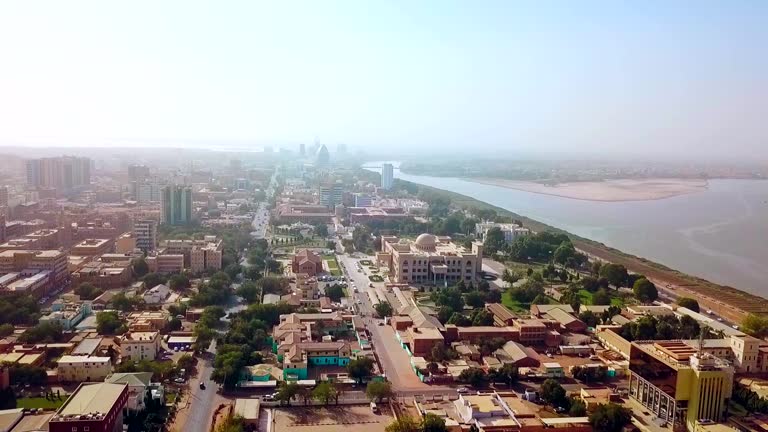
The following is an in-depth analysis of the fintech and wider digital economic development of Sudan in 2026.
Few countries illustrate the relationship between financial stability and political stability as clearly as Sudan.
Over the past several years, conflict has reshaped almost every aspect of daily life. Banks have been damaged, businesses disrupted, telecommunications interrupted and millions of people displaced. In such an environment, fintech is no longer simply about innovation or convenience-it becomes a question of resilience. How can people receive salaries, humanitarian assistance or remittances when traditional financial infrastructure is no longer functioning as intended?
For Sudan, digital finance has become less about creating the next fintech success story and more about preserving economic activity under extraordinarily difficult circumstances.
Sudan’s nominal gross domestic product (GDP) is projected to reach $35 billion this year, with GDP per capita of around $720. Agriculture continues to employ much of the population, while gold mining, livestock and trade remain important economic sectors despite ongoing disruption.
Khartoum has historically been Sudan’s financial centre, although much of the country’s banking activity has been affected by the civil conflict. Major financial institutions include the Bank of Khartoum, Faisal Islamic Bank Sudan and Omdurman National Bank, all according to the International Monetary Fund (IMF).
Conflict has changed the purpose of fintech
In many countries, fintech is driven by consumer demand for faster payments or better digital experiences.
Sudan’s priorities are fundamentally different. Years of conflict have disrupted branches, payment infrastructure and cash distribution networks, forcing individuals and businesses to rely on whatever financial channels remain available. Digital payments have increasingly become an essential means of maintaining economic activity rather than merely improving it.
This has also highlighted the importance of resilience. Financial systems that depend entirely on physical branches become vulnerable during periods of instability, whereas mobile platforms and digital payment solutions can continue operating where communications infrastructure permits.
Fintech therefore occupies a unique role in Sudan: it supports continuity rather than disruption.
Mobile banking has become a financial lifeline
Perhaps the most significant development has been the growing importance of digital banking platforms operated by established banks.
The Bank of Khartoum’s Bankak application has become one of Sudan’s most widely used digital financial services, allowing customers to transfer funds, pay bills and access banking services remotely. During the conflict, the platform became increasingly important as many customers were unable to visit physical branches.
Other banks have also expanded digital channels where possible, recognising that mobile services often provide the safest and most reliable way for customers to access their finances.
The experience demonstrates an important lesson: fintech adoption does not always accelerate because consumers prefer digital services. Sometimes it accelerates because there are few viable alternatives.
Remittances have become even more important

As conflict has displaced millions of Sudanese, the country’s diaspora has become an increasingly significant source of financial support. Remittances now help households meet basic needs, while digital channels provide safer and more efficient ways to transfer funds than carrying cash across borders or relying solely on informal networks.
Lower-cost cross-border payments could have an immediate impact on household incomes by reducing transfer fees and ensuring a greater share of each payment reaches its intended recipient. For Sudan, improving digital remittance infrastructure may ultimately deliver greater social benefits than developing sophisticated consumer lending products or investment platforms.
Rebuilding confidence will be as important as rebuilding infrastructure
Eventually, Sudan’s financial sector will need more than repaired buildings. It will require restored public confidence. Consumers must believe that deposits are secure, payment systems are reliable and financial institutions are properly supervised. Businesses need confidence that payments will settle, while investors require a predictable regulatory environment before committing capital.
The Central Bank of Sudan will therefore play a critical role in any future recovery, not only through monetary policy but also by modernising payment systems, strengthening financial supervision and encouraging responsible digital innovation once conditions permit.
International financial institutions, including the World Bank, have consistently emphasised that rebuilding financial infrastructure will be essential for broader economic recovery alongside institutional reform and private-sector development.
Innovation will come after reconstruction
Sudan is unlikely to become one of Africa’s leading fintech hubs while conflict continues.
Unlike markets where fintech growth is fuelled by venture capital (VC) and rapid consumer adoption, Sudan’s immediate priorities remain humanitarian assistance, restoring essential services and rebuilding basic economic infrastructure.
Nevertheless, history suggests that periods of reconstruction often create opportunities to modernise legacy systems. As banking networks, payment infrastructure and public services are rebuilt, digital technology could allow Sudan to adopt more efficient financial systems than those that existed previously.
Rather than replicating traditional banking models, the country could gradually expand mobile payments, digital identity, electronic government payments and interoperable payment infrastructure as part of its longer-term recovery.
Sudan’s Future
Sudan’s fintech future depends first on peace. Without greater stability, even the most innovative financial technologies will struggle to achieve meaningful scale. Yet the experience of recent years has also demonstrated that digital finance can provide continuity when conventional systems fail.
As reconstruction eventually gathers pace, fintech has the potential to become more than a tool for modernising banking. It could help reconnect communities, facilitate commerce, strengthen humanitarian assistance and rebuild confidence in the country’s financial institutions.
For Sudan, digital finance is not simply about preparing for the future. It is increasingly about ensuring that economic life can continue through one of the most challenging periods in the nation’s modern history.
The post Sudan: Can Fintech Help Rebuilt the Economy? appeared first on The Fintech Times.