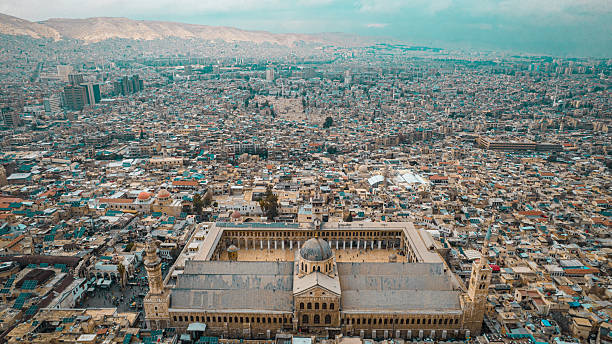
The following showcases the 2026 developments of fintech and wider digital of Syria.
When protests erupted across Syria during the Arab Spring in 2011, few imagined that the country’s financial system would still be trying to recover more than a decade later.
What began as demonstrations calling for political reform evolved into one of the most devastating conflicts of the 21st century. The civil war destroyed infrastructure, displaced millions of people, isolated Syria from the international financial system and left much of its banking sector operating with outdated technology and limited international connectivity.
For years, conversations about Syrian fintech were almost impossible. Economic survival took precedence over innovation, while sanctions, conflict and institutional collapse left little room for digital transformation.
Yet 2026 feels different. Following sweeping political changes, the emergence of a new government and Syria’s gradual reintegration into the regional and international economy, the country is beginning to rebuild not only its institutions but also the financial architecture that underpins them. Fintech is becoming part of that conversation-not because Syria wants to become the next regional start-up hub overnight, but because rebuilding a modern economy requires rebuilding the way money moves.
According to the International Monetary Fund (IMF), Syria’s economy is showing its strongest signs of recovery since the conflict began. Improved consumer confidence, the return of refugees, easing sanctions and renewed regional engagement are all supporting economic activity. The IMF has also intensified its engagement with Damascus, providing technical assistance to both the Ministry of Finance and the Central Bank of Syria as the country rebuilds key economic institutions.
Before the conflict, Syria’s economy relied heavily on agriculture, manufacturing, oil production and trade. Today, reconstruction itself has become one of the country’s largest economic sectors. Damascus remains the country’s historic financial centre, while the Central Bank of Syria has assumed an increasingly important role in restoring confidence in the banking system.
The Arab Spring changed everything
The Arab Spring did more than reshape Syria’s political landscape. It fundamentally altered the country’s financial trajectory.
Years of conflict damaged bank branches, interrupted payment networks, weakened confidence in financial institutions and accelerated the growth of informal cash transactions. Millions of Syrians became dependent on humanitarian assistance and remittances sent from relatives living abroad.
In many respects, Syria’s financial system stopped evolving while much of the world accelerated towards digital payments, open banking and fintech innovation.
The challenge facing policymakers today is therefore unique. Syria is not simply modernising an existing banking sector-it is rebuilding one after more than a decade of extraordinary disruption.
The country’s new political leadership has repeatedly identified economic reconstruction as a national priority. Restoring confidence in financial institutions, rebuilding public services and reconnecting Syria with regional markets are increasingly viewed as essential steps in stabilising the country after years of conflict.
Rebuilding trust before building fintech

Perhaps the biggest obstacle is not technology; it is trust. A digital wallet or mobile-payment application has little value if citizens lack confidence in banks, the national currency or financial institutions more broadly. Restoring public trust therefore becomes a prerequisite for fintech adoption.
Recognising this, the Central Bank of Syria has placed financial stability, banking-sector rehabilitation and payment modernisation at the centre of its newly launched 2026–2030 Strategy. The strategy includes strengthening digital payment infrastructure, expanding financial inclusion, reforming the foreign exchange market and gradually reconnecting Syria with international financial systems.
This represents an important shift. During much of the previous decade, financial policy was focused on managing crisis. Today, attention is increasingly turning towards reconstruction.
Digital payments are becoming part of reconstruction
One of the clearest signs of change is the renewed focus on payment infrastructure. Rather than immediately pursuing sophisticated fintech products, Syrian policymakers are concentrating on more fundamental objectives: restoring electronic payments, modernising banking systems and reducing dependence on cash.
The IMF has identified rehabilitation of the banking and payments system as one of its primary areas of technical assistance to Syria. Capacity-building programmes now include financial regulation, banking supervision, payment-system modernisation and improvements to monetary policy implementation.
These reforms may appear technical, but they are essential. Without functioning payment rails, fintech companies cannot scale, businesses struggle to trade efficiently and consumers remain dependent on physical cash.
A fintech ecosystem is beginning to emerge
Although Syria’s fintech ecosystem remains small, it is no longer non-existent. Several domestic companies have continued operating despite years of conflict, providing a foundation for future growth.
One of the country’s leading platforms is Sham Cash, which has evolved into one of Syria’s largest digital payment providers. By this year, the company reported more than 4.2 million users and approximately two million transactions every day, while continuing to expand merchant payments, bill settlement and digital financial services.
Another growing player is Syria Cash, an electronic wallet that enables consumers to transfer funds, make digital payments and connect with both MTN Cash and Syriatel Cash, illustrating how mobile money is gradually becoming more accessible across the country.
Meanwhile, Syriatel Cash and MTN Cash, operated by Syria’s two largest mobile network providers, continue to underpin much of the country’s mobile-money infrastructure. Their extensive customer bases provide an important starting point as digital financial services gradually expand beyond simple transfers into broader payment and financial products.
While these companies remain modest compared with regional fintech leaders in the Gulf, they demonstrate that innovation continued even during Syria’s most difficult years. As financial infrastructure improves, these domestic firms are well positioned to become the building blocks of a broader digital financial ecosystem.
Reconnecting with the global financial system
For much of the past decade, Syria operated largely outside mainstream international finance; that is beginning to change.
The easing of sanctions and renewed engagement with international institutions have opened discussions around reconnecting Syrian banks with global payment networks, improving correspondent banking relationships and facilitating international trade.
International financial companies are also beginning to return. Reuters reported that Visa has agreed a roadmap with the Central Bank of Syria to help develop the country’s digital payments ecosystem following years of absence. At the same time, QNB Group became the first international bank to enable merchants in Syria to accept international payment cards, representing another symbolic milestone in Syria’s financial reintegration.
For Syrian businesses, particularly small and medium enterprises (SMEs), these developments could prove just as significant as domestic fintech innovation.
Fintech will follow institutional reform
Unlike many neighbouring markets, Syria is unlikely to experience an immediate boom in venture-capital-backed fintech start-ups. The country’s priorities are understandably different.
Rebuilding central banking capacity, restoring confidence in commercial banks, modernising payment infrastructure and digitising government financial services are likely to deliver greater economic impact than launching dozens of consumer fintech applications.
Indeed, the Ministry of Finance has already identified digitalisation as a key component of its broader public-sector transformation programme, while international organisations are supporting institutional reforms across financial governance.
In many ways, Syria’s fintech future will depend less on entrepreneurs than on institutions. If the financial system can regain public trust and reconnect with international markets, private-sector innovation is likely to follow.
In Conclusion
The Arab Spring reshaped Syria’s political future. Fifteen years later, the country is attempting to reshape its economic future as well.
Fintech alone will not rebuild Syria. It cannot replace political stability, restore damaged infrastructure or resolve the immense humanitarian challenges that remain. But it can become an important enabler of reconstruction.
The years ahead will determine whether Syria can transform political change into lasting economic reform. If the country’s financial modernisation continues, fintech could play a pivotal role in reconnecting citizens with banks, businesses with global markets and investors with one of the Middle East’s most significant reconstruction stories. After years in which financial innovation was overshadowed by conflict, Syria’s next chapter may finally be defined by rebuilding rather than surviving.
The post Syria: Can Fintech Rebuild a Country After Revolution and War? appeared first on The Fintech Times.