The following showcases the 2026 developments of fintech and wider digital of Southeast Asian nation of Timor-Leste.
For more than two decades, Timor-Leste was Southeast Asia’s young outsider. That changed in October last year.
After a 14-year accession process, the country formally became the 11th member of the Association of Southeast Asian Nations (ASEAN), joining an economic bloc containing more than 680 million people and some of Asia’s fastest-growing digital economies.
For Timor-Leste, membership is much more than diplomatic symbolism. The country now needs to compete, trade and increasingly integrate with neighbours where QR payments, digital wallets and instant bank transfers are rapidly becoming normal.
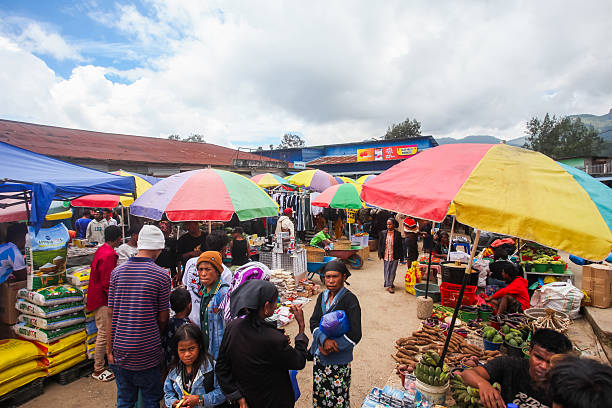
Yet Timor-Leste enters that market from a very different starting point. Cash remains deeply embedded in everyday life. Formal financial inclusion is comparatively low, particularly outside Dili, and the economy continues to depend heavily on government spending supported by petroleum wealth.
Fintech could therefore become part of something considerably larger: Timor-Leste’s transition from a young petroleum-dependent state towards a more integrated Southeast Asian economy.
ASEAN changes the conversation
Timor-Leste is one of Asia’s smallest economies, with a population of approximately 1.4 million.
Dili is overwhelmingly the country’s commercial and financial centre. Agriculture remains important for employment, while government expenditure, petroleum revenues, construction, coffee, tourism and remittances support wider economic activity.
Commercial banks include BNU Timor, Banco Nacional de Comércio de Timor-Leste (BNCTL), Bank Mandiri, Bank Rakyat Indonesia and ANZ.
Economic growth remains relatively strong. The Asian Development Bank (ADB) forecasts GDP growth of 3.8 per cent this year, accelerating to 4.1 per cent in 2027, supported by government expenditure, investment, bank lending, remittances and tourism.
ASEAN membership potentially widens that opportunity. The bloc gives Timor-Leste a much deeper relationship with Indonesia, Singapore, Malaysia, Thailand, Vietnam, the Philippines and other Southeast Asian markets. However, membership also exposes how much infrastructure still needs to be developed.
Oil money cannot finance the country forever

Timor-Leste possesses one financial asset completely disproportionate to the size of its economy.
Its Petroleum Fund stood at approximately $18.75billion as of May this year, according to Banco Central de Timor-Leste (BCTL), the country’s central bank. The fund has financed much of the country’s public expenditure since independence.
But petroleum wealth is not an unlimited development strategy. Existing oil and gas resources are declining, while the long-discussed Greater Sunrise gas development remains central to debates about the country’s future energy revenues.
This makes economic diversification urgent. Timor-Leste needs more private businesses, greater investment and stronger domestic economic activity if it is eventually to depend less heavily on withdrawals from petroleum wealth.
Financial services are part of that equation. An entrepreneur cannot easily build a business without payments, savings and access to credit.
The financial-inclusion gap remains enormous
This is where Timor-Leste’s fintech opportunity becomes clearest. Historically, only around one in five Timorese adults owned a current account, while roughly one in ten possessed a payment card.
Access is also geographically uneven. Smartphone ownership is much higher in Dili than in rural communities, while many Timorese must travel considerable distances to reach physical banking infrastructure.
Banco Central de Timor-Leste has consequently made financial inclusion a formal priority since 2013. Its initiatives include agent banking, children’s savings accounts, a national card and mobile payment infrastructure, with the objective of extending financial services to low-income and previously unbanked communities.
For Timor-Leste, this is where fintech matters most. The country does not need another premium credit card. It needs ways for someone living far outside Dili to participate in the formal financial system without travelling kilometres to reach a branch.
Mobile money arrived surprisingly early
Timor-Leste has actually experimented with digital finance for more than a decade.
BNU Mobile was launched by Banco Nacional Ultramarino in partnership with Timor Telecom in 2014, becoming the country’s first mobile-wallet product. It demonstrated how telecommunications infrastructure could potentially extend financial services beyond conventional branches.
T-Pay, associated with Telemor, subsequently provided another example of telecommunications-led digital finance, enabling mobile customers to conduct transactions through their phones.
These products reflect a model already familiar elsewhere in developing Asia and Africa. When bank branches are expensive to build, the mobile network can become financial infrastructure.
Yet Timor-Leste’s challenge has never simply been launching products. It is achieving sufficient adoption, merchant acceptance, interoperability and trust for digital payments to become part of everyday economic life.
The central bank is building faster rails
The infrastructure beneath those services is now changing. Banco Central de Timor-Leste operates R-TiMOR, an automated transfer system connecting the country’s commercial banks, the central bank and the Ministry of Finance. The platform combines real-time gross settlement with an automated clearing house, allowing electronic transfers between participating financial institutions.
A more significant step arrived in May last year, when the BCTL held the soft launch of an Instant Payment System (IPS). The central bank describes the objective as creating a faster, safer and more inclusive payment system.
For consumers, instant payments can make digital banking considerably more useful. For fintech companies, they provide infrastructure upon which new products can be developed. And for Timor-Leste’s ASEAN ambitions, modern payment infrastructure becomes part of a much wider integration challenge.
The real opportunity sits beyond Dili
The danger is that Timor-Leste develops two digital economies. One could emerge in Dili, where smartphone ownership, banking infrastructure and internet connectivity are comparatively strong.
The other would remain largely cash-based across rural communities.
That divide matters because a substantial proportion of Timorese livelihoods remain connected to agriculture and informal economic activity. Agent banking, USSD-based services and simple digital wallets may therefore prove more important for financial inclusion than sophisticated smartphone applications.
Products also need to reflect local realities surrounding financial literacy, connectivity and household incomes. The objective should not be digitalisation for its own sake. It should be making finance useful to people who currently have limited access to it.
Looking ahead in the future
ASEAN membership gives Timor-Leste’s fintech story a completely different context in 2026. The country is no longer preparing to join Southeast Asia’s principal economic organisation. It is inside it.
That creates opportunities for investment, trade and eventually deeper regional financial integration. However, it also raises expectations.
Timor-Leste still needs to reduce its dependence on petroleum wealth, expand financial inclusion and create a stronger private sector. Instant payments, agent banking and mobile financial services will not solve those problems alone.
They can, however, provide some of the infrastructure required to address them.
For ASEAN’s newest member, fintech’s greatest contribution may be helping ensure that regional integration reaches beyond government meetings in Dili and into the wallets of ordinary Timorese.
The post Timor-Leste: ASEAN’s Newest Member and Financial Inclusion appeared first on The Fintech Times.