In July 2026 the crypto venture firm Paradigm launched a 1.2 billion dollar fund aimed at frontier technology, including AI and robotics. Shortly before, it led an 8.5 million dollar seed round in M1X Global, a company that describes itself as sovereign financial infrastructure: it partners with governments to put financial instruments on public blockchains within existing legal and regulatory frameworks.

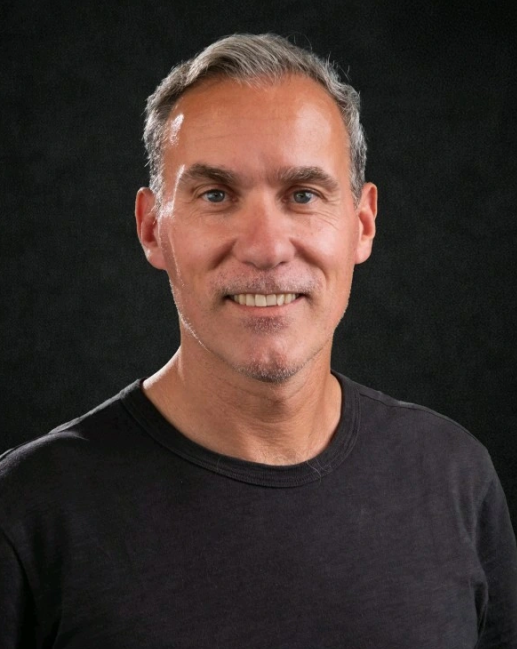
M1X Global’s first instrument is USDM1, a US dollar-denominated sovereign bond issued natively on chain by the Republic of the Marshall Islands and collateralised one to one by US Treasuries. Mark Lurie, chief executive and co-founder, and Jordan Goldman, president, chief operating officer and co-founder, answered The Fintech Times‘ questions in writing between them. Each answer below is attributed to the person who gave it.

Lurie set out what the company means by sovereign financial infrastructure. “M1X Global partners with governments to unlock new applications of blockchain technology. We focus on modernisation, risk reduction and efficiency improvements within clear legal and governance frameworks, supporting long-term economic development across public-sector programmes and institutional markets.” The Marshall Islands partnership is the example he reaches for: a public-private arrangement to coordinate the issuance of USDM1, which he describes as the world’s first natively issued, dollar-denominated sovereign bond, and which “creates a secure, direct rail for delivering government aid across the widely distributed island nation,
including to citizens who are unbanked or underbanked”
The same instrument, Lurie said, has a second life in institutional markets. It turns dollar-denominated sovereign debt, collateralised one to one by US Treasuries held by a US trust company, “into an always-on digital asset capable of 24/7 mobility and T+0 settlement”. A sovereign instrument that already has utility in the existing financial system gains the mobility and programmability of digital markets, with uses that range from government disbursements to collateral movement, margin and settlement, while staying within existing legal, accounting, custody, risk-management and regulatory frameworks.
How the bond works, and what the Marshall Islands gets
Goldman took the question of structure. “USDM1 is USD-denominated sovereign debt natively issued onchain. It is structured in the style of a fully collateralised Brady bond under New York law and secured 1:1 by short-duration US Treasury instruments held in a bankruptcy-remote structure, with an explicit customary waiver of sovereign immunity. “The framework was developed with Cleary Gottlieb as issuer’s counsel, and the instrument is dual-recourse. “Holders have enforceable rights to par redemption against a sovereign issuer, and a perfected, first-priority security interest in US Treasury collateral held by a US trust company under UCC Articles 8 and 9.”
For the issuing government the case is practical. The Marshall Islands operates exclusively on the US dollar under its Compact of Free Association with the United States, with a population spread across more than 1,200 islands and an ocean area Goldman compares to the size of Mexico. “Blockchain rails provide a fast, secure and low-cost mechanism for distributing aid across vast distances while reducing dependencies on fragmented banking infrastructure.” The same characteristics give the instrument interoperability with institutional capital markets, which he describes as “a source of long-term economic value for the country that can be put towards funding for climate resilience and other sustainability initiatives”
Collateral at machine speed
M1X has been working with Bank of America, Citadel Securities and DTCC on tokenised sovereign debt. Asked what problem that work is trying to solve, Lurie said the core one is “making high-quality financial assets as operationally efficient as the markets being built around them”. USDM1 has been used in institutional working groups including Bank of America and Citadel Securities, in the ISDA and GDF Tokenised Collateral Working Group and US industry sandbox powered by Ownera, and in M1X’s work with the DTC Digital Assets Working Group. In those settings, he said, regulated institutions have recognised the
utility of moving a dollar-denominated, Treasury-collateralised sovereign instrument on a T+0, 24/7 basis.
The distinction Lurie is keenest to draw is that USDM1 is issued natively on chain. “The token does not represent a claim on a bond maintained somewhere else, it represents a dematerialised sovereign bond itself.” That matters most when a counterparty fails, because legal title, perfection, control and close-out treatment then decide the outcome. The instrument was structured under New York law to give straightforward answers to those questions without giving up round-the-clock transferability.
He listed where the structure has been tested. USDM1 is accepted at an FDIC-insured bank and is available through OCC-regulated custodians including Anchorage Digital Bank and BitGo Bank and Trust, as well as through tZERO‘s FINRA and SEC-regulated broker-dealer custodian. Recent fully on-chain repo transactions with Virtu Financial through Tradeweb’s regulated infrastructure, using USDM1 as the securities leg, illustrate the compatibility in practice. “In repo, USDM1’s UCC 8/9 treatment, title-transfer mechanics, and enforceability under standard GMRA agreements allow it to move cleanly through existing capital markets
plumbing. That means a security interest can be perfected and the position can sit inside a legal netting set at close-out.” Every stage of such a repo, from securities delivery and cash settlement through to the return leg, can settle atomically on chain.
What Paradigm’s thesis means for market plumbing
Paradigm’s seed investment in M1X came shortly before it raised its 1.2 billion dollar fund. Goldman said the firm “has consistently invested at the technical frontier, and sovereign financial infrastructure fits naturally within that thesis”, and was careful about the AI framing. “M1X is not an artificial intelligence company, but the broader shift toward automation and continuous economic activity has important implications for financial markets.” The trend predates the current AI cycle, visible in high-speed and algorithmic trading, but AI accelerates it.
As transactions occur continuously, globally and at scale, he said, infrastructure that only operates in business hours and relies on manual reconciliation or delayed settlement becomes harder to justify as the only option. There is growing value in assets, collateral and settlement systems that can run on the same timetable, or at least offer T+0 and 24/7 capability where institutions need it. “Faster rails alone are not the only answer to this problem. Financial assets moving at machine speed require clear ownership, collateral,
enforcement and settlement mechanics.” Sovereign bonds are foundational collateral in the traditional system, and a digitally native version is, in his words, “a modernisation of this structure that can introduce new efficiencies, while also allowing the financial architecture of the asset itself to operate in a more automated environment”
The questions governments ask
Lurie said the hardest regulatory and trust questions from governments and institutions are traditional financial and legal ones rather than blockchain questions. “Can the instrument operate within existing rules? Who owns the asset? What rights does the holder have? Where is collateral held? How is a security interest perfected? What happens if an issuer or counterparty defaults? Under what law are those rights enforced?” Those questions become sharper when assets can move continuously and settle almost instantly.
USDM1 was designed around those issues from the start, he said, rather than building a rail and working out afterwards how it fits existing frameworks. That meant establishing certainty on legal title, bankruptcy remoteness, segregation of collateral and enforceability. “Ultimately, trust in sovereign financial infrastructure does not come simply from putting an asset on a blockchain. It comes from combining technological efficiency with regulatory rigour, legal enforceability and institutional compatibility. For governments in particular, modernisation has to preserve those protections.”
What comes next
Goldman said the immediate focus is expanding regulated institutional adoption of USDM1 across derivatives, repo, secured financing and collateral workflows. He sees tokenised deposits as a complement rather than a competitor. “As commercial bank money moves onchain, institutions still need neutral, high quality assets for collateral, liquidity and balance sheet management between transactions. Sovereign debt performs those functions in traditional markets. Digitally native sovereign debt could play a similar, complementary role in digital markets.”
Getting there has meant integrating USDM1 into the infrastructure institutions already use: custodians, dealers, trading venues, alternative trading systems, margin and risk platforms and off-exchange settlement networks. Principal derivatives dealer STS Digital recently announced it would accept USDM1 as collateral and pledge the instrument across its OTC, structured product and financing books, and Goldman said M1X is working with further licensed entities, including swap dealers, prime brokerages and OTC trading desks, that will accept it as margin and collateral. USDM1 addresses a need that both ISDA and FIA have identified for high-quality government collateral that can operate around the clock.
The biggest challenge, he said, is education. “Institutions understand sovereign debt extremely well, but a sovereign instrument issued natively onchain is new.” The legal architecture draws on decades of sovereign debt and secured transactions precedent and is compatible with existing ISDA, GMRA and GMSLA agreements. “As that becomes better understood by the market, we believe digitally native sovereign bonds like USDM1 will become a source of high-quality collateral, and could become an important component of
continuous, fully digital capital markets.”
Paradigm’s fund and its seed investment in M1X Global were both announced in July 2026. The company’s news on USDM1 that the interview refers to was released from embargo on 26 August 2026.
The post M1X Global on Issuing Sovereign Debt Natively on the Blockchain appeared first on The Fintech Times.