
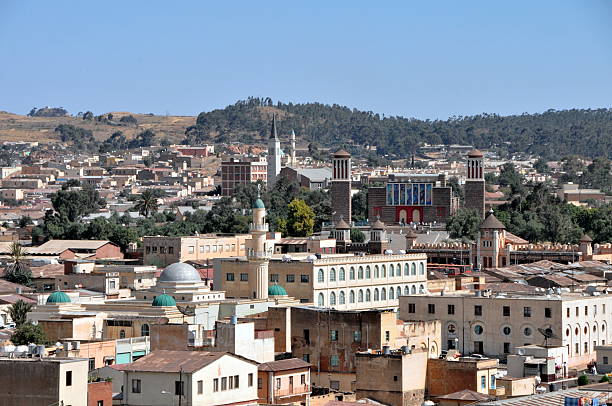
Eritrea is a nation that has its own economic development challenges, yet, opportunities. The following showcases its nascent fintech and wider digital economic development landscape in the 2026 context.
In a continent where mobile money has transformed financial inclusion across dozens of markets, Eritrea stands apart. Its financial system remains highly centralised, its digital infrastructure underdeveloped and its fintech ecosystem largely reflective of that. Yet even in this constrained environment, early signals of change are beginning to emerge.
In 2026, Eritrea’s fintech landscape is less about scale and more about possibility. The country may not yet have a fully functioning fintech ecosystem. Nonetheless, the structural conditions that could eventually support one are slowly taking shape.
Financial Inclusion Challenges and Structural Barriers
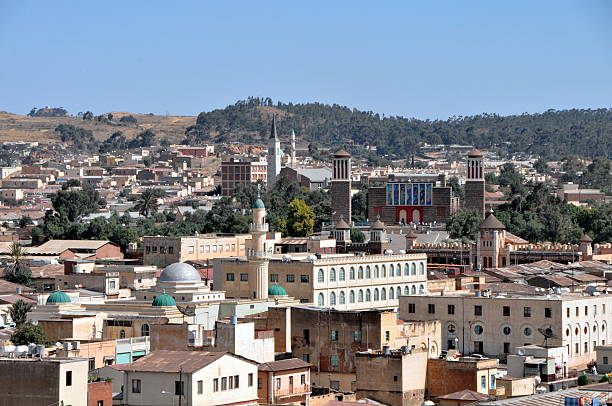
Eritrea faces one of the most significant financial inclusion gaps in Africa.
Estimates suggest that more than 70 per cent of Eritreans remain unbanked, reflecting limited access to formal financial services across the country.
The structure of the banking sector is a key factor. Eritrea operates a highly centralised financial system with only a small number of state-owned banks, including the Commercial Bank of Eritrea, which provides the majority of retail banking services.
In practice, this has resulted in limited competition, minimal innovation and a financial system that still relies heavily on manual processes.
Digital banking services such as online banking, ATMs and mobile financial applications remain largely absent. As a result, cash continues to dominate economic activity, and access to financial services remains constrained for both individuals and businesses.
These structural barriers have slowed the development of fintech. Yet they also highlight the potential role that digital financial services could play in expanding access to finance, particularly in underserved communities.
Digital Infrastructure and Emerging Payment Trends
Fintech development in Eritrea is closely tied to the country’s digital infrastructure.
Mobile penetration as compared to its population in 2022 was shy of 60 per cent, according to the World Bank. Whist seeing an improvement from the previous year, it is still low as compared to 209 countries it was ranked 191st on that list.
Despite these limitations, mobile technology is beginning to play a more prominent role in the financial system.
Digital payments and e-commerce activity remain at an early stage, with total online commerce volumes estimated at under $10million annually, reflecting the nascent nature of the digital economy.
However, growth trends are notable. Digital payments and e-commerce transactions are expanding at an estimated 15–20 per cent annually, driven largely by mobile usage and gradual increases in digital engagement; this is all according to Pay Atlas.
Mobile wallets in particular with those linked to the state-owned telecom operator EriTel, are emerging as the primary entry point into digital financial services. These platforms are still limited in functionality, but they represent an important step toward building digital payment infrastructure.
For fintech, this signals a familiar pattern. Across Africa, mobile connectivity has often served as the foundation upon which digital financial services are built. Eritrea may be at an earlier stage of this process, but the trajectory is increasingly recognisable.
Digital Economic Transformation and Policy Direction
Eritrea’s fintech potential is also shaped by its broader economic development strategy.
The government’s long-term framework, Eritrea Vision 2030, emphasises infrastructure development, institutional capacity and inclusive economic growth. Its focus on infrastructure and development has indirect implications for digital finance.
Expanding telecommunications networks, improving energy infrastructure and strengthening institutional frameworks are all prerequisites for fintech growth.
At the same time, regional dynamics are also relevant.
Across the Horn of Africa, digital financial services, specifically with mobile money, have been identified as a key driver of financial inclusion and economic participation. Studies suggest that digital payments can play a significant role in closing financial inclusion gaps and supporting economic development across the region, according to the World Bank.
For Eritrea, aligning with these regional trends could be an important step toward developing its own digital financial ecosystem.
Fintech Ecosystem in Eritrea
Eritrea’s fintech ecosystem remains extremely small. Industry estimates suggest that the country currently hosts fewer than 5 fintech or digital financial service providers, most of which are linked to telecommunications services or state-supported initiatives.
There is no significant presence of independent fintech startups, venture capital investment or advanced financial technologies such as digital lending, insurtech or embedded finance.
As a whole, Eritrea’s financial sector is underdeveloped and operates under a centralised banking system dominated by state-owned institutions, with the Bank of Eritrea acting as the central authority for all banking and financial operations.
Looking at fintech subsectors, as of 2024, open banking has not been implemented in Eritrea, and there are no indications of active efforts to introduce it in the coming years. The country’s financial systems remain outdated, with heavy reliance on manual operations. In fact, there are lack of data frameworks nor ability to share APIs – in other words the data infrastructure is also not ready.
Despite this, there could be opportunities, which include in the following: mobile money and digital payments, remittance services driven by diaspora inflows, SME financing and micro-lending and basic digital banking services.
Remittances, in particular, represent a potential catalyst for fintech development. Due to its economic conditions many Eritreans work abroad. As seen in other emerging markets, remittance platforms can serve as an entry point into broader financial services ecosystems.
At the same time, demographic trends may also support future growth. Eritrea has a relatively young population, which is typically more receptive to digital technologies and mobile-based services.
The Future in Eritrea
Eritrea’s fintech ecosystem in 2026 is defined less by what it is and more by what it could become. Unlike many other African markets, the country has yet to experience a mobile money revolution or a surge in fintech startups. Its financial system remains centralised, and digital infrastructure continues to evolve gradually.
Yet the broader ingredients for change are beginning to appear.
Despite its challenges, Eritrea has potential to further grow and, like the rest of Africa, fintech has the opportunity to help it do so.
The post Eritrea’s Fintech Ecosystem in 2026 and Financial Inclusion appeared first on The Fintech Times.


