
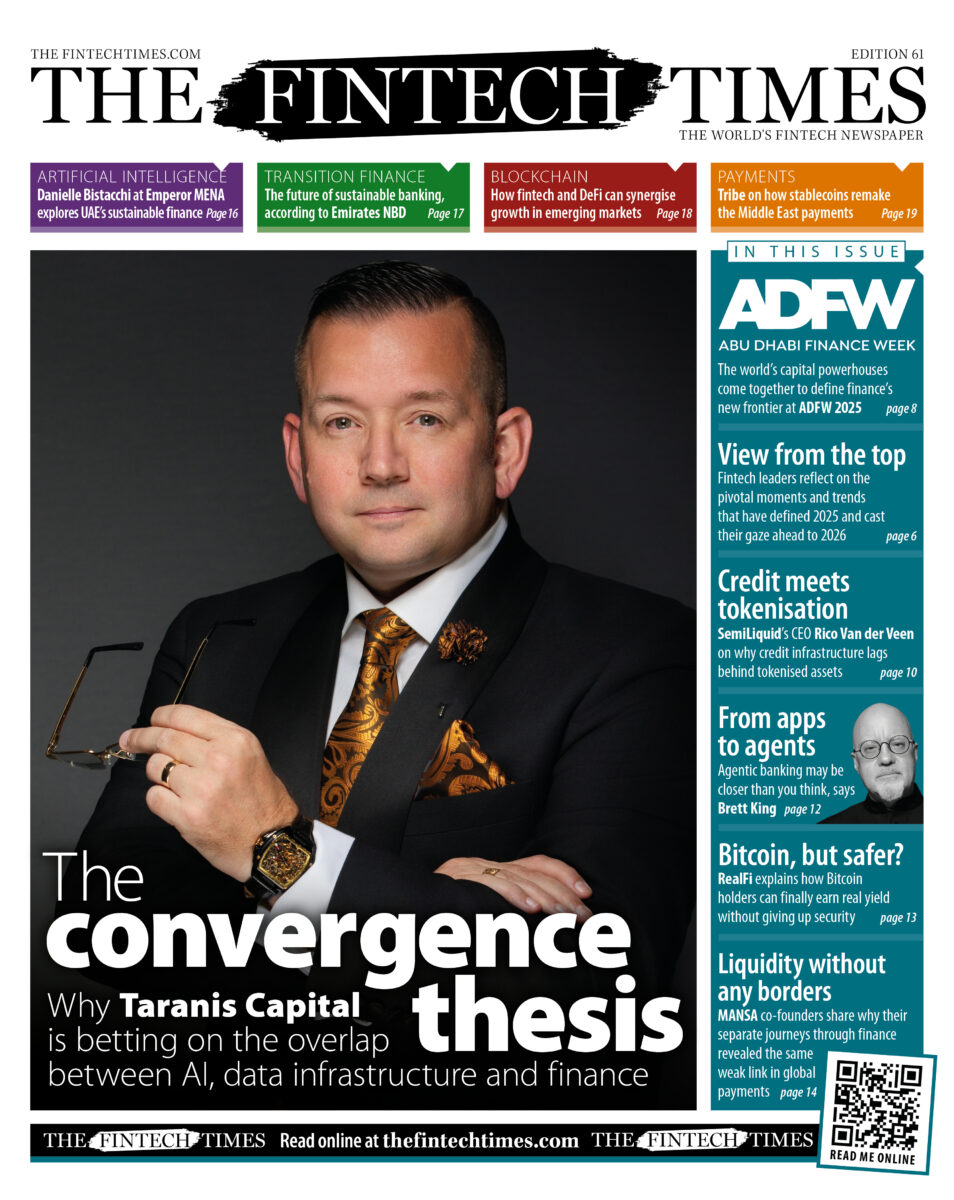
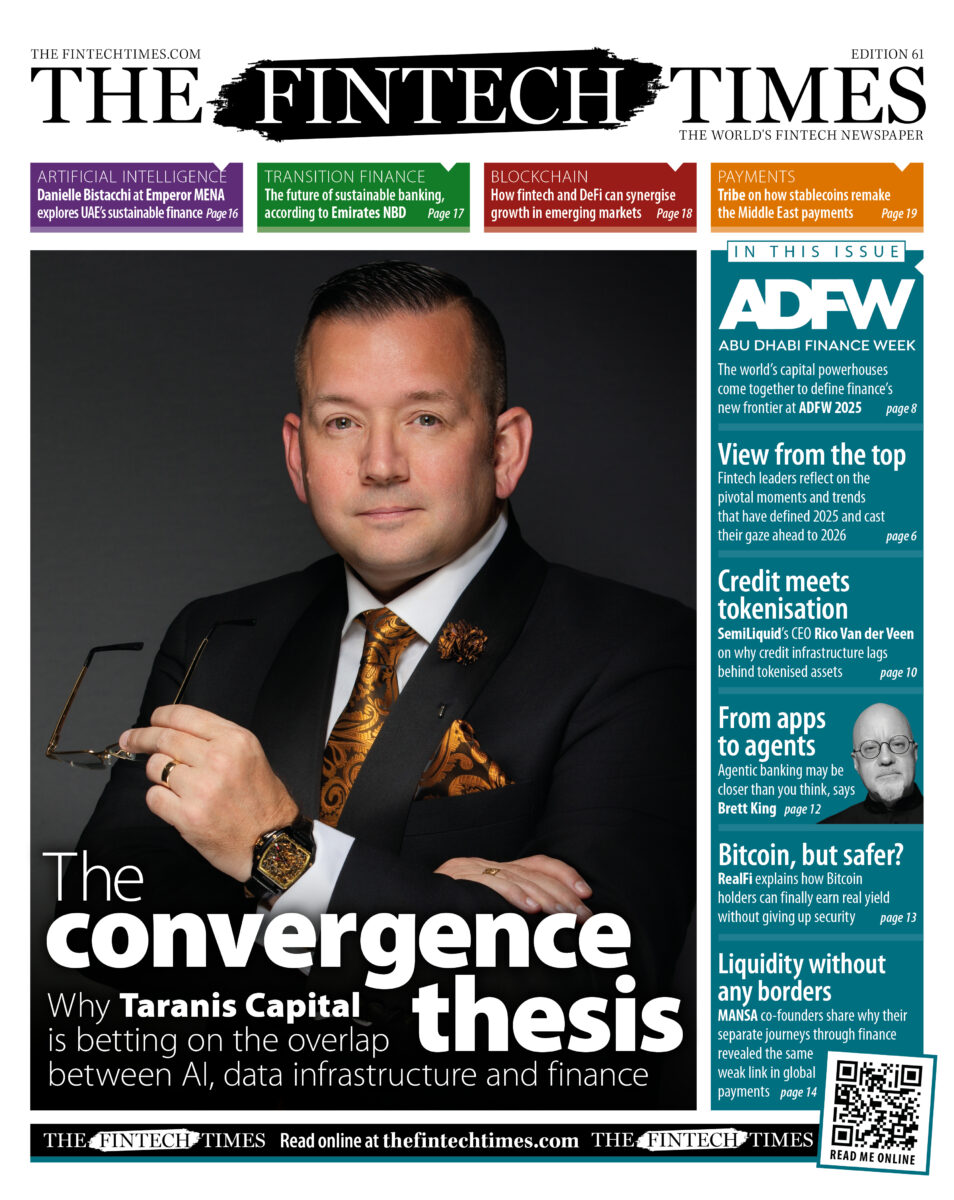
‘Engineering the Capital Network’ is the theme of this year’s Abu Dhabi Finance Week, where you may well have picked up this latest issue of The Fintech Times, but what does that mean in practice?
On one level, it’s about who is in the room. ADFW 2025 gathers leaders from organisations managing more than $62trillion in assets, that’s over half of global GDP, for four days of discussion on Al Maryah Island. The programme runs across more than 60 events and several hundred sessions, covering everything from macro and private markets to fintech, Web3 and sustainable finance.
On page 8, we unpack that mix, looking at how this week is structured, which forums matter for fintech and banking, and how Abu Dhabi is positioning itself as more than just a stop on the global conference circuit. It also picks out the parts of the agenda that feel most relevant if you care about how money actually moves: asset allocation, regulation, digital infrastructure and climate.
Several of the stories in this issue share that Abu Dhabi backdrop. On page 14, SemiLiquid’s co-founder and CEO Rico van der Veen sets out the firm’s programmable credit protocol, developed out of Abu Dhabi Global Market, and shows how tokenised assets can fit into standard lending workflows once the right infrastructure is in place, and what that means for regulated institutions looking to use them at scale.
We also look at the UAE’s push on sustainable finance. On page 16, Danielle Bistacchi charts how the country is moving from headline pledges to actual frameworks and products: from green and transition instruments to tokenised structures and cross-emirate regulatory work. Emirates NBD adds the bank-level view: hundreds of ESG data points, heavy reporting requirements and the use of AI to make that manageable.
On the technology side, Brett King’s piece on agentic banking on page 12 explores what happens when AI systems stop being add-ons and start to take on more independent roles inside banks. Taranis, meanwhile, makes the case that finance, AI and data-centre build-out should be viewed together, because investment decisions increasingly treat them as parts of the same story rather than separate sectors.
Looking ahead, our 2026 outlook section pulls together views on where things may move next: more serious work on digital identity, sharper fraud and risk questions, more scrutiny on AI performance, and stablecoins continuing to move into mainstream payments and settlement. That ties neatly into our piece on stablecoins and Gulf remittances, where fee-heavy corridors are already starting to feel the impact of cheaper, faster rails.
We also highlight two attempts to tackle long-standing access problems. Mansa sets out how it is building stablecoin-based liquidity for payment companies serving emerging markets, and RealFi looks at whether digital-asset structures can help close the funding gap for smaller businesses. Both are grounded in the reality of trying to move capital into places the traditional system tends to overlook.
Taken together, the issue sits quite naturally alongside this year’s ADFW theme. Engineering the Capital Network sounds broad on first hearing; the pieces that follow show what it looks like when you focus on the details: who is building what, under which rules, and for whose benefit.
If you are reading this at ADFW, do say hello if you see us around the venue!
Happy reading!
The post The Fintech Times – Edition 61 appeared first on The Fintech Times.

