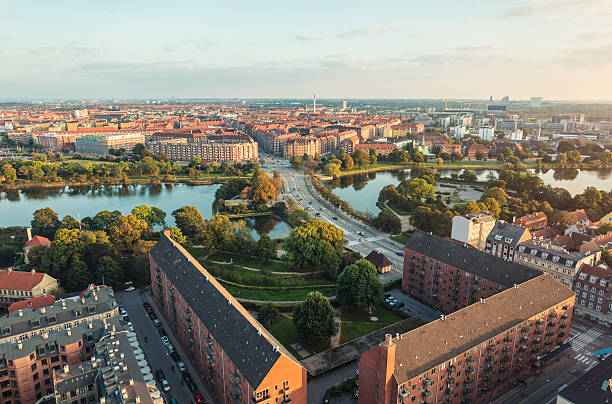
The following looks at the fintech, digital and wider economic development of the Scandinavian country of Denmark in a 2026 context.
Denmark’s fintech story is not one of catch-up. It is, in many ways, a story of refinement.
Unlike many markets where fintech emerged to compensate for weak banking infrastructure or low financial inclusion, Denmark’s digital finance ecosystem has grown from a very different starting point: a wealthy, highly banked, digitally literate society where the public sector, banks, consumers and businesses already operate with a high level of trust.
That makes Denmark an interesting case. Fintech here is less about bringing people into the financial system for the first time, and more about making an already advanced system faster, greener, more interoperable and more competitive.
The wider Danish economy helps explain this. Denmark is one of Europe’s most advanced high-income economies, with key sectors including pharmaceuticals, shipping, renewable energy, advanced manufacturing, food production, financial services and digital technology. According to the World Bank, Denmark’s gross domestic product (GDP) per capita is above $68,000, while the Organisation for Economic Co-operation and Development (OECD) highlights the country’s strong productivity, social model and innovation capacity.
Copenhagen remains the country’s clear financial, technology and startup hub, supported by major institutions such as Danske Bank, Nykredit, and Jyske Bank.
Yet Denmark’s economic narrative in recent years has also been shaped by a wider shift. The country has benefited from the strength of global companies such as Novo Nordisk, while continuing to position itself as a leader in green growth, digital government and innovation. Reuters reported that Denmark raised its 2025 growth outlook partly due to the pharmaceutical sector’s expansion and Novo Nordisk’s influence on the wider economy.
This matters because Denmark’s fintech ecosystem does not sit in isolation. It is part of a broader national model built around digital public services, cashless payments, trust-based institutions and sustainability. Denmark is one of the world’s most digitalised countries, where most transactions are cashless and interactions with public authorities largely take place online
That foundation has helped create a payments culture that is already deeply digital. Mobile payments, card payments and online banking are part of everyday life. In this respect, Denmark differs from many other fintech markets: the challenge is not persuading consumers to adopt digital finance, but rather building the next layer of innovation on top of existing digital behaviour.
One of the clearest examples is MobilePay, which has become a defining part of Danish consumer payments. The platform, originally launched by Danske Bank, became one of the Nordic region’s most recognisable mobile payment solutions. MobilePay processed more than €28billion in transfers in 2023 across more than 550 million transactions, while its merger with Norway’s Vipps and Finland’s MobilePay created a combined Nordic platform serving over 11 million users.
This Nordic integration is important. Denmark’s fintech future is increasingly regional rather than purely domestic. The merger of payment ecosystems across Denmark, Norway and Finland points to a wider Nordic ambition: to create scalable digital finance infrastructure that can compete beyond small national markets.
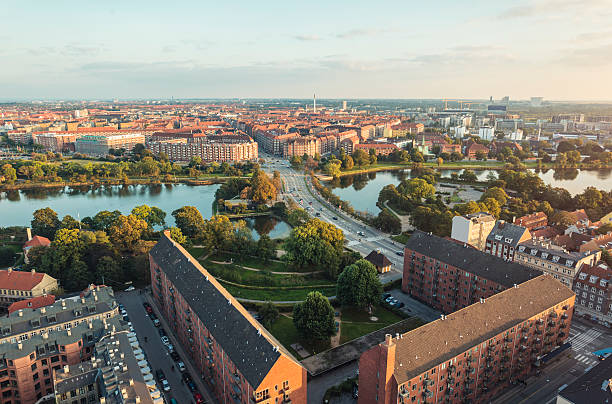
The same regional logic is visible in Denmark’s wider fintech ecosystem. Copenhagen Fintech, one of the country’s key ecosystem organisations, has played an important role in connecting startups, banks, regulators, investors and international partners. Its Nordic Fintech Report 2025 highlights the continued evolution of fintech across the Nordic region, including new company formation, investment trends and opportunities in areas such as payments, embedded finance, sustainability and artificial intelligence.
Copenhagen itself has become the natural anchor for this activity. It combines a highly educated workforce, strong English-language business culture, access to Nordic and EU markets, and a public-private innovation environment. While Denmark does not have the scale of London, Berlin or Paris, it has carved out a niche built around quality, trust and financial infrastructure.
The country’s fintech ecosystem includes companies across payments, accounting, open banking, regtech, lending, wealth management and sustainability-focused finance. Examples include Pleo, the spend management platform; Lunar, the Nordic challenger bank; Cardlay, which focuses on card and expense management solutions; and November First, a business payments fintech. These firms reflect Denmark’s broader fintech profile: practical, business-focused and often aimed at solving efficiency problems for companies rather than simply disrupting consumers.
A particularly Danish angle is green fintech. Given Denmark’s global reputation in renewable energy and sustainability, it is unsurprising that climate and finance are increasingly overlapping. Copenhagen Fintech’s Green Fintech Denmark report explores how sustainability-driven financial innovation is developing across the country, from climate data and ESG reporting to green investment solutions and cross-border collaboration.
This is where Denmark could differentiate itself internationally. As companies face growing reporting obligations under European sustainability rules, fintech solutions that help businesses measure emissions, manage ESG data, finance green transition and improve transparency may become more strategically important. Denmark’s existing credibility in green industries gives its fintech sector a strong platform from which to build.
Regulation and infrastructure are also central to the Danish fintech story. The Danish Financial Supervisory Authority, Finanstilsynet, supervises the financial sector and has engaged with innovation through regulatory guidance and dialogue. Like other European Union (EU) member states, Denmark’s fintech market is shaped by PSD2, open banking, MiCA, DORA and wider European digital finance frameworks.
Meanwhile, Nationalbank (the country’s central bank) has been modernising the country’s payments architecture. In April last year, the central bank moved Danish krone payments from Kronos2 to the pan-European TARGET Services infrastructure. The European Central Bank (ECB) also noted that Denmark became the first non-euro area central bank to participate in all three TARGET Services with its own currency, enabling Danish market participants to settle wholesale and retail payments in Danish kroner through T2 and TIPS.
This may sound technical, but it is important. Payment infrastructure is the plumbing of fintech. By linking the Danish krone more deeply with pan-European settlement infrastructure, Denmark strengthens resilience, interoperability and the potential for faster payment innovation.
Open banking is another important layer. Denmark, like the rest of the EU, has operated within the PSD2 framework, which opened bank account data and payment initiation to licensed third-party providers. The next phase, through PSD3 and the wider EU open finance agenda, could give Danish fintech firms more room to build services around data, identity, embedded finance and personalised financial management.
Financial inclusion in Denmark looks different from many countries. The issue is not basic account access, as bank account penetration is very high. Instead, inclusion questions are more likely to focus on digital exclusion among older citizens, vulnerable groups, migrants or those who may struggle with an increasingly cashless economy. As Denmark becomes more digital, ensuring that financial services remain accessible to all will remain an important policy consideration.
There are also challenges. Denmark is a small market, which means successful fintech firms often need to think internationally from an early stage. Funding conditions across European fintech have been more selective in recent years, and Danish startups compete for talent against both Nordic neighbours and larger global technology hubs. Compliance with EU regulation, while strengthening trust, can also be costly for early-stage companies.
Still, Denmark’s advantages are significant. It has high digital adoption, strong public trust, sophisticated banks, advanced payment infrastructure, a sustainability-driven economy and an active fintech cluster. These are not small foundations.
Ultimately, Denmark’s fintech ecosystem is not trying to imitate larger markets. Its strength lies in something more specific: building financial technology around trust, efficiency, sustainability and Nordic interoperability.
For Denmark, fintech is not merely a sector. It is part of the country’s wider digital economy – one where payments, green finance, open banking and public-private collaboration are helping shape the next phase of a society that is already among the world’s most digitally advanced.
The post Fintech Landscape of Scandinavia: Denmark in 2026 appeared first on The Fintech Times.