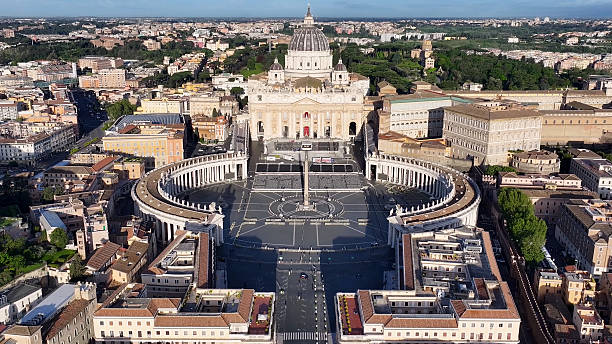
The following looks at the fintech, digital and wider economic development of the smallest nation in the world, the Vatican, in 2026.
When discussing fintech hubs, few would immediately think of Vatican City, also known as the Holy See.
The world’s smallest sovereign state has no startup district, venture capital ecosystem or growing population of digital entrepreneurs. It does not host challenger banks, unicorns or large fintech conferences. Yet over the past decade, the Vatican has been undertaking one of the more unusual financial transformations in the world.
For the Holy See, financial modernisation has never primarily been about innovation for innovation’s sake. Instead, it has been driven by a different objective: transparency, accountability and restoring confidence in one of the world’s most scrutinised financial systems.
In many respects, the Vatican’s financial journey offers a unique perspective on how digitalisation and financial technology can support institutional reform.
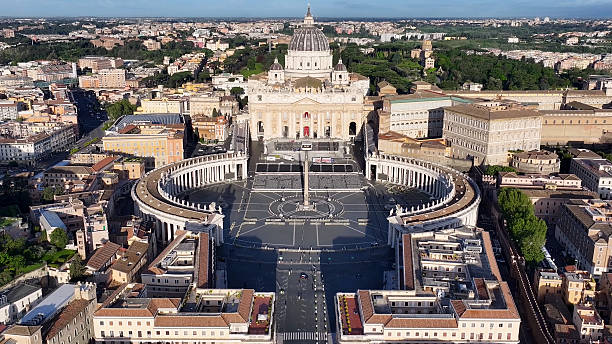
To understand the significance of these developments, it is important to appreciate the Vatican’s distinctive role within the global economy. Vatican City covers less than half a square kilometre and has a population of roughly 800 people. Yet the Holy See oversees a global religious institution serving approximately 1.4 billion Catholics worldwide.
This global footprint creates complex financial responsibilities. The Vatican manages donations, investments, real estate assets, charitable activities, pension obligations and international transactions that support religious, diplomatic and humanitarian missions across the world.
Historically, these activities were often conducted through fragmented administrative systems. Over time, concerns regarding governance, transparency and financial oversight prompted calls for reform.
Beginning under Pope Benedict XVI and accelerating significantly under Pope Francis, the Vatican launched a series of financial reforms aimed at strengthening governance and aligning its practices with international standards.
One of the most significant developments was the creation and strengthening of the Secretariat for the Economy and the continued expansion of the Authority for the Supervision and Financial Information, now known as the Supervisory and Financial Information Authority (ASIF).
While these reforms may not traditionally be described as fintech initiatives, they increasingly rely on digital financial infrastructure, compliance technologies and modern data management systems.
A major turning point came through the Vatican’s efforts to strengthen anti-money laundering controls and improve cooperation with international financial institutions. The Council of Europe’s MONEYVAL committee has periodically assessed the Vatican’s progress, noting significant advances in financial supervision, risk management and compliance frameworks.
These reforms have required investments in digital monitoring systems, transaction reporting capabilities and financial intelligence infrastructure. In practice, this means the Vatican has increasingly adopted many of the same technological tools used by modern financial institutions around the world.
At the centre of the Vatican’s financial system sits the Institute for the Works of Religion (IOR), commonly known as the Vatican Bank.
Over the past decade, the institution has undergone extensive restructuring. Annual reports published by the IOR demonstrate a growing emphasis on transparency, risk controls and digital governance. The bank has strengthened customer due diligence procedures, enhanced compliance mechanisms and modernised operational processes in line with international standards.
Unlike commercial banks, the IOR does not seek aggressive growth or market expansion. Its purpose is to serve Catholic institutions, clergy, religious orders and Vatican-related entities. Nevertheless, many of the technologies supporting these services increasingly mirror developments occurring across the wider financial sector.
The Vatican’s digital transformation extends beyond banking.
The Secretariat for Communication has expanded the Holy See’s digital capabilities, while broader administrative modernisation efforts have focused on improving efficiency and data management across Vatican departments.
Financial administration has been part of this wider modernisation agenda. Digital accounting systems, electronic reporting and centralised financial oversight mechanisms have increasingly replaced fragmented legacy processes.
Perhaps the most interesting aspect of the Vatican’s financial evolution is that it reflects a growing recognition that trust and technology are becoming increasingly interconnected.
Around the world, fintech discussions often focus on speed, convenience or customer experience. In the Vatican’s case, technology serves a different purpose. Digital tools are being deployed to improve transparency, strengthen governance and ensure that financial resources are managed responsibly.
This approach aligns closely with broader efforts by the Holy See to improve accountability.
The Vatican’s annual budget reporting has become more transparent in recent years. The Secretariat for the Economy has published greater detail regarding revenues, expenditures and financial management practices than was historically the case.
At the same time, digitalisation is helping the Vatican navigate increasingly complex global compliance requirements.
Financial institutions today must manage sanctions screening, anti-money laundering obligations, customer due diligence and transaction monitoring. These processes are increasingly supported by sophisticated regulatory technology, commonly known as regtech.
Although the Vatican does not position itself as a fintech adopter in the conventional sense, many of its reforms effectively rely upon the same technologies and operational approaches being deployed throughout the global financial services industry.
There is also a broader economic dimension to consider.
The Vatican’s finances have faced pressures in recent years due to declining donations in some regions, rising operating costs and the economic effects of the pandemic period. These challenges have reinforced the importance of efficient financial management and prudent stewardship.
According to Vatican financial statements, efforts to improve financial sustainability continue to be a central priority. Whilst relatively new, the future under the leadership of Pope Leo XIV most likely will further see wider digital transformation as with his predecessors.
Looking ahead, technologies such as artificial intelligence, advanced analytics and digital compliance solutions could play an increasingly important role in supporting these objectives. While it is unlikely that the Vatican will become a fintech hub in the traditional sense, it may continue incorporating digital financial tools that improve governance and operational effectiveness.
The Vatican’s experience also offers an important reminder for policymakers and financial institutions elsewhere. Fintech is often associated with startups, investment rounds and disruptive innovation. Yet one of its most valuable applications may be far less visible: helping institutions strengthen transparency, accountability and trust.
For Vatican City, financial technology is not about creating the next unicorn or digital bank. It is about supporting a centuries-old institution as it adapts to the demands of a modern financial system.
In that sense, the Vatican’s fintech journey may be one of the most distinctive in the world. Rather than pursuing innovation as an end in itself, it is using modern financial tools to reinforce a mission that has existed for generations, ensuring that resources are managed responsibly in service of a global community.
The post The Vatican: Fintech and Wider Digital in 2026 appeared first on The Fintech Times.