
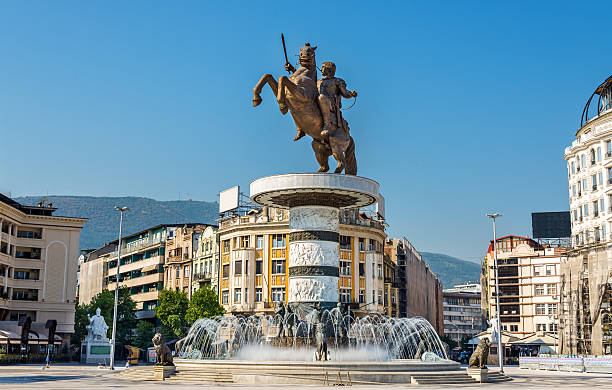
The following is an analysis of the fintech, digital and wider economic development of the North Macedonia in 2026.
Unlike many of Europe’s larger fintech markets, North Macedonia’s digital finance story is not defined by unicorns or billion-dollar investment rounds. Instead, it is about modernising financial services as part of a broader effort to strengthen competitiveness, attract investment and move closer towards European Union membership.
Fintech therefore occupies a different role within North Macedonia’s economy. Rather than disrupting an already mature financial sector, digital finance is gradually improving payments, expanding digital banking and helping businesses and consumers participate more fully in an increasingly integrated European economy.
According to the International Monetary Fund, North Macedonia’s economy is projected to reach approximately $21.6billion, with gross domestic product (GDP) per capita approaching $12,000. Real GDP growth is forecast at 3.1 per cent this year as the country continues implementing structural reforms aimed at accelerating convergence with the European Union (EU). Manufacturing, automotive components, agriculture, information technology and services remain key sectors, while Skopje continues to serve as the country’s financial and commercial centre.
Fintech supports the country’s European ambitions
North Macedonia’s fintech agenda is increasingly shaped by its EU accession process.
As an EU candidate country, the government continues aligning financial legislation with European rules covering payments, anti-money laundering, banking supervision and digital finance. The European Commission (EU)‘s enlargement process has encouraged reforms that strengthen financial stability, consumer protection and digital public services, helping create a more attractive environment for investment.
The IMF likewise notes that continued structural reforms, stronger governance and improvements to the business environment remain essential for faster income convergence with the European Union.
Payment modernisation gathers pace
The National Bank of the Republic of North Macedonia (NBRNM) continues to modernise the country’s payment infrastructure through its National Strategy for Payment Systems while encouraging wider adoption of electronic payments and digital financial services.
One of the most significant recent developments has been the alignment of North Macedonia’s payments legislation with European Union requirements, paving the way for participation in the Single Euro Payments Area (SEPA). Membership will make euro-denominated cross-border payments faster, cheaper and more efficient, reducing costs for businesses, exporters and consumers while strengthening financial integration with Europe.
Alongside payment reforms, the NBRNM continues strengthening banking supervision by aligning prudential regulation with European Banking Authority (EBA) standards while enhancing stress testing and financial stability oversight. These reforms are designed to ensure that innovation develops alongside a resilient banking system.
Digital banking continues to expand

Cash remains widely used across North Macedonia, but consumer behaviour is steadily changing.
Commercial banks have accelerated investment in mobile banking, internet banking, contactless payments and remote customer onboarding. Increasing smartphone adoption, improved internet connectivity and greater familiarity with digital financial services are encouraging more consumers and businesses to adopt electronic payments.
Although the domestic fintech ecosystem remains relatively small, innovation is emerging through partnerships between banks, payment providers and technology companies developing solutions for small and medium enterprises (SMEs), merchants and retail customers.
The IMF has also highlighted the importance of expanding digital public services and reducing informality, noting that digitalisation can improve productivity, strengthen competitiveness and support long-term economic growth.
A developing fintech ecosystem
North Macedonia’s fintech sector is still in an early stage compared with many European markets, but momentum is gradually increasing.
Rather than producing large numbers of venture-backed fintech start-ups, much of the innovation is occurring within existing financial institutions. Digital payment solutions, SME lending platforms, accounting software, financial management tools and embedded payment services are becoming increasingly common.
As regulatory alignment with European standards continues, international fintech firms may also find opportunities to partner with domestic banks seeking to modernise customer services and expand digital capabilities.
At the same time, the IMF notes that non-bank financial institutions and crypto-asset service providers are beginning to grow, although they remain relatively small and require appropriate supervision as the market develops.
Looking ahead
North Macedonia is unlikely to become Europe’s largest fintech market, nor does it need to. Its opportunity lies in becoming a well-regulated and digitally connected financial system that complements its broader European integration ambitions.
As payment infrastructure continues to modernise, banking legislation aligns with EU standards and SEPA integration improves cross-border transactions, fintech is becoming another building block in the country’s long-term economic transformation. The greatest success may ultimately be measured not by the number of fintech companies it creates, but by how effectively digital finance helps businesses, consumers and investors participate in an increasingly connected European economy.
The post North Macedonia: Can Fintech Accelerate the Country’s Future? appeared first on The Fintech Times.
