
Choco Up, the Singapore-headquartered growth financing platform, was named in July among CNBC and Statista’s World‘s Top Fintech Companies 2026, one of only three Singapore-based companies in the Alternative Financing category. That category recognises 60 companies globally from more than 3,500 fintechs assessed. Since its founding Choco Up has financed more than 1,000 businesses across Singapore, Hong Kong and Australia, which it says have generated more than US$2.5 billion in enabled gross merchandise value.

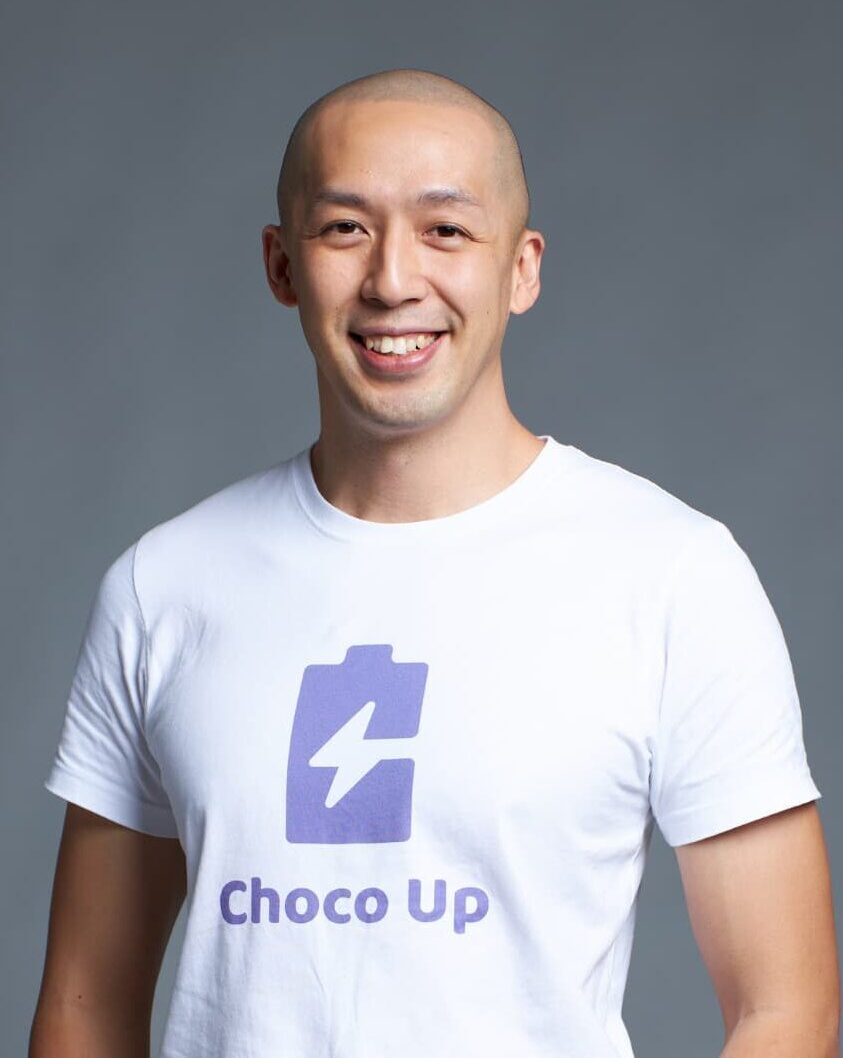
Percy Hung, an engineer turned serial entrepreneur, is its founder and chief executive. He answered The Fintech Times’ written questions on why SMEs are looking beyond bank lending, where revenue-based financing is the wrong answer, what live revenue data does to underwriting and what a proposed merger with a Nasdaq-listed company means for the business.
For Hung, the shift towards alternative financing in Asia is not a story about a shortage of credit. “SMEs are realising that the challenge is not necessarily a lack of financing options. It is finding financing that fits how their business operates and what they are trying to achieve,” he says. Banks will continue to matter, particularly for businesses that meet traditional lending requirements, but SMEs now grow in ways that can outpace bank processes: an e-commerce business that suddenly needs inventory ahead of a major sales period, or a restaurant group that needs working capital to open its next outlet.
“I do not think the future is about SMEs choosing alternative financing over banks,” he says. “Rather, businesses will become more sophisticated in using different types of capital for different needs. That shift is already underway, and I expect it to continue.”
When revenue-based financing is the wrong answer
Hung is direct about the limits of his own product. “There is little reason for a business to use more expensive capital when a lower-cost option can meet the same need,” he says. A business that qualifies for bank financing with the flexibility it needs should take it, and a company developing a new product or pursuing an opportunity that could take years to generate returns is better suited to equity.
Non-dilutive financing, in his account, “works particularly well when an established business has a relatively clear path to generating returns from the capital”: buying inventory, increasing marketing spend or fulfilling a large order. In those situations, giving away equity to cover a short-term working capital need may not make sense. “Problems tend to arise when the duration of the financing does not match the investment,” he says. “Short-term financing should not be used to fund a project that may take several years to generate returns.”
Underwriting on live data
Choco Up puts data analytics and machine learning at the core of its underwriting, and Hung’s argument for it starts with what a thin credit file does and does not mean. “A thin credit file does not necessarily indicate a weak business,” he says. “In some cases, it simply means traditional credit assessments do not have enough information to understand how that business operates.” By combining historical sales data with live transaction feeds, the company maps a business’s growth trajectory and builds a profile of its repayment capacity that takes in income consistency, seasonality and available cash buffers. That matters most, he says, for newer or digital-first businesses with healthy revenues but limited physical assets or credit history.
He is equally clear about the failure modes. “AI does not automatically solve SME underwriting,” he says. “The quality of the decision still depends on the quality of the underlying data and how that data is interpreted.” A sudden rise in revenue could be genuine growth or simply seasonality, and historical patterns become less reliable as economic conditions change. “We use machine learning because it allows us to process and understand significantly more business data. But the objective remains the same: understand the business, assess the risk appropriately and provide financing that it can reasonably manage.”
What 1,000 businesses have taught the company
The lesson Hung draws from financing more than 1,000 businesses is that “SMEs are not necessarily looking for another financial product. They are trying to solve a business problem.” A supplier that must be paid before a customer settles an invoice. A large order without the working capital to fulfil it. A proven marketing strategy that needs cash upfront before the sales come through. He also sees differences between markets. In Australia, he says, SMEs tend to have a clearer understanding of the type of capital they need and are increasingly comfortable incorporating non-bank lenders into a diversified capital stack. In Singapore, the company is seeing particularly strong adoption of AI and data tools.
Those lessons are reshaping the product. “We started with revenue-based financing, but we are increasingly looking at the broader working capital cycle and identifying where financing can remove friction,” Hung says, which is why Choco Up is expanding into supply chain and accounts payable financing. “The opportunity is not simply to offer SMEs more financing products. It is to better understand where the funding gap occurs and make the appropriate form of capital available at that point.”
Competition and context
On a category with 60 recognised companies, Hung expects competition to increase and regards that as good for SMEs because it creates choice. What interests him more is how the basis of competition is changing. “Fintech has spent much of the past decade making financial services faster and easier to access,” he says. “That was an important step, but speed alone is becoming less of a differentiator as customer expectations rise.” The next stage, he argues, is about context: why a business needs capital, what its cash conversion cycle looks like, when the investment is expected to pay back and what type of financing fits that need. Distribution matters too, as financing becomes embedded in the platforms SMEs already use. “The companies that understand both the business and the context in which capital is needed will be best placed to differentiate themselves.”
The Plutus Financial merger
That embedding is also the logic behind Choco Up’s next phase. “To empower one million SMEs, we cannot rely solely on businesses coming directly to Choco Up to apply for financing. We need to meet SMEs where they already operate,” Hung says. That means expanding into supply chain and embedded financing while building deeper connections with technology platforms, brokers, financial institutions and other partners.
The proposed merger is with Plutus Financial. “The transaction is currently progressing through the necessary documentation and processes, so there is more work to be completed before we can share further details,” he says. Once completed, he expects it to turn Choco Up into “a one-stop fintech platform bringing together traditional finance, flexible growth capital, and brokerage services”, combining Choco Up’s financing with Plutus Financial’s licensed asset management and brokerage capabilities so that SMEs can be supported across different stages of growth.
“Ultimately, reaching one million SMEs is about building the scale and distribution to make financing available where businesses already operate, rather than expecting SMEs to seek out financing only when a funding need arises,” he says.
The post Choco Up’s Percy Hung on Financing Asia’s Thin-File SMEs appeared first on The Fintech Times.

