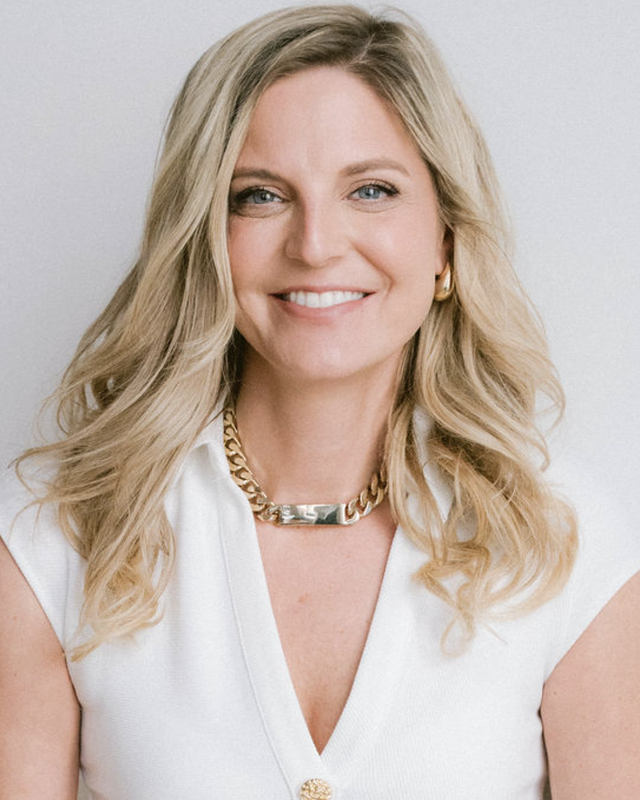
Rebecca Kacaba spent more than a decade as a capital markets lawyer on Bay Street before deciding, in 2016, to build the platform she believed the industry was missing. DealMaker, the company she co-founded with Mat Goldstein, has since powered more than $2 billion in online capital raising for brands including the Green Bay Packers and Pacaso.

In this In Profile, the DealMaker CEO discusses testifying before Congress, the case for raising regulatory caps, and why retail investors deserve a real seat at the table.
Tell us more about your company and its purpose
DealMaker is a technology platform that lets companies raise capital directly from retail investors. We built it because the traditional capital raising process was slow, expensive, and closed off to everyday investors. Companies using our platform have raised over $2 billion to date, from startups to household names like the Green Bay Packers and Pacaso. Our purpose is simple: make raising capital as straightforward as running an e-commerce store, and give retail investors a real seat at the table. For too long, access to high-growth investment opportunities was reserved for institutions and accredited investors. We think that’s backwards. Everyday Americans should be able to invest in the companies they believe in, not just watch from the sidelines.
What are some of your recent achievements you’d like to highlight?
Testifying before the U.S. House Financial Services Committee was a career highlight. I presented data showing how the JOBS Act could unlock billions in capital formation and tens of thousands of new jobs. That’s the kind of impact I want DealMaker to have beyond just our platform. Pacaso’s recent raise through DealMaker is a great example: it showed retail investors participating alongside institutional and VCs in a high-growth company. We’ve also been recognised on Deloitte‘s Technology Fast 500 and named one of Fast Company’s Best Workplaces for Innovators. The achievement I care most about though is getting more great businesses funded and giving everyday people the opportunity to own the brands they love, and participate in investing.
How did you get into the fintech industry?
I spent over a decade as a capital markets attorney, most of it on Bay Street advising companies on how to raise money. I saw the same problem over and over: the process was paper-heavy, expensive, and built for institutions, not for everyday investors or the companies trying to reach them. I kept thinking there had to be a better way. In 2016, my co-founder Mat Goldstein and I decided to build it ourselves. Neither of us came from a traditional tech background. We came from law, which meant we understood the regulatory maze better than most, but had to learn how to build software from scratch. That combination turned out to be an advantage. We knew exactly which problems needed solving because we’d lived them from the inside, advising clients through broken processes for years. Being the implementor of tremendous legislation like the JOBS Act is exciting and an honour.
What’s the best thing about working in the fintech industry?
The pace of change. Fintech moves fast, and that means the rules that felt fixed five years ago are being rewritten right now. I get to be part of conversations, in Congress, with regulators, with founders, about what capital access should look like going forward. That’s rare in most industries. I also love that the work is tangible. When a company raises capital through our platform and uses it to hire people, expand, or launch a product, that’s a direct, visible result. The other thing is that fintech attracts people who want to fix something broken, not just build another app. Most people I work with, whether at DealMaker or at the companies we serve, are motivated by making a system more fair and more open. That shared mission makes the work genuinely energising.
What frustrates you most about the fintech industry?
Too much of the industry still treats retail investors as a risk to be managed rather than a resource to be included. That mindset is outdated, and it’s not backed by the data we’re seeing. Founders on our platform have raised a total of $2.8 billion via their retail base, and we’re seeing 23.5 per cent year-on-year growth in retail investors, with almost 90,000 new investors so far in 2026. Ordinary people are hungry for a stake in their favourite private companies. A solid example is that of the Green Bay Packers, whose 176,000-plus fans turned into shareholders and raised a total of $65.8 million via a common stock offering in just three
months. That frustration is fading, though, as larger private companies allocate bigger share allocations to non-accredited investors.
How have your previous roles influenced your career?
My psychology degree turned out to be more useful than I expected. I use it every day, whether I’m reading a room in a negotiation or figuring out what actually motivates an investor to say yes.
Cold sales came first, though. I worked at my dad's business as a teenager, making cold calls. That experience shaped how I think about founders. If you can’t walk in a room and sell something to a stranger, you’re going to struggle. It’s one of the most underrated skills in this industry.
Law is what gave me the opening to start DealMaker. I learned from lawyers who were sharp in a specific way. They didn’t just solve the problem in front of them. They looked underneath it, found the other problems hiding there, and built solutions that closed off all of them at once. That kind of thinking shapes how I approach everything now, from product to strategy.
What’s the best mistake you’ve ever made?
I make so many mistakes it’s hard to pick a favourite! Recently, a departing employee sent me the nicest message about my leadership and what working at DealMaker meant for his career. I regret having to say goodbye to him and his excellent work ethic, but it’s a good reminder that even when you get things wrong along the way, and I have, more than I’d like to admit, the impact you have on people can outlast the mistakes.
That’s the real lesson. Leadership isn’t about avoiding mistakes. It’s about what people take away from working alongside you, even after they’ve moved on.
What has the future got in store for your company?
We’re focused on continuing to give access to everyone to own the brands they love. That includes expanding access to areas like private markets and pre-IPO opportunities, which have historically been closed to everyday investors almost entirely. We’re also investing heavily in the technology side, making the platform smarter and more automated so companies can run raises with less manual work and more visibility into what’s actually happening with their capital. On the advocacy side, we’ll keep pushing for regulatory reform. The Reg CF and Reg A+ caps need to rise to reflect where the market actually is today. Longer term, my goal is for DealMaker to be a core part of how companies think about raising capital, not an alternative path, but a standard one. Retail investors have shown they’re a loyal, engaged source of capital. We want the infrastructure to reflect that.
What are the next key talking points or challenges for your industry as a whole?
Market perception. Retail has a strong role to play in the capital markets that would be good for the economy. The gig economy can also be the investing economy. Regulation caps under Reg CF and Reg A+ are a key issue. The data is clear that raising these limits would drive real capital formation and job creation, and I expect this conversation to keep gaining momentum in Washington. I’d also point to the growing role of AI in investment access and trading. As AI tools become more central to how people invest, the industry needs to make sure retail investors aren’t left behind or given inferior access compared to institutions. Finally, expect continued debate over tokenised and pre-IPO equity access. That’s an area where the technology is moving faster than the regulatory framework, and the industry will need to figure out how to close that gap responsibly.
The post In Profile: Rebecca Kacaba, CEO and Co-Founder of DealMaker appeared first on The Fintech Times.