
Since 2008 the regulatory project in banking has been about capital: how much a bank holds, how liquid it is, and whether it could survive a run. The money-laundering record of the same period has been less reassuring. The Financial Conduct Authority fined Barclays a combined 42 million pounds in July 2025 over two separate financial crime failures, and the European Commission puts the proceeds of organised crime in the EU at around 139 billion euros a year.

The contributed piece below argues that those two facts belong together: that the plumbing which moves money is now a bigger systemic risk than the reserves sitting behind it, and that rules-based transaction monitoring is the reason. Its author runs a company that sells AI-based monitoring to banks, so the conclusion is not a disinterested one, and readers should weigh it in that light.
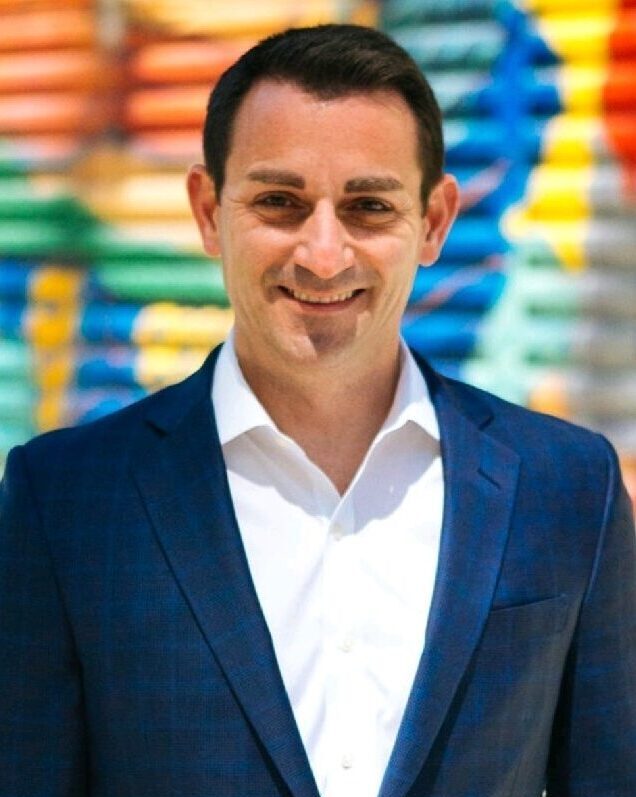
Brad Levy is chief executive of ThetaRay, a provider of AI-based financial crime detection and transaction monitoring to banks and fintechs. The article that follows sets out his opinion.
The financial industry has spent the last decade meticulously perfecting balance sheets, capital cushions and liquidity ratios. While it has been busy protecting cash reserves, the literal pipelines that move cash around have been decaying from the inside out, with bad actors leveraging legitimate avenues to move criminal money. With record regulatory fines and billions of dollars laundered, these activities jeopardise the whole system. As a result, the next financial crisis will emerge from financial markets losing trust in the networks themselves before a single bank runs out of money.
The cracks are already beginning to appear. The UK’s Financial Conduct Authority (FCA) targeted Barclays last year over deep-seated, historic vulnerabilities in its anti-money laundering processes, revealing signs of compliance design failures. Even regions held up as standards of clean banking are showing faultlines. In Sweden, a recent public finance analysis revealed that the criminal economy now generates an annual turnover equivalent to 5.5 per cent of the country’s GDP. Petra Lundh, Sweden’s national police chief, has openly warned that this illicit capital is seeping into legitimate industries and society at large.
The financial industry must ensure that networks are vigilantly guarded, and that trust is reinstated before the next crisis is triggered.
When rules-based solutions are the problem
Mainstream banks proudly protect financial rails and critical infrastructure with historically proven, well-known, rules-based tools. And that is precisely the issue. At this point, bad actors are well versed in rules-based systems, knowing exactly how to circumvent them while taking advantage of fragmented global networks.
Behind the scenes, chaos reigns at many banks, where compliance teams spend a third of their day clearing junk alerts, too busy to dig into hidden risks and connections. This creates a dangerous ‘operational fiction’: the illusion of security because people are busy typing, while very little actually moves forward. Simultaneously, sophisticated criminal networks exploit the situation by using multi-layered, automated digital velocity to slip right under static rule thresholds completely unnoticed.
As a result, global regulators are revising their rulebooks for financial institutions. The European Commission has overhauled its confiscation and asset recovery policy, noting that organised crime successfully launders an estimated 139 billion euros every year through mainstream markets.
In the US, FinCEN is looking to fundamentally reform financial institution AML programmes with a proposal released this year intended to lead to more effective outcomes for financial institutions. These new approaches have one thing in common: banks and fintechs must invest the required resources to identify and stop large-scale systematic threats.
One thing regulators and boardrooms around the world can agree on is that compliance is the next great global platform, integral to safeguarding financial networks and, ultimately, trust. Compliance tactics must follow suit, and shift from merely checking the box to proactive protection that guarantees financial integrity.
When trust erodes
The cracks in standard AML practices are the industry’s worst kept secret. The lack of trust among global regulators is palpable, given their intense overhaul of rules and regulations. Investors tend to focus on cash reserves, and treat compliance issues as a box to be checked rather than a real threat. For now.
As banks continue to be hit with billion-dollar fines by regulators, the more money laundering increases and infiltrates legitimate infrastructures, the more compliance failures will erode trust in financial institutions as a whole. We must begin addressing this issue as an industry before it spurs the next big financial crisis.
Transparent detection over hype
Change does not happen overnight, and tier-one financial institutions cannot be expected to completely stop and replace their compliance infrastructures in one dramatic swoop. Adding more rules, processes and bodies will not move the needle either. Rather, modernisation can be implemented via AI integrations that build upon and leverage current systems, turning static processes into intelligent defenders of global liquidity.
The conversation around AI is mostly held in the future tense, and in the promise of agentic AI to solve the operational crisis. However, we must stop talking about agents as a future roadmap item. Early adopter financial institutions are already in live production, while others remain in the strategy phase.
Unsupervised machine learning models and autonomous AI agents are already at work on global rails today, removing any lag time from processing transactions. In order to be approved by regulators, the agents deliver transparent, explainable results, far from the black box. They map red flags directly to a bank’s specific risk profile, delivering tailored results.
Agentic AI is also handling the low-risk busywork, allowing compliance teams to pivot from data gatherers to decision makers and investigators focused on high-risk cases. The AI systems do not require humans to trigger manual queries, but run continuously: investigating, contextualising data anomalies and closing complex AML cases.
Success in this high-speed, interconnected global economy is dictated by the speed at which a firm converts raw data into information, intelligence, insights and action.
The mission to wipe out financial crime requires patient urgency. Building globally accepted infrastructure takes time and institutional grit. But deploying the tools to defend it must happen immediately. This decade has been defined by disruption, and institutions that stay static will be guaranteed to fail. It is time to choose whether we will build an automated infrastructure of trust, or get left behind by its absence.
The path forward is defined by our collective capacity to evolve. By embracing new, adaptive intelligence, the financial industry is showcasing a remarkable ability to repair foundational cracks, as well as fundamentally reimagine the architecture of trust. As we make business more secure, efficient and inherently more reliable, we are entering an era of renewal. It empowers us to outpace threats, rebuild the integrity of our global financial networks, and ensure they remain the secure, trusted backbone of the modern economy.
The post A Failure of Trust: The Next Financial Crisis Starts in the Pipes appeared first on The Fintech Times.


