
Cross-border payments are getting faster, but the capital behind them has not kept pace. Payment companies still pre-fund accounts across currencies and markets so that transactions can settle, leaving money idle that could otherwise go into hiring, better services or new markets.

Arf, a Swiss-regulated financial institution, provides stablecoin-based settlement liquidity to licensed financial institutions, bridging fiat and stablecoin rails for B2B payment providers across the US, UK, EU, UAE, Hong Kong, Singapore and beyond.
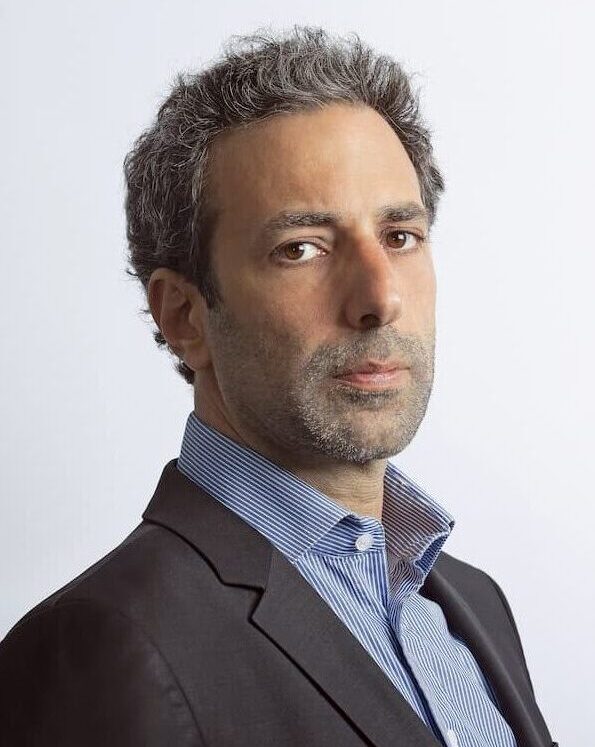
In this Behind the Idea, Ali Erhat Nalbant, co-founder and CEO of Arf, discusses the pre-funding problem the company was set up to solve, how its model has moved from direct lending to embedded infrastructure, and where it goes next.
Tell us more about your company and its offering
Arf is a Swiss-regulated global treasury platform providing liquidity and same-day settlement for international financial institutions. We enable international payments across fiat and stablecoin rails, offering IBANs, FX, and scalable treasury infrastructure.
As payments become faster, more global and increasingly real time, liquidity has become a major bottleneck. Innovations like faster rails and stablecoins are changing how money moves, but advances in speed cannot ultimately be realised if liquidity still determines when payments settle.
Our platform changes that by providing settlement liquidity, allowing financial institutions to support payment flows, enter new markets and scale without continually raising debt or diluting equity. We bridge fiat and stablecoins to deliver same-day liquidity to B2B payment providers, so their clients can access capital at the moment they need to send, rather than after a wire clears. Put simply, we help liquidity move as freely as payments, so our clients can grow faster while putting more of their own capital to work.
What problem was your company set up to solve?
We set up the company to solve a simple but persistent problem: payment businesses need liquidity exactly when demand appears, but traditional funding is often too slow, rigid and expensive. That means companies either hold excess capital that sits idle, which diverts capital away from company growth, whether that’s hiring, investing in better services or scaling to new markets, or they risk being caught short when payment volumes spike.
For decades, financial institutions have relied on prefunding accounts across currencies and markets to ensure liquidity is available wherever and whenever a payment needs to settle. Our aim is to make liquidity work more intelligently, by providing on-demand funding that can scale with real payment activity.
Ultimately, we want to ensure capital moves to where demand exists, when it is needed, so we can eliminate the trade-off between speed and capital efficiency in cross-border payments.
Since launch, how has your company evolved?
When we started Arf, the idea was simple: payment companies shouldn’t have to lock up capital just to guarantee they can settle. What’s evolved since then is the scale and sophistication of how we deliver that.
We’ve grown from serving individual financial institutions directly to embedding liquidity into the platforms and infrastructure they already use, so on-demand funding becomes part of their existing operations rather than a separate relationship to manage.
Today, we’ve processed more than $18bn in cumulative settlement with zero defaults across more than 1,400 days, tracked live on a public dashboard, not just reported internally. Our capital turns over 4.78 times per month, reflecting how actively our liquidity is being deployed across settlement flows.
What has been the biggest challenge or most ‘tricky moment’ to overcome?
One of the biggest challenges has been operating at the intersection of financial services, regulation, and new technology. Building a blockchain-based solution for a highly regulated industry required significant effort to establish the right regulatory and operational foundations, including becoming a regulated financial institution in Switzerland.
At the same time, demand has consistently been ahead of the capital available to us. We have had to learn how to make limited working capital work as efficiently as possible while continuously improving the model. Another challenge is that there is rarely a one-size-fits-all solution in cross-border payments. Every market and financial institution has its own requirements, which means we often have to solve problems individually and keep adapting as we scale.
What are your biggest achievements or ‘proudest moment’ so far?
I’m proud of how far we’ve scaled while staying focused on the core problem we set out to solve. We’ve now processed more than $18bn in cumulative settlement with zero defaults across more than 1,400 days. But beyond the numbers, I’m particularly proud of how this model has evolved from something transactional into real infrastructure.
We’re seeing partners across payments, stablecoin infrastructure and settlement networks build on top of what we’ve created, rather than simply using Arf as another financial service. That’s a meaningful shift for us.
How would you describe the culture of your company?
I would describe our culture as entrepreneurial, persistent, and deeply focused on solving real problems. We work on complex problems where there is rarely a simple, one-size-fits-all solution, so we stay very close to our customers and keep solving problems one by one.
There is also a strong culture of resilience. Building something new in financial infrastructure takes time, and there is always another challenge to solve and another piece to put in place. We are ambitious and excited about what we are building, but we also understand that progress comes from consistently doing the hard work. At the same time, we take regulation, compliance, and accountability very seriously because we are building infrastructure for the financial system.
What’s in store for the future?
Our focus is on scaling what we have built and making liquidity more accessible for financial institutions around the world. We see significant opportunities to expand into new markets, deepen our relationships with banks and financial institutions, and support more cross-border payment corridors, particularly in regions where prefunding still ties up the most working capital.
As the market continues to evolve, we want to keep building infrastructure that makes cross-border payments faster, more transparent, and more efficient. There is still a huge amount of liquidity trapped in traditional settlement processes, and our ambition is to play a meaningful role in changing that.
The post Behind the Idea: Arf appeared first on The Fintech Times.

