The following is an in-depth analysis of the fintech and wider digital economic development of African nation Seychelles.
Seychelles presents a different fintech story from much of Africa.
The country does not have a large population, an extensive start-up market or the same financial inclusion challenges seen across many continental economies. Instead, its opportunity lies in using digital finance to connect a geographically dispersed island state, modernise an established financial services industry and reduce some of the economic vulnerabilities associated with tourism dependence.
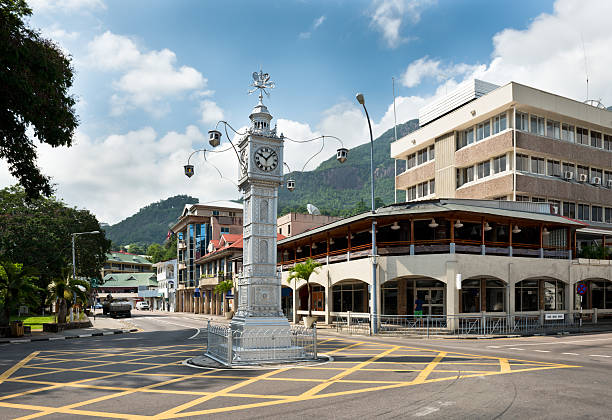
Victoria, on the island of Mahé, remains the country’s commercial and financial centre. The banking sector includes institutions such as Absa Bank Seychelles, Mauritius Commercial Bank Seychelles, Nouvobanq and Seychelles Commercial Bank. Alongside domestic banking, the country has developed an international financial services industry spanning company administration, capital markets, insurance and investment services.
According to the International Monetary Fund, Seychelles’ nominal gross domestic product (GDP) is projected to reach approximately $2.25billion this year, with GDP per capita of around US$17,670. Although this remains among the highest in Africa, the IMF expects economic growth to moderate to around 1.5 per cent this year following an estimated 5.1 per cent expansion last year, largely reflecting weaker tourism demand and wider geopolitical pressures affecting international travel.
Fintech as resilience rather than disruption
In larger markets, fintech is often presented as a disruptive force challenging traditional banks. In Seychelles, its importance is considerably more practical.
Digital financial services can reduce the cost of serving customers across multiple islands, improve access to government and commercial services and make the economy less dependent on cash and physical banking infrastructure. They also support tourism operators, fisheries, merchants and small businesses that rely on efficient domestic and international payments.
The Central Bank of Seychelles (CBS) has therefore made payment-system modernisation a central part of its broader digital transformation agenda. Its 2025 Annual Report highlights continued work on the National Payment System Modernisation Plan, financial-sector resilience and digital financial infrastructure, while the Bank’s Strategic Plan for 2024–2028 identifies digital payments and financial innovation as long-term priorities.
Moving beyond paper-based payments
One of the clearest examples of this transition has been the gradual withdrawal of cheque usage.
The Central Bank began phasing out cheques for individuals from January 2025 before extending the process to businesses and other users from January 2026. The objective is to encourage safer, faster and more efficient electronic alternatives while supporting wider adoption of digital payments.
Alongside this transition, banks have continued investing in internet banking, mobile applications, contactless payments and electronic transfers. For a tourism-dependent economy welcoming visitors from across the world, reliable digital payment acceptance has become increasingly important.
The IMF also notes that further financial market reforms-including the introduction of a Real Time Gross Settlement (RTGS) System and a Central Securities Depository (CSD); it will strengthen the country’s financial infrastructure over the coming years.
A stronger regulatory framework for digital assets
Seychelles’ international financial services sector gives fintech another important dimension.
The country has long hosted internationally focused financial businesses, but recent reforms have strengthened oversight of virtual asset activities. The Virtual Asset Service Providers Act 2024 introduced a comprehensive licensing framework covering exchanges, custodians, brokers and other digital asset providers.
The Financial Services Authority (FSA) now oversees licensing and supervision of virtual asset service providers while applying enhanced anti-money laundering and counter-terrorist financing requirements.
Importantly, the IMF notes that Seychelles has moved from being regarded as a lightly regulated crypto jurisdiction towards implementing a comprehensive supervisory framework aligned with international standards. As of early 2026, applications continued to be assessed under the new regime while the FSA developed a fully risk-based supervisory approach.
A specialised fintech opportunity
Seychelles is unlikely to build a fintech ecosystem measured by hundreds of start-ups. Its domestic market is simply too small.
Instead, opportunities are emerging in areas including tourism payments, foreign exchange services, digital identity, regtech, compliance technology, wealth management and financial products linked to the blue economy.
Climate finance is another area where fintech could play an increasingly important role. The government continues developing financing mechanisms to support climate resilience, marine conservation and sustainable investment, creating opportunities for digital financial platforms to improve transparency, reporting and capital mobilisation.
Looking ahead
Seychelles does not need to replicate the fintech models of Kenya, Nigeria or South Africa. Its comparative advantage lies in combining a sophisticated international financial services sector with the flexibility of a small island economy.
The challenge for 2026 this year in 2026 and beyond is ensuring that payment modernisation, stronger digital asset regulation and continued investment in financial infrastructure benefit both international investors and the domestic economy. If that balance can be achieved, fintech will become more than another financial service-it will strengthen the country’s long-term economic resilience while reinforcing Seychelles’ reputation as one of Africa’s most innovative small financial centres.
The post Can Digital Finance Strengthen Seychelles? appeared first on The Fintech Times.