With a population of over 18 million people, how has fintech and wider digital impacted economic development in the South American nation of Ecuador in 2026?
Ecuador’s fintech and wider digital economy story in 2026 begins with an unusual foundation for Latin America: dollarisation. Since adopting the US dollar in 2000, Ecuador has had a financial system shaped by monetary stability, conservative banking and a consumer economy closely linked to remittances, trade, oil, agriculture and services. That has made its fintech journey different from some of its larger neighbours. It is not a story of runaway venture capital or regional scale overnight. It is one of gradual digitisation, financial inclusion and a market slowly learning how digital finance can complement a deeply bank-led economy.
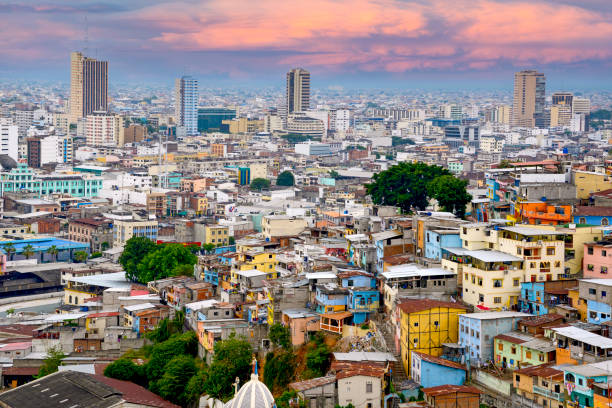
The economic backdrop remains important. Ecuador recorded gross domestic product (GDP) of over $124billion in 2024 with a GDP per capita of around $6,875. The economy is driven by oil, bananas, shrimp, cocoa, mining, tourism, retail and services. Quito is the political capital, while Guayaquil remains the country’s commercial and financial centre due to its port, trade links and business concentration.
From a financial services perspective, major banks such as Banco Pichincha, Banco Guayaquil, Produbanco, and Banco del Pacífico continue to shape the formal financial sector. Much of it is concentrated in Guayaquil.
Yet Ecuador’s economy has also faced volatility. After contracting by two per cent in 2024, the World Bank estimated that Ecuador rebounded last year, helped by exports, investment and private consumption. Although the 2026-2028 outlook remains tied to political stability, fiscal consolidation and the country’s ability to attract investment. This matters for fintech because macroeconomic confidence directly affects consumer credit, investment appetite, digital adoption and the ability of startups to raise capital.
Where Ecuador becomes particularly interesting is in financial inclusion. In many countries, fintech has emerged because traditional banking failed to reach large segments of the population. Ecuador’s picture is more nuanced. According to a 2025 Alliance for Financial Inclusion case study, more than 85 per cent of Ecuador’s adult population owns at least one financial product, showing notable progress in formal inclusion. The challenge, therefore, is not only whether Ecuadorians are included, but whether they are using digital financial services regularly, affordably and confidently.
That distinction shapes the fintech opportunity. Ecuador’s fintech ecosystem is still relatively small compared with Brazil, Mexico, Colombia, Argentina or Chile, but it is becoming more visible in areas such as digital payments, lending, personal finance, remittances, merchant services and financial infrastructure. The Inter-American Development Bank and Finnovista have highlighted that Latin America’s fintech ecosystem grew to more than 3,000 startups by 2023, with smaller markets such as Ecuador, Peru and Guatemala showing some of the strongest growth rates.

Examples help show the direction of travel. Kushki, founded in Ecuador, is one of the country’s most prominent fintech success stories and has become a regional payments infrastructure player across Latin America. Its growth matters because it shows that Ecuadorian fintech can scale beyond the domestic market when it solves regional pain points around payment acceptance, orchestration and digital commerce. PayPhone has also become a recognised digital payments platform, helping individuals and businesses make and receive payments through mobile channels. Meanwhile, BuenTrip Ventures has helped support Ecuadorian and regional startups, reinforcing the link between fintech and the wider entrepreneurial ecosystem.
Banks remain central to Ecuador’s digital financial transformation. The banks mentioned previously have all invested in mobile banking, digital onboarding, online services and improved customer experience. This reflects a familiar Latin American pattern: fintechs may create the pressure for innovation, but banks often provide the trust, scale and infrastructure needed for mainstream adoption.
The regulatory and public policy environment is also evolving. Ecuador’s Ministry of Telecommunications and Information Society published the Digital Transformation Agenda 2025–2030 in April last year, with pillars covering digital infrastructure, digital inclusion, digital economy, emerging technologies, digital government, interoperability, data processing and digital security. This broader agenda is relevant because fintech cannot develop without reliable connectivity, digital identity, cybersecurity, interoperable systems and public trust.
Ecuador had already laid earlier foundations through its Digital Transformation Agenda 2022–2025, which the World Bank analysed as part of wider recommendations for Latin America and the Caribbean’s digital economy. The continuity between these agendas suggests that Ecuador’s digital transformation is no longer an isolated technology conversation; it is increasingly linked to competitiveness, public services, small and medium enterprises (SME) productivity and financial modernisation.
Payments remain the clearest near-term opportunity. Ecuador’s dollarised economy, strong remittance flows and growing e-commerce activity create demand for faster, cheaper and more user-friendly digital payment tools. For merchants, particularly SMEs, the ability to accept digital payments is increasingly tied to formalisation and growth. For consumers, digital wallets and mobile payment tools can reduce friction in daily transactions.
Still, obstacles remain. Ecuador’s fintech ecosystem faces limited venture capital depth, regulatory complexity, cybersecurity concerns, informality, uneven digital skills and trust barriers among consumers who still rely heavily on cash. The domestic market is also smaller than the region’s major economies, meaning Ecuadorian fintechs often need regional ambition to achieve scale.
Yet Ecuador’s fintech story should not be underestimated. Its strongest companies show that innovation can emerge from smaller markets. Its banks are digitising. Its public sector is placing digital transformation on the national agenda. Its consumers are increasingly financially included, even if deeper digital usage remains a work in progress.
The most interesting fintech markets are not always the loudest ones. Ecuador in 2026 is not yet a regional fintech powerhouse. But it is becoming a market where dollarisation, digital policy, bank transformation and entrepreneurial ambition are slowly converging into a more serious digital finance ecosystem.
The post Fintech and Wider Digital Landscape of Ecuador in 2026 appeared first on The Fintech Times.