The tiny Pacific nation of Nauru has a growing fintech and wider digital ecosystem. How does that pan out in 2026?
Nauru’s economic story is one of the most unusual in the world. For a brief period in the 20th century, this tiny Pacific island was among the richest places on earth on a per-capita basis. Its prosperity came from phosphate. This is a resource formed over centuries and mined intensively after independence. In the 1970s, high phosphate prices helped Nauru reach extraordinary income levels, with some estimates placing its gross domestic product (GDP) per capita at around $50,000 in 1975, making it one of the world’s wealthiest countries at the time.
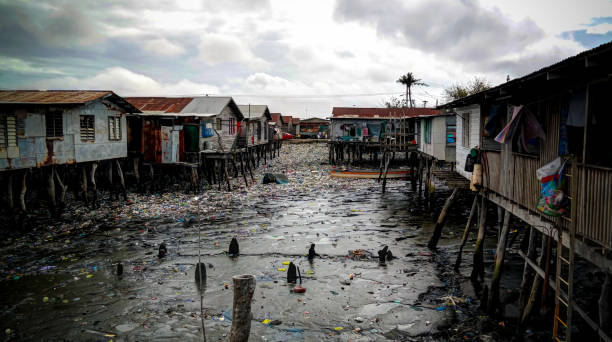
That prosperity did not last. As phosphate reserves were depleted, revenues declined, trust funds were weakened and the country’s economic foundations became increasingly fragile. Nauru’s experience became a cautionary tale about resource dependence, environmental degradation and the difficulty of turning temporary wealth into long-term resilience.
This context matters when discussing fintech. Nauru is not a fintech hub in the conventional sense. It does not have a large domestic market, a mature startup ecosystem or major financial institutions competing for digital customers. Instead, its fintech opportunity is connected to a much broader question: how can a very small island economy use digital finance, better payments and financial governance to build resilience after decades of economic vulnerability?
Today, Nauru’s economy is small, remote and highly exposed to external shocks. According to the World Bank, the country’s GDP per capita remains far below its phosphate-era peak. The Asian Development Bank (ADB) notes that Nauru is seeking to diversify income through secondary phosphate mining, air services and training workers for regional employment opportunities. The International Monetary Fund (IMF) has also highlighted that Nauru’s narrow revenue base, driven mainly by fishing licences and residual phosphate processing, creates challenges for fiscal sustainability and growth.
The island’s main economic activities include public administration, fisheries, residual phosphate activity, development assistance, air services and services linked to regional arrangements. Yaren functions as the de facto administrative centre, while the country uses the Australian dollar. With a population of roughly 12,000 people, Nauru’s scale is unlike most economies discussed in fintech terms.
This is why the starting point for digital finance in Nauru is not disruption. It is basic infrastructure. A small island economy needs reliable banking, affordable payments, digital government services, remittance channels and secure connections to the global financial system. Without these, businesses struggle, households face higher costs and public administration becomes less efficient.

Banking access has been a significant issue. Bendigo Bank has long been an important financial partner for Nauru. In 2023, Bendigo Bank and the Government of Nauru issued a joint statement emphasising that people’s money was safe and held in Australia, with Bendigo regulated by the Australian Prudential Regulation Authority. This year, the Government of Nauru stated that it had made a decision to strengthen its business and financial relationship with Bendigo Bank, underlining how important stable banking relationships are for the country.
For larger countries, banking access may be taken for granted. For Nauru, it is a matter of economic continuity. Correspondent banking, international payments and domestic banking services are essential for trade, public finances, salaries, remittances and household transactions. If these connections weaken, the impact is felt across the entire economy.
This makes digital payments particularly relevant. Nauru’s National Digital Transformation Strategy, published in 2025, explicitly identifies digital ID and digital payments as tools that can improve access to government services and financial systems, support social inclusion and reduce administrative costs. The strategy places digitalisation within a wider national development agenda, rather than treating it as a narrow technology project.
That distinction is important. For Nauru, digital payments could help modernise public services, reduce reliance on paper-based systems, support government-to-person payments and make everyday transactions more efficient. In a small economy, even relatively simple digital improvements can have a meaningful impact.
Digital government could also help address administrative constraints. Small states often face capacity challenges. Ministries and agencies must deliver services with limited human and financial resources. Digital identity, online forms, e-payments and integrated data systems can reduce friction for citizens while improving public-sector efficiency.
Financial inclusion is another area where digital tools could matter. Although Nauru’s population is small, access to modern financial services is still important for households, workers and small businesses. The Asian Development Bank has supported work aimed at strengthening financial inclusion and financial literacy in Nauru, including efforts to introduce the country to more modern financial services.
This is where fintech’s role becomes practical. Mobile banking, digital wallets, online payments and financial literacy tools could help citizens manage money more easily. For small businesses, digital payments could support merchant transactions, tourism-related services, public procurement and record-keeping. For government, digital finance could help improve transparency and reduce transaction costs.
Nauru’s international workforce links are also relevant. As the country trains workers for regional employment opportunities, remittances may become more important to household income over time. Digital remittance channels can help reduce transfer costs, improve speed and make it easier for families to receive funds securely.
There is also a more controversial digital finance angle: virtual assets. Last year, Nauru announced legislation establishing the Command Ridge Virtual Asset Authority, described as a dedicated virtual asset regulator overseeing virtual assets, digital banking and Web3 innovation. The move positioned Nauru as one of the first Pacific countries to create a dedicated virtual asset regulatory authority.
This is potentially significant, but it must be approached carefully. For small jurisdictions, digital assets can offer opportunities around regulation, innovation and new revenue sources. However, they also bring serious risks, including financial crime, reputational exposure, consumer protection issues and international scrutiny. Nauru’s own history with offshore finance and external dependency means credibility will be critical.
The challenge is therefore not simply to be early. It is to be trusted. If Nauru wants to explore virtual assets, digital banking or Web3-related activity, it will need strong supervision, clear licensing, anti-money laundering safeguards, international cooperation and transparent governance. In a small state, reputational risk can have outsized consequences.
The broader Pacific context also matters. Many Pacific island countries face similar issues: small populations, geographic isolation, limited financial infrastructure, high costs and vulnerability to climate change. Digital finance is increasingly viewed as a tool for improving service delivery and inclusion across the region. The International Telecommunication Union has noted that digital transformation and digitalised services can support social and economic benefits, particularly through e-government and improved service delivery.
For Nauru, climate and environmental resilience are inseparable from economic policy.
Phosphate mining left deep scars on the island’s landscape. Today, like other Pacific island states, Nauru also faces climate-related pressures. Digital finance cannot solve these environmental challenges, but it can support resilience through faster emergency payments, better public financial management, digital records and more efficient service delivery.
The country’s intergenerational trust fund is also part of the resilience story.
Nauru’s Intergenerational Trust Fund was created to help manage resources for the benefit of future generations. Its 2025 annual report notes the importance of government contributions and the volatility of fisheries revenue. Strong financial governance, transparency and digital systems can support these kinds of long-term fiscal tools.
This connects back to the lesson of phosphate. Nauru once had extraordinary wealth, but wealth alone did not guarantee resilience. Today, the country’s development challenge is about building systems that are sustainable, transparent and adaptable. Fintech, if used well, can contribute to that goal.
However, the constraints are substantial. The domestic market is extremely small. Digital skills and institutional capacity must continue developing. Financial technology firms may see limited commercial scale. Cybersecurity and consumer protection frameworks will need strengthening. Any attempt to position Nauru as a digital asset jurisdiction will require careful alignment with international standards.
There is also the question of trust. Citizens must trust digital payments. International partners must trust Nauru’s regulatory systems. Businesses must trust that banking relationships and payment channels will remain stable. Without trust, digital finance cannot become a meaningful development tool.
Ultimately, Nauru’s fintech story is unlike almost any other. It is not about unicorns, venture capital or mass-market apps. It is about a tiny island state trying to modernise financial infrastructure after one of the most dramatic economic rises and falls of the modern era.
For Nauru, digital finance should be understood as part of a broader resilience agenda. It can help improve public services, strengthen financial inclusion, support small businesses, enable remittances and create more efficient government systems.
The lesson from Nauru’s past is clear: temporary wealth can disappear. The opportunity now is to build stronger institutions and smarter systems. In that sense, fintech’s role in Nauru is not to recreate the riches of the phosphate era. It is to help ensure that the country’s next economic chapter is more connected, more transparent and more resilient than the last.
The post Nauru: From Phosphate to a More Resilient Future with Fintech? appeared first on The Fintech Times.