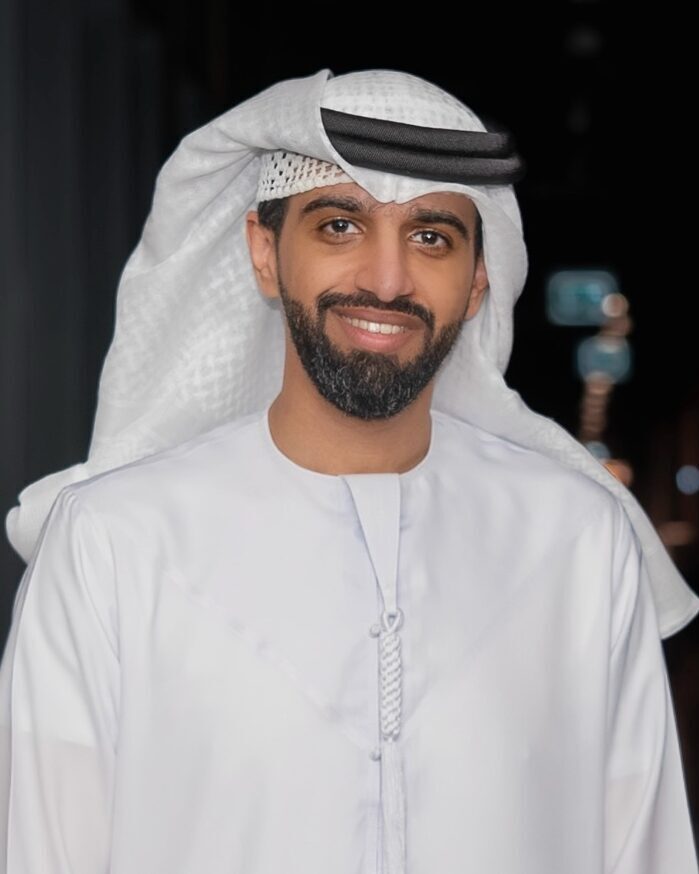
Dubai recorded 1.38 million tenancy contracts worth AED 126.4 billion in 2025, by figures Rentify cites. For the company’s co-founders, Rashed Hareb and Rajneel Kumar, that scale is exactly the problem their new product, Earn AI, is built to manage.

In a written interview with The Fintech Times, the pair set out how an AI operating layer sits on top of the rent-payment and embedded finance rails Rentify has already built, and where humans stay in the loop.

Rent, argues Hareb, Rentify’s co-founder and chief executive, is the largest recurring payment in most people’s lives and the primary income stream for property owners, yet it runs across disconnected systems. “Payments, renewals, collections and operations sit apart. Earn AI brings them together and shows property teams where income is being lost,” he says.
Kumar, his co-founder, traces the product back to the company’s starting point. “Rentify started by building the financial infrastructure around rent: payments, financing and reconciliation. Earn AI sits on top of that,” he says. “Once you connect property and payment data, you can automate the workflows that still sit across spreadsheets, emails and individual people. The opportunity is not another dashboard. It is an operating layer that helps every unit earn better.”
At the scale of the Dubai market, Hareb says, property management becomes a coordination problem. Renewals, payments, vacancies and tenant issues all move at once, and when they sit in separate tools, teams spend the day chasing information instead of acting on it. Kumar puts numbers on the same point. “That is roughly 3,800 tenancy contracts every day, at more than AED 90,000 per contract on average. At that scale, small operational misses become material. A late renewal, an unreconciled payment or an unbilled charge might look insignificant individually, but across thousands of units they compound quickly. Managing 10 units is a memory problem. Managing 10,000 is a systems problem.”
In practice, Hareb describes one view of the portfolio: a manager sees where attention is needed, where income is at risk and what to handle first, without opening four systems. Kumar walks through the mechanics. “A landlord can give us the data they already use, even an imperfect spreadsheet, and we can structure it into a live portfolio in under 60 seconds. From there, specialised agents take over workflows. Our Renewal Agent, for example, starts around 120 days before expiry, interprets more than 50 data points and can execute more than 20 actions through to signed, paid and updated. The property manager stays in control of the key decisions.”
So which decisions genuinely improve with AI? “AI earns its place where signals are numerous and decisions are continuous: pricing, occupancy, renewals, payment behaviour, tenant engagement,” Hareb says. “It catches patterns across a portfolio that are difficult to see unit by unit and catches them earlier.” Kumar agrees that AI is strongest where there are too many signals for a person to monitor continuously, and says the company’s ingestion workflows are currently around 94 per cent accurate. “The important part is that the
remaining uncertainty is flagged, not guessed. That is the principle across Earn AI: the system detects, analyses and prepares. The human keeps the decisions that require judgement, accountability or commercial discretion.”
The fintech junction is where the founders say Rentify differs from a standalone AI tool. “Rent is not an administrative task, it is the recurring financial relationship between tenant and owner,” Hareb says. “Connecting payments to operations gives landlords a clear view of both the asset and the income it produces and gives tenants a simpler way to pay.” Kumar goes further. “The payment and embedded finance rails already sit underneath the operating layer. So a renewal does not stop at an alert. It can move into signature, payment and reconciliation. A missed payment can immediately become a collections workflow. Property events and financial events sit in the same system, which gives landlords a much clearer view
of what each unit is actually earning.”
“Trust is fundamental to the product,” Hareb says of data accuracy and privacy. “Property and financial information is commercially sensitive, so accuracy, privacy and responsible handling are designed in, not added later.” Kumar’s operating rule is simple: where confidence is high, the workflow moves forward, and where confidence drops, the system asks for human confirmation rather than inventing an answer. Both place the platform inside Dubai’s wider smart city agenda. “Dubai has already digitised much of its real-estate infrastructure,” Kumar says. “The next step is making that data actionable, not just available.”
As for results, the founders point to the scale the company says is already running on the platform: enterprise portfolios representing more than AED 22 billion in property assets and over AED 1.3 billion in annual rental value. “That is demand for technology that improves portfolio operations, not technology that reports on them,” Hareb says. Kumar adds that, by the company’s measure, the Renewal Agent saves roughly two hours per renewal. “At 1,000 renewals, that is about 2,000 hours, or 250 working days, returned to the team. The roadmap is straightforward: more agents across collections, renewals, tenant experience and operations, all working from the same underlying data.”
For Hareb, the direction of travel is set. “Next is extending the AI workforce across more of the rental lifecycle.”
The post Rentify’s Earn AI: An Operating Layer for Dubai’s Landlords appeared first on The Fintech Times.