
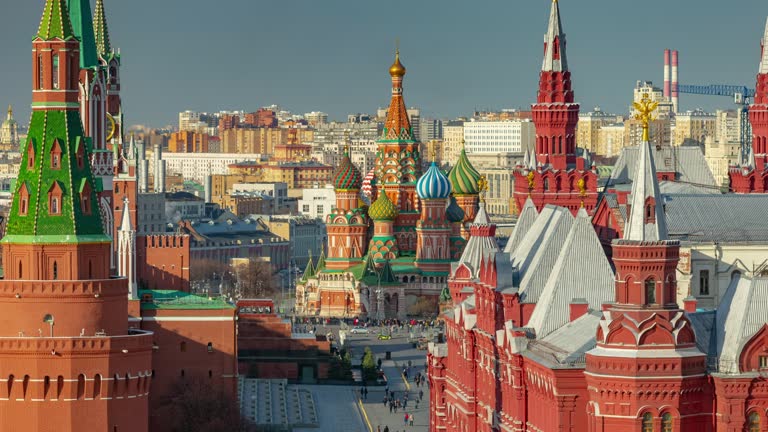
The following showcases the 2026 developments of fintech and wider digital landscape of Russia.
Before 2022, Russia already possessed one of Europe’s most developed digital-banking markets.
Consumers could open accounts remotely, receive near-instant credit decisions and manage payments, investments, insurance and shopping through sophisticated financial applications. Banks such as Sber and Tinkoff-now T-Bank-were becoming technology ecosystems rather than conventional lenders.
The invasion of Ukraine and the sanctions that followed did not begin Russia’s fintech transformation. They changed its purpose. As international payment networks withdrew, Russian banks lost access to parts of the global financial system and foreign technology became more difficult to obtain. Fintech ceased to be primarily about convenience or competition. It became part of the infrastructure required to keep the domestic economy operating.
Russia is therefore building something unusual: an advanced digital financial system that is increasingly efficient inside the country but progressively disconnected from much of the world outside it.
A large economy turning inwards
Russia remains one of the world’s largest economies, supported by energy, mining, manufacturing, agriculture, defence production and an extensive services sector.
Moscow is the country’s dominant financial centre, while major institutions include Sberbank, VTB, Gazprombank, Alfa-Bank and T-Bank. The International Monetary Fund (IMF) estimates Russian gross domestic product (GDP) per capita at approximately $18,530 this year.
These figures sit within an increasingly distorted economic environment. Military expenditure has supported production and employment in certain sectors, while sanctions, labour shortages, inflationary pressure and restricted access to international capital continue to affect the wider economy.
Digital finance has helped preserve the functioning of domestic commerce. It cannot, however, remove the structural cost of reduced international integration.
The payment system sanctions could not switch off
Russia’s financial authorities had been preparing domestic alternatives to foreign payment infrastructure long before the latest sanctions. The National Payment Card System was established in 2014, following the first wave of restrictions connected to Russia’s annexation of Crimea. It subsequently launched Mir, Russia’s national card network.
When Visa and Mastercard suspended their Russian operations in 2022, cards already issued by Russian banks continued working domestically because their transactions were processed through national infrastructure.
Mir then expanded rapidly. By 1 April this year, approximately 493.9 million Mir cards had been issued-far more than Russia’s population because individuals can possess several cards. The network has become deeply embedded in salaries, pensions, welfare payments and everyday retail transactions. It is increasingly linked to transport, public services and direct government payments.
This represents one of Russia’s most consequential fintech achievements. A national payment system originally created as a contingency became the backbone of the country’s card market. Its weakness appears beyond Russia’s borders. Sanctions have encouraged foreign banks and governments to restrict Mir acceptance, limiting its usefulness for international travellers and cross-border commerce.
Faster payments replaced the card for many transactions

Mir is only part of Russia’s domestic financial infrastructure. The Faster Payments System, usually known by its Russian abbreviation SBP, allows users to transfer money instantly through telephone numbers and pay merchants using QR codes. It was introduced by the Bank of Russia in 2019 and has since become an everyday alternative to card payments.
By 1 July this year, 224 banks were participating in the system. SBP had processed a cumulative 52.5 billion transactions worth ₽279.8 trillion ($13billion). At the end of 2024, seven out of ten Russian residents had used SBP for transfers, while five out of ten had used it to pay for purchases.
For merchants, QR-based payments can be less expensive than traditional card acquiring. For regulators, SBP reduces dependence on commercial payment networks while increasing competition between banks.
It also illustrates how Russia’s fintech development has become increasingly state-directed. The most important innovations are no longer emerging solely from start-ups. They are being built as national utilities.
Fintech companies became ecosystems
Russia nevertheless retains a substantial private fintech sector. They include:
- T-Bank, formerly Tinkoff Bank, remains one of the most recognisable examples. Beginning as a branchless credit-card provider, it developed into a digital ecosystem covering banking, brokerage, insurance, travel and services for businesses.
- Tochka has concentrated on entrepreneurs and SMEs, providing digital accounts, accounting tools, payment services and administrative support. Its position in business banking has made it strategically valuable within Russia’s consolidating technology sector.
- YooMoney, previously known as Money, operates digital wallets and online payment services, while YooKassa provides payment acceptance for online merchants.
Sber has moved even further beyond traditional banking. Its ecosystem combines payments and lending with e-commerce, cloud services, artificial intelligence, entertainment and other digital products.
This model is not purely a Russian invention, but the country’s large population and concentrated banking market allowed financial institutions to build unusually broad platforms. Sanctions have since reinforced that expansion as banks replace foreign software, payment tools and technology providers.
The digital ruble moves towards the public
The next stage is the digital ruble, issued directly through a Bank of Russia platform but accessed through participating banks.
Unlike money held in a conventional bank account, the digital ruble is a liability of the central bank. Russia began a live pilot in 2023 and has gradually expanded participants and transaction types.
Large-scale introduction is scheduled to begin on 1 September this year. Major banks will be required to allow customers to open digital-ruble wallets and conduct transactions, while large retailers will begin accepting digital-ruble payments. Smaller institutions and merchants will follow in stages through 2028. The system will use a universal QR code compatible with the existing faster-payments infrastructure.
Supporters argue that the digital ruble could lower payment costs, automate transactions and improve access to public funds. It may also eventually support carefully controlled cross-border settlements with countries willing to connect their digital-currency systems. Critics see a different possibility: a payment instrument capable of increasing state visibility over how money is transferred and spent.
Looking ahead
Russia will probably continue producing technically advanced financial infrastructure. The Bank of Russia’s priorities for 2025–2027 include payment development, regulatory technology, cybersecurity and international cooperation with accessible partner markets.
Yet innovation should not be confused with openness. Russia’s domestic payments are fast, widely adopted and increasingly independent. Its international financial connections are narrower, more expensive and politically constrained.
The country’s fintech system has proved that sanctions cannot easily return a digital economy to cash. The larger question is whether technological sovereignty can compensate for financial isolation. Russia may continue building one of the world’s most sophisticated national fintech systems-while finding that fewer countries are willing or able to connect to it.
The post Russia: When Fintech Becomes a System of Economic Defence appeared first on The Fintech Times.
