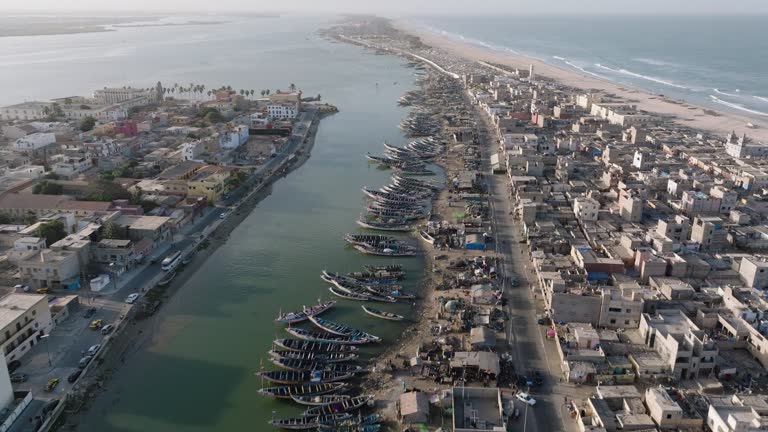
The following is an in-depth analysis of the fintech and wider digital economic development of African nation Senegal.
In many parts of the world, fintech has evolved around making banking more convenient. In Senegal, it has played a more fundamental role by bringing millions of people into the formal financial system for the first time.
This distinction has helped make Senegal one of Francophone Africa’s most closely watched digital finance markets. While traditional banking infrastructure continues to develop, mobile money, digital payments and fintech have become essential tools for supporting entrepreneurship, expanding financial inclusion and strengthening one of West Africa’s fastest-growing digital economies.
As discussed in Fintech Overview of Senegal in 2024, the foundations for digital finance were already taking shape. By this year, however, the conversation has shifted from expanding access to building an increasingly interconnected financial ecosystem capable of supporting regional trade and economic growth.
Senegal’s economy is projected to reach approximately $40.5billion, while gross domestic product (GDP) per capita is expected to exceed US$2,050. Dakar remains the country’s financial and commercial centre, supported by institutions including Banque Atlantique Sénégal, Société Générale Sénégal and Coris Bank International Sénégal. Beyond financial services, agriculture, fisheries, mining, tourism and the country’s emerging oil and gas sector continue to shape economic activity.
Digital finance has become everyday infrastructure
Unlike many developed markets, Senegal’s fintech revolution has largely taken place through mobile phones rather than traditional bank branches.
Digital wallets are increasingly used not only for person-to-person transfers but also for merchant payments, utility bills, salary payments and government services. As a member of the West African Economic and Monetary Union (WAEMU), Senegal also benefits from a shared regulatory framework overseen by the Central Bank of West African States (BCEAO), helping create common standards for payment providers operating across the region.
The BCEAO has continued strengthening its regulatory framework for payment institutions and fintechs while supporting greater interoperability across the regional financial system.
Mobile money remains the growth engine

Few companies have transformed Senegal’s financial landscape as dramatically as Wave. Since entering the market, unicorn Wave has significantly lowered the cost of domestic money transfers, encouraging greater competition and accelerating the adoption of digital payments throughout the country. Rather than viewing mobile money simply as a payments product, many consumers increasingly use digital wallets as their primary financial account.
This competitive environment has encouraged innovation across merchant acquiring, QR-code payments, digital savings and microfinance integration. Other providers, including Orange Money, continue expanding digital financial services as adoption grows across urban and rural communities.
Increasingly, fintech firms are embedding additional services such as savings, lending and merchant finance around mobile money, allowing digital payments to become an entry point into broader financial services. Analysts increasingly view Francophone West Africa as one of Africa’s most promising fintech regions, with Dakar emerging as an important innovation hub.
Regional integration creates new opportunities
One of Senegal’s greatest advantages is that its fintech market extends beyond national borders.
Membership of the WAEMU gives businesses access to a regional market of more than 140 million people using the CFA franc. This enables payment providers and fintech companies to scale across multiple countries under a harmonised monetary framework rather than serving a single domestic market.
For SMEs, exporters and entrepreneurs, more efficient cross-border payments are becoming increasingly important as regional trade expands under the African Continental Free Trade Area (AfCFTA).
At the same time, Dakar continues attracting technology entrepreneurs and investors seeking to build solutions for Francophone Africa, particularly in digital payments, agricultural finance, small and medium enterprises (SME) lending and financial inclusion.
A growing fintech ecosystem
Senegal’s fintech ecosystem remains smaller than those of Nigeria, Kenya or South Africa, but it is steadily diversifying.
Companies operating across payments, merchant services, digital lending and financial infrastructure are increasingly collaborating with banks, microfinance institutions and telecommunications providers. International fintechs are also viewing Senegal as a strategic entry point into Francophone West Africa.
As the BCEAO continues refining its regulatory framework and encouraging innovation, digital financial services are expected to become increasingly integrated across the wider WAEMU region.
Looking ahead
Senegal’s fintech sector illustrates that digital finance is not solely about creating the next technology unicorn. Its greatest contribution has been making financial services more accessible, affordable and relevant to everyday life.
As mobile money evolves into a broader digital financial ecosystem and regional payment integration gathers pace, Senegal is positioning itself as one of Francophone Africa’s leading fintech markets. The country’s long-term success will depend not simply on adopting new technologies, but on ensuring those innovations continue to expand economic opportunity for businesses and consumers across West Africa.
The post Senegal: How Mobile Money Is Impacting Financial Inclusion appeared first on The Fintech Times.