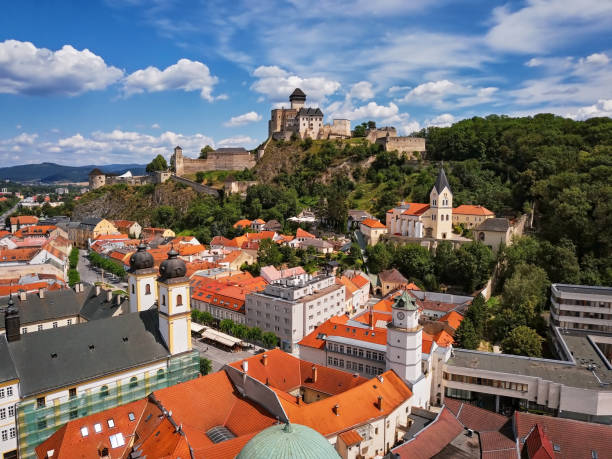
The following showcases an in-depth 2026 overview of the developments of fintech and the wider digital landscape of Slovakia.
Slovakia is better known for producing cars than fintech companies.
Volkswagen, Kia, Stellantis and Jaguar Land Rover all manufacture vehicles in the country, while Volvo is developing another major plant in eastern Slovakia. Few countries produce more cars relative to their population.
This industrial identity matters when looking at Slovakia’s digital financial transformation. Fintech here is not primarily about creating flashy consumer applications or challenging banks from the outside. Instead, technology is becoming embedded within payments, banking and business services across an economy deeply connected to European manufacturing and cross-border trade.
Instant euro payments are becoming standard. Banks are increasingly digital. European fintech companies can serve Slovak customers through the European Union (EU) single market, while domestic technology businesses are finding opportunities in payments, lending, financial software and business services. For Slovakia, fintech is increasingly becoming economic infrastructure.
Europe’s car factory faces a slower 2026
Slovakia has around 5.4 million inhabitants and one of the most industrialised economies in the European Union (EU).
Automotive manufacturing dominates exports, complemented by electronics, machinery, metals, information technology and business services. Bratislava is the country’s principal financial and commercial centre, while major banks include Slovenská sporiteľňa, VÚB banka, Tatra banka and ČSOB.
The economic environment in 2026 is challenging. According to the International Monetary Fund (IMF), economic growth slowed from 1.9 per cent in 2024 to 0.8 per cent last year, with growth expected to remain subdued at around 0.9 per cent by the end of this year. Nominal gross domestic product (GDP) is projected at approximately €142.4billion.
Slovakia faces several longer-term problems, including an ageing population, weaker productivity growth and substantial exposure to changes affecting Europe’s automotive industry. Digitalisation therefore has a wider economic purpose. Improving financial infrastructure can reduce costs for businesses, make payments faster and help small and medium enterprises (SMEs) operate more efficiently across European markets.
Ten seconds is becoming too long

Slovakia’s payment transformation accelerated significantly last year. Instant euro transfers had been available through selected Slovak banks since 2022. However, new European rules fundamentally changed their position within the financial system.
From 9 January last year, all relevant banks became required to receive instant euro payments. From October last year, payment providers were also required to enable customers to send them. The result is that money can now move between participating accounts within seconds, 24 hours a day, including weekends and public holidays.
The National Bank of Slovakia reports that instant payments already accounted for 27 per cent of all SEPA transfers made in Slovakia at the end of 2024, even before universal availability took effect.
This represents an important change in expectations. If a consumer can transfer money from Bratislava to another euro-area account within seconds on a Sunday evening, waiting until the next working day increasingly feels outdated. Fintech innovation is often described through new products. Sometimes the bigger transformation is simply making an existing financial service immediate.
Slovakia does not need its own payment island
Being part of the Euro area fundamentally changes Slovakia’s fintech landscape.
The country does not need to develop a completely separate domestic payment ecosystem. Through the Eurosystem, the National Bank of Slovakia provides access to TARGET Instant Payment Settlement (TIPS), enabling instant euro transactions across participating European financial institutions.
This means a Slovak business can increasingly treat payments to Austria, Germany or elsewhere in the euro area almost like domestic transfers.
For an export-oriented economy, this matters enormously. Slovak manufacturers and small and medium enterprises (SMEs) sit inside supply chains extending across Germany, Czechia, Austria, Poland and other European markets. Faster settlement can improve cash flow and reduce friction between suppliers and customers.
Fintech therefore becomes closely connected with Slovakia’s industrial competitiveness rather than simply consumer convenience.
The fintech ecosystem is small but broader than it looks
Slovakia does not possess the start-up scale of neighbouring Poland or the financial weight of Austria. Nevertheless, a recognisable fintech community has emerged.
The Slovak Fintech Association, established in 2018, provides a platform connecting financial technology companies with regulators, financial institutions and other participants across Slovakia and the wider Visegrád and European markets.
One example of a Slovak-founded fintech is Finax, a Bratislava-based digital investment company that uses automated investment technology to provide wealth-management products. The company has expanded beyond Slovakia into several European markets, illustrating why internationalisation is particularly important for fintech businesses originating in smaller countries.
Another is wflow, which operates in financial automation and accounting technology, while Slovakia has also developed companies specialising in digital lending, payments, cryptocurrency and financial-management software.
Alongside home-grown businesses, international fintech platforms such as Revolut have become familiar to Slovak consumers. This creates an increasingly competitive environment where domestic banks are not merely competing with one another. They are competing with financial applications capable of serving customers across Europe from a single technological platform.
Banks have responded rather than retreated
Slovakia’s established banks have not stood still. Tatra banka has historically positioned itself as an early adopter of digital banking technologies, including mobile banking, biometric authentication and automated customer services. Slovenská sporiteľňa, VÚB and other major institutions have similarly invested heavily in their digital channels.
This makes Slovakia another example of a European market where the boundary between “bank” and “fintech” is becoming increasingly difficult to define. Consumers rarely care whether a service originates from a start-up or a century-old financial institution.
They care whether it works. That competitive pressure has encouraged banks to simplify onboarding, improve mobile applications and integrate payments, investments and personal financial management into digital platforms.
European regulation is doing much of the heavy lifting
Slovakia’s fintech development cannot be separated from Brussels. PSD2 opened banking infrastructure to authorised third parties. The EU Instant Payments Regulation has accelerated real-time transfers. The Digital Operational Resilience Act is strengthening technology and cybersecurity requirements, while the Markets in Crypto-Assets Regulation provides a common regulatory framework for crypto-related businesses.
For Slovakia, European harmonisation is particularly valuable. A domestic fintech company does not ultimately have to think of five million Slovaks as its addressable market. Products designed around EU requirements can potentially be expanded across the European Economic Area.
Likewise, Slovak consumers gain access to financial products developed elsewhere in Europe. The result is a fintech ecosystem whose borders increasingly extend far beyond Slovakia itself.
Looking ahead
Slovakia’s biggest fintech opportunity may have little to do with producing the next European neobank.
Its industrial economy creates demand for faster business payments, automated accounting, SME finance, embedded financial services and better cross-border transactions. At the same time, instant payments and European regulation are making the country’s financial infrastructure increasingly integrated with the rest of the euro area.
Slovakia spent decades building an economy capable of manufacturing products for the rest of Europe. Its next digital opportunity may be ensuring that the financial technology sitting behind those businesses becomes just as efficient.
The post Slovakia: Where Fintech Meets an Industrial Economy appeared first on The Fintech Times.