
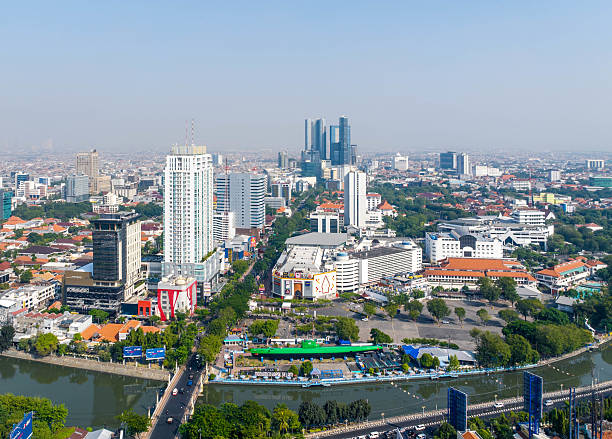
The following is a fintech and wider digital and economic development overview of Indonesia in 2026.
As Southeast Asia’s largest economy and most populous nation, Indonesia is no longer simply an emerging fintech market. It is becoming a system where digital finance, policy and infrastructure converge to drive inclusion across a vast and diverse archipelago.
Indonesia’s gross domestic product (GDP) has grown to approximately $1.5trillion, making it the largest in Southeast Asia based on this metric. It is the only country from Southeast Asia a part of the G20. Its economic base is broad, spanning natural resources (coal, palm oil, gas), manufacturing, services and a rapidly expanding digital economy.
Despite this, the country of over 200 million people has a GDP per capita of around $5,500. There is still room to grow but nonetheless the country has achieved its upper-middle-income status and steady growth driven by domestic consumption and digitalisation.
Digital economic transformation: an archipelago connected by platforms
Indonesia’s digital transformation is shaped by geography as much as policy. With over 17,000 islands, digital infrastructure is not simply a convenience but rather a necessity for economic integration.
The government’s broader development agenda, including the Making Indonesia 4.0 roadmap and digital economy strategies, has focused on expanding digital infrastructure and connectivity, supporting e-commerce and digital platforms, and promoting financial inclusion through technology
Internet penetration has reached approximately 75-78 per cent, with over 210 million users, while smartphone adoption continues to rise rapidly.
Indonesia’s digital economy is projected to exceed $150billion in gross merchandise value (GMV) by this year, driven by e-commerce, ride-hailing and digital financial services.
In this context, fintech has become a critical enabler. It is bridging geographic divides and connecting individuals and businesses to the formal economy.
Financial services sector: digital transformation at scale

The country’s financial hub is Jakarta, home to regulators, financial institutions and the Indonesia Stock Exchange. Among the largest banks are the ‘Big Four’ of Indonesia – Bank Mandiri, Bank Rakyat Indonesia (BRI), Bank Central Asia (BCA), and Bank Negara Indonesia (BNI) – each of them respectively have been at the forefront of digital banking initiatives.
As a whole, Indonesia’s financial services sector has undergone rapid transformation, moving from a bank-centric system to a multi-layered digital ecosystem.
Key drivers include the following: First, growth in digital wallets and QR-based payments; Second, expansion of digital lending and buy-now-pay-later (BNPL) services; and Third, integration of financial services into e-commerce and super apps
The Bank Indonesia (the country’s central bank) and the Financial Services Authority (OJK) have played central roles in shaping this ecosystem, especially the past few years.
Key initiatives include:
- QRIS (Quick Response Code Indonesian Standard) – QRIS has become a cornerstone of Indonesia’s digital payments infrastructure, enabling interoperable QR-based payments across providers. This year, QRIS supports tens of millions of merchants and processes billions of transactions annually.
- Blueprint Sistem Pembayaran Indonesia (BSPI) 2025 –
This roadmap outlines the country’s strategy for digital payments, focusing on interoperability, efficiency and financial inclusion - Open banking and API frameworks – Indonesia has advanced open banking initiatives through the Open API Payment Standard (SNAP), enabling data-sharing and collaboration between banks and fintech firms
- Central bank digital currency (CBDC) “Digital rupiah” exploration –
Bank Indonesia has progressed its digital rupiah (Project Garuda), moving into advanced design and pilot phases between 2024 and this year - Strengthening fintech regulation –
The OJK has tightened oversight of digital lending platforms, focusing on consumer protection, licensing and risk management.
Together, these initiatives reflect a coordinated approach to building a secure, interoperable and inclusive financial system.
Financial inclusion and fintech
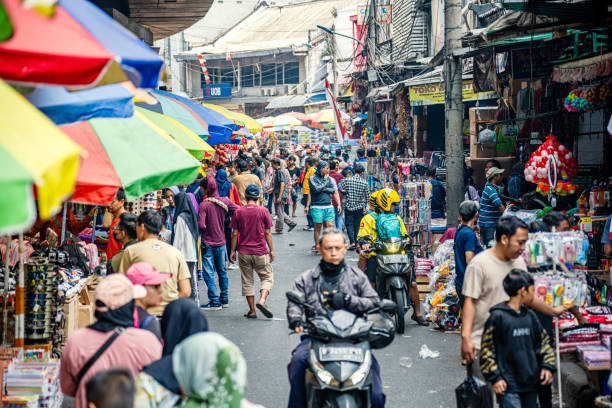
Indonesia has made significant strides in financial inclusion. According to the World Bank, approximately 78 per cent of adults have access to a formal financial account, up from around 50 per cent a decade ago.
Government initiatives such as the National Strategy for Financial Inclusion (SNKI) have played a key role, alongside the expansion of digital financial services.
Digital wallets, mobile banking and agent networks have been particularly effective in reaching rural populations, informal workers, and micro and small and medium enterprises (MSMEs). While gaps remain, particularly in remote regions, fintech has accelerated progress by reducing barriers to access and cost.
Indonesia’s fintech ecosystem is among the largest in the region. Behind Singapore in terms of number, Indonesia has the highest number in Southeast Asia with an estimated 1,200 fintech companies operating across payments, lending, insurtech and wealthtech.
Several companies illustrate the breadth of innovation. These include: GoTo (Super app ecosystem integrating payments, e-commerce and financial services), OVO (Digital payments platform widely used across retail and services), Xendit (Payment infrastructure for businesses across Southeast Asia), and Akulaku (Digital credit and BNPL services to underserved consumers).
These firms operate within a broader ecosystem where platforms, banks and regulators are increasingly interconnected.
Conclusion: inclusion across an archipelago
Indonesia’s fintech journey is defined by its ability to scale inclusion across complexity.
This year, digital finance is connecting millions across islands, reducing barriers and enabling participation. While challenges remain, Indonesia demonstrates how coordinated policy and innovation can transform financial access. This turns Indonesia’s geography from a constraint into an opportunity for inclusive growth.
The post The Fintech Ecosystem of Indonesia 2026 appeared first on The Fintech Times.


