
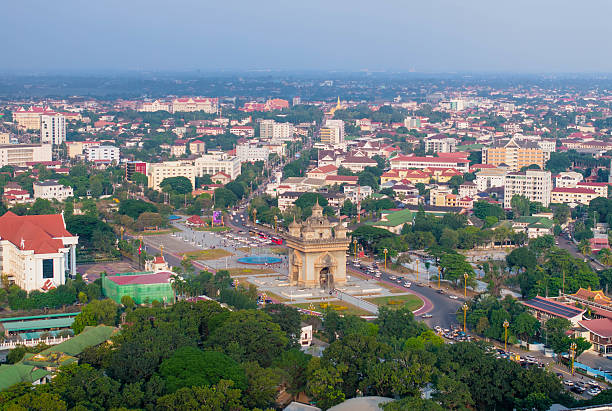
What has been the wider digital and fintech ecosystem like in the Southeast nation of Laos in 2026?
Laos, a landlocked Southeast Asian nation often overshadowed by its more industrialised neighbours, has quietly been building the foundations of a modern digital and financial ecosystem. As highlighted in something I’ve written back in 2024, the country’s fintech landscape then was still nascent but showing early promise. At present, that promise has evolved into something more structured, though not without persistent constraints.
At its core, Laos remains a frontier market. Its economy, valued at roughly $17 billion, continues to rely heavily on hydropower exports, mining (particularly copper and gold), agriculture, and an expanding tourism sector. Its gross domestic product (GDP) per capita remains modest at around $2,700, reflecting both developmental constraints and opportunities for leapfrogging through digitalisation. Vientiane, the capital, serves as the country’s principal financial hub, home to institutions such as Banque pour le Commerce Exterieur Lao Public (BCEL), one of the largest and most digitally progressive banks in the country.
Fintech and digital
Much like in 2024, Laos’ fintech ecosystem in 2026 is still characterised by a small but growing number of players. Estimates suggest there are now around 25 active fintech firms operating in areas such as mobile payments, remittances, and digital wallets. Notable examples include BCEL One (a leading mobile banking app) and emerging QR-based payment providers aligned with regional interoperability initiatives. These developments echo regional trends seen across the Association of Southeast Asian Nations (ASEAN), where QR payments and mobile-first financial services dominate.
Digital economic transformation in Laos has been guided by broader government strategies, including the National Digital Economy Strategy (2021–2030), which has gained momentum up until present. The government has prioritised digital infrastructure, e-government services, and cross-border payment integration, in particular with Thailand and Vietnam. For instance, QR-payment interoperability between Laos and Thailand has expanded significantly, enabling seamless retail payments for tourists and small businesses, according to the central bank – Bank of the Lao PDR.
The Central Bank has played a cautious but increasingly proactive role in shaping the fintech ecosystem. The past few years, Bank of the Lao PDR has introduced regulatory sandboxes, encouraged digital banking licences, and supported the expansion of the Lao National Payment Network. While not yet as advanced as open banking frameworks seen in more developed markets, there are early discussions around data-sharing protocols and API-based services to improve financial inclusion and competition.
Financial inclusion remains a challenge yet is progressing

Financial inclusion remains one of the most critical challenges and opportunities for Laos. As of 2025, approximately 45 per cent of adults have access to formal financial services, according to the World Bank. This leaves a significant portion of the population underserved, particularly in rural areas. However, mobile penetration has now exceeded 70 per cent, creating fertile ground for fintech-driven inclusion. Mobile wallets and agent banking models are increasingly bridging the gap, particularly for remittances and domestic transfers.
From a payments perspective, Laos has made tangible progress. The adoption of QR code payments, especially through the Lao QR standard, has grown rapidly, supported by partnerships with regional players. Cross-border QR payment linkages with Thailand’s PromptPay system have been a notable success, enabling real-time, low-cost transactions, all according to the Bank of Thailand. These developments are particularly important for a country with strong economic ties to its neighbours and a reliance on tourism.
Institutionally, ecosystem support remains limited but evolving. Organisations such as the Lao ICT Commerce Association (LICA) and regional development partners, including the Asian Development Bank, have played catalytic roles in supporting digital entrepreneurship and fintech capacity building.
Despite these advancements, structural challenges persist. Limited digital literacy, underdeveloped infrastructure in rural areas, and regulatory capacity constraints continue to slow progress. Moreover, macroeconomic pressures, including inflation and currency volatility, have impacted consumer trust and financial stability, indirectly affecting fintech adoption.
Yet, there is a sense that Laos is approaching an inflection point. The convergence of government strategy, regional integration, and private sector innovation is beginning to create a more cohesive digital ecosystem. As noted in recent commentary from The Fintech Times, smaller markets like Laos may not lead in scale, but they can move quickly in adopting fit-for-purpose digital solutions.
In many ways, Laos’ fintech journey mirrors its broader economic trajectory: gradual, uneven, but quietly progressive. The foundations being laid today, particularly in payments, digital banking, and financial inclusion, will determine whether the country can fully participate in the ASEAN region’s digital economy over the next decade.
The post The Fintech Ecosystem of Laos in 2026 appeared first on The Fintech Times.

