Public infrastructure, regulatory foresight and private-sector dynamism have converged to create one of the most sophisticated and inclusive financial ecosystems in the emerging world. The following looks at Brazil and its unique fintech ecosystem.
As Latin America’s largest economy, Brazil combines industrial depth with natural resource wealth. Its economy, valued at $2.3 trillion, is anchored in a diversified base: agriculture (soybeans, coffee, beef), mining (iron ore), manufacturing, and a dominant services sector that consists of the likes of digital industries and financial services. The services sector accounts for nearly 60 per cent of the country’s gross domestic product (GDP).
In terms of GDP per capita, that is around $10,700, putting the country firmly in the upper-middle-income status. Its growing influence in the world can be seen in the likes of being a member in the BRICS group – which founding and early members include China, Russia, India and South Africa.
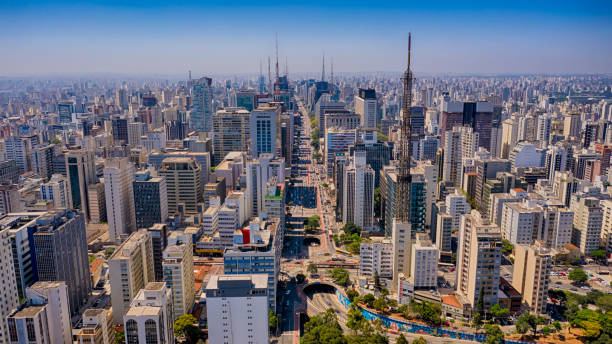
Speaking of financial services, the financial gravity is centred in São Paulo, Brazil’s largest city by population and is home to the B3 stock exchange, major banks such as Itaú Unibanco, and the nucleus of Brazil’s fintech ecosystem. Historically, this concentration reinforced financial depth but also exposed gaps in access across the broader population.
Digital economic transformation

Brazil’s digital transformation has been deliberate, shaped by a view that financial infrastructure is a public good. Over the past decade, policymakers, led by the Banco Central do Brasil ((BCB) – Central Bank of Brazil in English)—have embedded digitalisation into wider economic development strategies.
At the core is Pix, the instant payment system launched in 2020 by the Central Bank of Brazil. This year, Pix processes over 6 billion transactions per month, with more than 170 million users, which is around three-fourths of the adult population. In value terms, the system moves roughly $550 billion each month, operating continuously and at minimal cost.
Pix is not merely a payments platform; it is a form of digital public infrastructure (DPI) that underpins economic participation. This scale has transformed economic behaviour. Payments, once costly and fragmented, eare now instant and accessible. Informal workers and small merchants have been brought into the formal financial system, while transaction costs have fallen sharply.
Pix has significantly reduced transaction costs, often to near zero, and enabled real-time payments across the economy. It is credited with bringing over 70 million people into the financial system, accelerating financial inclusion.
This transformation sits within a broader policy framework that includes: Expanding mobile and internet penetration; Encouraging digital identity and data-sharing systems; and Supporting innovation through regulatory sandboxes
Financial services sector: from incumbency to ecosystem
Brazil’s financial services sector has undergone a structural evolution. Historically dominated by a small group of large banks that controlled roughly 70 per cent of assets at its peak, the market is now more competitive and innovation-driven.
The fintech sector itself has grown rapidly, with estimates of up to 1,500 fintech companies operating across payments, lending, insurtech and wealthtech. This makes Brazil one of the largest fintech ecosystems in the developing world.
Digital transformation within the sector has been driven by key forces: mobile-first adoption, alternative credit models and embedded finance.
Several Brazilian fintechs illustrate this evolution and include the likes of Nubank (digital bank serving 110 million customers across LatAm), PicPay (digital wallet that has expanded into lending, insurance and payment infrastructure), PagSeguro (merchange acquiring and digital banking) and StoneCo (payment solutions mainly with small and medium enterprises (SMEs).
In terms of other catalysts and organizations, examples include the Associação Brasileira de Fintechs ((ABFintechs) Brazilian Fintech Association in English).
Central bank leadership: regulation as a catalyst
The role of the BCB has been important, acting both as regulator and infrastructure provider. Its approach has been to enable competition while maintaining stability, positioning Brazil as a global reference point in fintech policy.
Brazil has made inroads with Pix but the BCB and the country as a whole have done other successful progressive things in the wider digital space.
First, there is open finance. Brazil has built one of the world’s most advanced open finance ecosystems; it is regulated by the BCB.
Initially starting off mainly with open banking, it evolved into open finance, incorporating the likes of payments, insurance, and investments, with over 800 institutions with over 60 million active data-sharing consents. This allows consumers to securely share financial data, enabling personalised services and improved access to credit.
Second, there is Drex and digital currencies. The BCB is advancing Drex, which is the country’s central bank digital currency (CBDC), aimed at enabling programmable payments and tokenised financial assets. A phased rollout is expected through this year and into next year in 2027.
Beyond these initiatives, the central bank has introduced fintech licences, strengthened regulatory clarity, and supported innovation through sandbox environments. The result is a financial system where innovation is structured rather than fragmented.
Despite its progress, Brazil continues to face structural inclusion challenges, particularly in rural regions and among lower-income populations. Historically high fees, limited credit access and geographic barriers excluded millions. The combination of public infrastructure and private innovation has created a self-reinforcing cycle, where increased access drives adoption, and adoption drives further innovation.
Brazil’s fintech journey offers a clear lesson for emerging economies. Financial inclusion is not simply a byproduct of innovation but rather designed and scaled through coordinated policy and infrastructure that promotes wider financial inclusion and economic development.
The post The Fintech Landscape of Brazil in 2026 appeared first on The Fintech Times.