
The following showcases the 2026 developments of fintech and wider digital of Central Asian nation of Turkmenistan.
Fintech usually thrives on openness. Entrepreneurs need access to international technology. Investors need reliable information. Consumers need affordable internet, while financial companies need the freedom to experiment, compete and connect with markets beyond their borders.
Turkmenistan provides almost the opposite environment. Since gaining independence following the collapse of the Soviet Union in 1991, the country has pursued a considerably more isolated economic model than many of its Central Asian neighbours. That isolation has influenced financial development too. Banking remains heavily state dominated, foreign-currency access is restricted and the private technology ecosystem is comparatively small.
Yet Turkmenistan is becoming more digital. Today, a new national digital-economy programme is taking effect, banks are being technologically modernised and legislation regulating cryptocurrency mining and exchanges has entered into force.
Turkmenistan is therefore embracing selected parts of fintech without embracing the open digital economy from which fintech normally emerges. That contradiction makes it one of Central Asia’s most unusual financial technology markets.
Natural gas still shapes the economy
Understanding Turkmenistan’s fintech landscape requires beginning underground rather than online. The country possesses some of the world’s largest natural gas reserves, with hydrocarbons dominating exports and providing an important source of government revenue. China remains the principal destination for Turkmen gas.
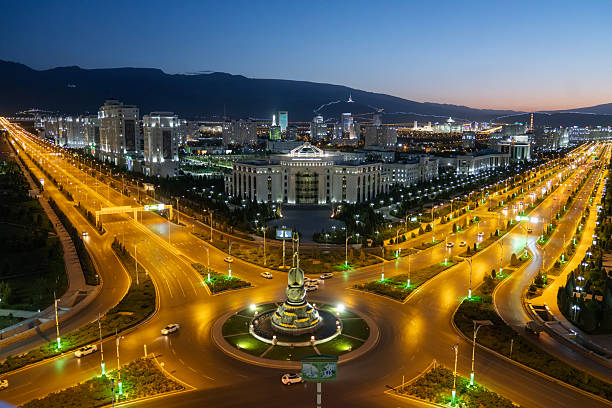
Ashgabat is the country’s political, commercial and financial centre, while the banking system includes institutions such as the State Bank for Foreign Economic Affairs, State Commercial Bank of Turkmenistan and other specialised state banks.
Nominal gross domestic product (GDP) is estimated to reach around $83billion this year, with economic growth of approximately 2.6 per cent and nominal GDP per capita of roughly $12,300. These figures should nevertheless be treated cautiously given Turkmenistan’s unusual exchange-rate system and limited availability of independent economic data.
Unlike neighbouring Kazakhstan or increasingly Uzbekistan, Turkmenistan has not developed a large private financial-services industry. That fundamentally changes how fintech emerges. Innovation is more likely to arrive because the state decides banks should digitalise than because a start-up decides to disrupt them.
Digitalisation did not begin in 2026

Turkmenistan’s current digital push has been developing for several years. Earlier initiatives included the Concept for the Development of the Digital Economy for 2019–2025 and the subsequent State Programme for the Development of the Digital Economy for 2021–2025.
The United Nations Development Programme (UNDP) has also worked with Turkmenistan on digital transformation and broader economic modernisation initiatives.
This earlier period is important when understanding the country’s fintech development. Digital finance has historically developed much more slowly than in neighbouring Kazakhstan and Uzbekistan, but electronic banking, payment cards and government-led digitalisation have gradually expanded.
The latest strategy therefore represents another stage rather than the beginning. In October last year, President Serdar Berdimuhamedov approved the Concept for the Development of the Digital Economy in Turkmenistan for 2026–2028. Its objectives include economic diversification, e-government, greater use of information and communications technology and development of an innovative, high-technology economy; the corresponding state programme and implementation plan were approved in January this year.
Banks are the fintech companies
Turkmenistan does not possess a conventional fintech ecosystem filled with venture-backed payment companies, neobanks or digital lenders. The country’s banks themselves are consequently among its most important fintech actors.
Electronic services including internet banking, mobile banking and payment-card infrastructure have gradually expanded, allowing more transactions to take place without physical cash.
In January this year, the government approved further technological modernisation at several major financial institutions, including the Central Bank of Turkmenistan, State Commercial Bank Türkmenistan and Türkmenbaşy Bank. The objective is explicitly linked to developing modern financial technologies and making banking operations faster and more accessible.
This is a very different definition of fintech from London or Singapore. In Turkmenistan, simply moving more everyday financial transactions from cash towards digital channels represents significant modernisation.
Financial reform now has a 2030 horizon
Digital banking forms part of a broader financial-sector agenda. In October last year, the government approved its Strategy for the Development of the Financial Market until 2030. The strategy aims to improve financial legislation, introduce modern financial instruments, make the circulation of financial resources more efficient and expand digital financial services.
The direction is significant. Whether it creates room for independent fintech companies is another question. Digitalisation and financial liberalisation are not the same thing. Turkmenistan appears considerably more comfortable with the former.
Then came crypto
Perhaps the most unexpected fintech development arrived at the beginning of this year.
A new law regulating virtual assets entered into force on 1 January this year, establishing a legal framework for cryptocurrency mining and digital-asset exchanges. Licensed operators can participate in the sector under regulatory oversight, while virtual assets themselves are not recognised as legal tender. For one of the world’s more closed economies, the decision was striking.
Turkmenistan’s enormous energy resources could theoretically support cryptocurrency mining, while regulated digital assets form part of the government’s wider effort to diversify and modernise the economy.
Yet legalising crypto should not be mistaken for creating an open cryptocurrency economy. The activity remains regulated and closely supervised by the state.
The digital contradiction remains
Turkmenistan’s fintech ambitions ultimately encounter a problem much larger than banking. A sophisticated digital economy requires connectivity.
Entrepreneurs need access to international software and cloud platforms. Businesses need to communicate easily with customers overseas, while consumers need affordable and reliable internet access.
Turkmenistan’s tightly controlled online environment makes creating that ecosystem considerably harder.
This differentiates it sharply from Uzbekistan, where economic liberalisation, private investment and a rapidly expanding technology sector have created a much more recognisable fintech market.
Turkmenistan can digitise its existing financial institutions without creating the conditions required for independent fintech entrepreneurship. The two should not be confused.
Looking ahead
Turkmenistan’s fintech development will probably remain unlike that of almost anywhere else in Central Asia.
The government clearly wants greater digitalisation. Its 2026–2028 digital-economy programme, financial-market strategy, bank-modernisation initiatives and new virtual-asset legislation all point in that direction.
What remains uncertain is how much room private innovation will eventually receive. Without greater connectivity, private-sector participation and integration with international financial markets, fintech is likely to remain predominantly state-led.
That may ultimately become the defining contradiction of Turkmenistan’s digital transformation. The country could become considerably more digital without becoming considerably more open.
The post Turkmenistan: Can Fintech Develop Behind a Closed Digital Door? appeared first on The Fintech Times.

