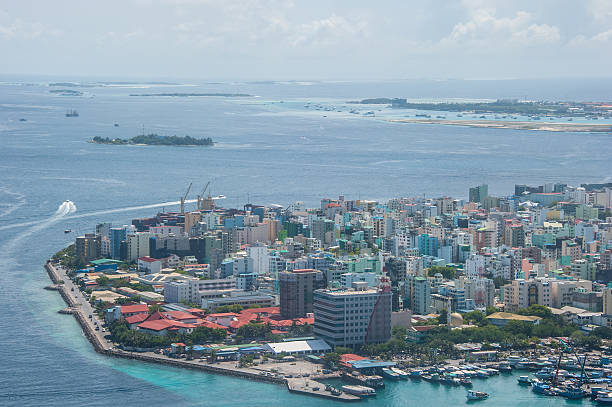
The following gives an overview of the fintech, digital and wider economic development of the South Asian island nation of the Maldives in 2026.
The Maldives’ fintech story in 2026 is increasingly tied to a larger national question: how can a small island economy reduce its dependence on tourism while strengthening long-term economic resilience?
That debate has become more urgent in recent years. The Maldives, comprising more than 1,000 coral islands spread across the Indian Ocean, remains one of the world’s most tourism-dependent economies. Tourism contributes heavily to gross domestic product (GDP) and foreign exchange earnings, but climate vulnerability and external economic shocks continue to expose the risks of relying too heavily on a single industry.
By 2026, that conversation has evolved further. Fintech in the Maldives is no longer viewed simply through the lens of banking modernisation. It is increasingly connected to economic development, small and medium enterprise (SME) growth, tourism infrastructure, digital inclusion and national resilience.
The country’s economic profile explains why this matters. According to the World Bank, the Maldives, with a current population of over half a million people, had a GDP last year of around $7billion. The country has the highest GDP in South Asia at more than $16,000.
Tourism remains the dominant sector, but fisheries, transport, logistics, hospitality services and construction also contribute significantly to the economy. Malé continues serving as the political and financial centre, while institutions such as Bank of Maldives, Maldives Islamic Bank, and State Bank of India Maldives remain key pillars of the financial system.
However, geography creates structural challenges unlike those faced by most economies. Delivering banking infrastructure across dispersed islands is expensive. Access to ATMs, branches and financial services outside Malé has historically been uneven. The Maldives Monetary Authority previously noted that cash remained the dominant payment method despite relatively strong account ownership levels.
This is precisely where digital finance becomes strategically important.

Rather than attempting to replicate the scale of larger Asian fintech ecosystems, the Maldives is developing a more practical and infrastructure-focused digital finance model centred around payments, connectivity and accessibility. Mobile banking, QR payments, instant transfers and digital wallets are increasingly becoming tools for overcoming geographical fragmentation.
One of the most important developments has been the Maldives Monetary Authority’s continued push towards payments modernisation. The launch of the instant payment system “Favara” represented a major milestone in the country’s digital payments infrastructure, allowing faster transfers and more seamless financial interactions. The system’s Favara ID functionality also aimed to simplify user experience and improve accessibility for consumers. These developments were discussed in the earlier Fintech Times feature on fintech in the Maldives.
Cross-border payments remain another major priority. The Maldives depends heavily on tourism receipts, imports and international transactions, making interoperability and payment efficiency economically vital. In 2024, discussions emerged around introducing PayPal into the market, particularly to support foreign tourists, freelancers, overseas students and cross-border commerce. Although implementation timelines remain uncertain, the broader point reflects the country’s ambitions to strengthen digital payment connectivity with the global economy.
Another notable development involved plans to introduce India’s Unified Payments Interface (UPI) into the Maldives. President Mohamed Muizzu announced steps towards implementing UPI infrastructure through a consortium led by TradeNet Maldives Corporation. Given India’s success using UPI to accelerate financial inclusion and digital payments adoption, the initiative has the potential to significantly influence how transactions are conducted across the islands.
Tourism itself is also reshaping fintech adoption. Resorts, hotels, restaurants and tourism operators increasingly require seamless digital payment capabilities to meet international visitor expectations. In practice, tourism is acting as a catalyst for payment digitisation across the broader economy.
At the same time, the Maldives’ fintech future is not solely about visitors. SMEs and island-based entrepreneurs increasingly depend on digital finance to access customers, suppliers and services more efficiently. Financial technology is gradually becoming tied to broader economic participation, especially for businesses operating outside Malé.
Internet and mobile penetration trends reinforce this potential. Internet usage rates and mobile subscription levels in the Maldives are relatively high, creating a foundation for wider digital financial adoption. The challenge now lies less in connectivity itself and more in converting access into sustained digital usage and trust.
Islamic finance also continues playing an important role in the market. The Maldives’ Islamic banking ecosystem, led by institutions such as Maldives Islamic Bank, creates opportunities for Sharia-compliant digital financial products that align with domestic consumer preferences and broader regional trends across Muslim-majority markets.
Still, obstacles remain evident. The domestic market is small. Venture capital availability is limited. Financial literacy gaps persist in some communities. Cybersecurity and digital resilience are becoming increasingly important as more transactions move online. The economy also remains heavily exposed to tourism volatility and climate-related risks.
Yet these same pressures may ultimately accelerate digital transformation rather than slow it. The Maldives increasingly sees fintech and digital infrastructure not simply as financial sector upgrades, but as tools for economic diversification and resilience-building.
Smaller markets often reveal some of the most practical applications of fintech. The Maldives in 2026 is not attempting to become Asia’s next mega fintech hub. Instead, it is steadily building a digital finance ecosystem shaped by geography, tourism, financial accessibility and the need to create a more diversified and digitally connected economy for the future
The post Fintech Landscape of the Maldives in 2026 appeared first on The Fintech Times.