The following looks at the fintech, digital and wider economic development of the Southern European country of Croatia in a 2026 context.
Croatia’s digital economy in 2026 is increasingly being shaped by a combination of European integration, tourism-driven commerce and a growing appetite for digital financial services. While the country is not often mentioned alongside Europe’s largest fintech hubs, Croatia has quietly positioned itself as one of Southeast Europe’s more interesting digital finance markets, particularly as payments modernisation, banking digitisation and startup activity continue to evolve.
Much of this momentum has accelerated since Croatia adopted the euro and entered the Schengen Area in 2023. Those two developments fundamentally changed the country’s financial operating environment. Euro adoption simplified cross-border payments and strengthened integration with wider European financial systems, while Schengen membership reinforced Croatia’s role as both a tourism gateway and regional commercial connector.
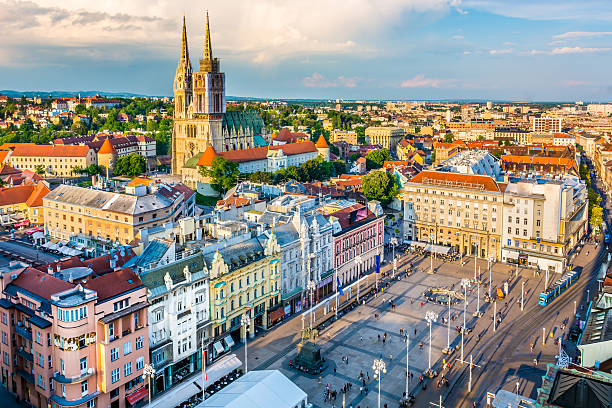
That wider economic context matters. Croatia’s economy continues to rely heavily on tourism, services, logistics, trade and manufacturing. According to the World Bank, the country’s gross domestic product (GDP) exceeded approximately $92billion last year, while GDP per capita surpassed $23,000, placing Croatia among the more developed economies in Central and Southeast Europe. Zagreb remains the country’s principal financial hub, and institutions such as Zagrebačka Banka, Privredna Banka Zagreb and Hrvatska Poštanska Banka continue to dominate the banking landscape.

Yet Croatia’s financial services sector is undergoing a visible transformation. Consumers increasingly expect the same seamless digital banking experiences found elsewhere in Europe, while businesses, particularly those linked to tourism and e-commerce, are demanding faster and more integrated payment solutions.
Payments have consequently become one of the strongest areas of fintech growth in Croatia. The country’s tourism-heavy economy creates a natural demand for efficient digital transactions, especially during peak summer months when millions of international visitors arrive along the Adriatic coast. Hotels, restaurants, transport operators, marinas and retailers have expanded contactless and mobile payment acceptance rapidly over recent years.
This environment has helped fintech and payments companies scale more visibly. One of Croatia’s most prominent fintech success stories is Aircash. They are a digital wallet and payment platform that has expanded across parts of Europe while building a strong domestic user base. The company reflects a wider trend in Croatian fintech: scalable payments infrastructure connected to broader European markets.
Croatia has also developed a relatively visible cryptocurrency payments ecosystem compared with some neighbouring markets. Electrocoin, through its PayCek platform, has enabled merchants to accept cryptocurrency payments, particularly in tourism and retail sectors. While Croatia is not positioning itself as a global crypto hub, digital asset awareness among consumers and businesses has grown steadily as alternative payments become more mainstream.
Importantly, Croatia’s fintech development is not being driven solely by startups. Traditional banks remain central players in the country’s digital transformation journey. Zagrebačka Banka and Privredna Banka Zagreb have both invested heavily in digital banking services, mobile functionality, online onboarding and customer experience upgrades in response to changing consumer behaviour.
This collaborative rather than confrontational relationship between banks and fintech firms increasingly defines Croatia’s ecosystem. Rather than replacing incumbents, many fintech solutions are emerging alongside them, complementing existing financial infrastructure and helping modernise service delivery.
Regulation and European alignment are also becoming increasingly important. The Croatian National Bank has continued focusing on payments modernisation, cybersecurity resilience and alignment with broader European Union (EU) financial frameworks. Croatia’s integration into European regulatory structures provides fintech companies with clearer pathways for interoperability, open banking and potential regional expansion.
Open banking, while still developing, is gradually becoming part of the country’s wider digital finance conversation under PSD2 frameworks. As in much of Europe, adoption remains uneven, but Croatia’s participation in EU regulatory structures gives fintech firms access to broader opportunities beyond the limitations of its domestic market alone.
The country’s wider digital transformation agenda is similarly gaining momentum through European Union-backed investment programmes. Croatia’s National Recovery and Resilience Plan includes substantial digitalisation initiatives targeting infrastructure, Small and medium enterprises (SMEs) and public administration reform. These reforms matter because fintech ecosystems rarely develop in isolation; they are closely tied to the strength of the surrounding digital economy.
Croatia’s startup ecosystem has also matured gradually over the past decade. Zagreb, in particular, has developed a growing reputation for software engineering, gaming, SaaS and technology entrepreneurship. This broader innovation environment indirectly benefits fintech by strengthening technical talent pools and entrepreneurial networks.
Several organisations are helping support that ecosystem. The Croatian Fintech Association, CroFintech, has become one of the more visible industry platforms connecting startups, banks, technology firms and policymakers. Meanwhile, incubators, accelerators and startup hubs across Zagreb and other cities continue supporting digital entrepreneurship and innovation-led SMEs.
Financial inclusion itself is relatively high in Croatia compared with many emerging economies, with most adults already integrated into the formal banking system. As a result, Croatia’s fintech opportunity is less about first-time financial access and more about efficiency, embedded finance, digital convenience and cross-border commerce.
That distinction explains why many Croatian fintech developments are centred around merchant services, digital wallets, e-commerce infrastructure, SME enablement and payment optimisation rather than basic financial access products.
Still, challenges remain. Croatia’s domestic market is relatively small, and venture capital availability continues to lag behind larger European ecosystems. Talent retention also remains an issue as many highly skilled professionals pursue opportunities in larger EU economies. Additionally, European regulatory compliance can be expensive and resource-intensive for smaller startups attempting to scale.
Yet Croatia’s fintech story is increasingly becoming one of measured but meaningful progress. It is not attempting to become Europe’s next hypergrowth fintech capital overnight. Instead, the country is steadily embedding digital finance into its wider economic modernisation strategy through tourism, payments innovation, banking digitisation and European integration.
Fintech ecosystems do not necessarily need to be the largest to become influential. Croatia’s ecosystem remains relatively modest in scale, but by 2026 it is increasingly evident that digital finance is becoming an important pillar of the country’s broader economic future.
The post Croatia and its Fintech and Wider Digital Ecosystem in 2026 appeared first on The Fintech Times.