The following gives the developments of the fintech and wider digital growth that is driving the economy and society of the Southeast African nation of Mozambique in 2026.
Mozambique’s fintech ecosystem in 2026 is being shaped by two very different realities unfolding simultaneously. On one side is a country with enormous long-term economic potential driven by natural gas, mining, agriculture and regional trade access along the Indian Ocean. On the other is a nation still facing infrastructure gaps, financial inclusion challenges, climate vulnerability and uneven economic development.
It is precisely within that tension that fintech is beginning to play a larger role.
Unlike some African fintech ecosystems driven primarily by venture capital hype or rapid startup proliferation, Mozambique’s digital finance evolution has been more gradual and infrastructure-led. The country’s fintech transformation is less about disruption for its own sake and more about solving practical problems around payments, connectivity and access to financial services in a geographically dispersed and still largely underbanked economy.
The broader economic context is important. According to the World Bank Mozambique country data, the former Portuguese colony’s gross domestic product (GDP) exceeded approximately $21billion last year, while GDP per capita remained below $700. This makes it one of Africa – and the world’s – poorer nations.
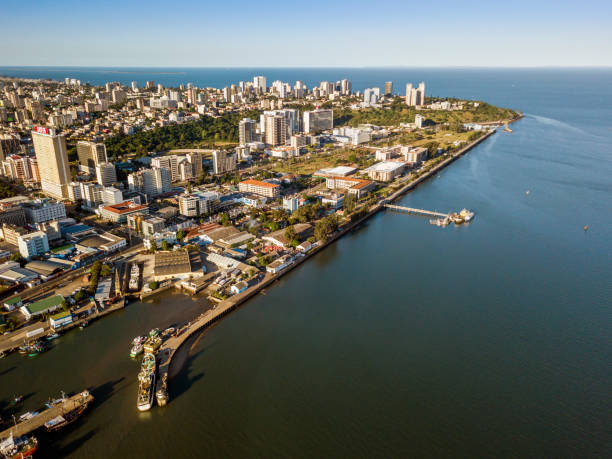
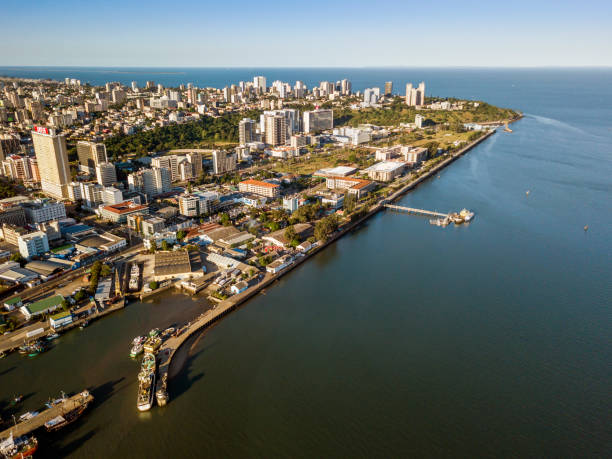
Agriculture continues employing much of the population, while energy, mining, logistics, construction and telecommunications are becoming increasingly important parts of the economy. Maputo remains the country’s political and financial centre, while institutions such as Millennium bim, Standard Bank Mozambique, and Banco Comercial e de Investimentos – BCI continue dominating the formal banking landscape.
Yet traditional banking penetration in Mozambique remains relatively low, particularly outside urban areas. This has created fertile ground for mobile money and alternative digital financial services.
In many respects, Mozambique’s fintech story is inseparable from mobile telecommunications. Mobile network operators have become some of the country’s most important drivers of financial inclusion, particularly through mobile money platforms that allow consumers to send, receive and store funds without relying on traditional bank branches.
Much of the fintech penetration has been foreign investors. One of the strongest examples is M-Pesa Mozambique, operated by Vodacom Mozambique. Over recent years, M-Pesa has significantly expanded its footprint across the country, helping increase access to digital financial services among populations historically excluded from formal banking. Mobile money agents have effectively become part of Mozambique’s wider financial infrastructure, especially in rural and semi-urban communities.
e-Mola, operated by Mozambique-based telecom Movitel, has also become an increasingly important player in the mobile financial services ecosystem. Together, these platforms have helped accelerate digital payments, peer-to-peer transfers and merchant transactions across the country.
This mobile-first model reflects a broader pattern seen across parts of Africa, where fintech development often bypasses traditional banking infrastructure entirely. In Mozambique’s case, the combination of mobile penetration growth and limited physical banking access created conditions where digital wallets and telecom-led finance became especially relevant.
Financial inclusion remains central to the country’s fintech narrative. Account ownership and digital payment adoption have improved across Sub-Saharan Africa in recent years, although gaps remain significant in lower-income and rural populations. Mozambique continues facing challenges around income inequality, literacy, internet accessibility and financial education, all of which shape fintech adoption rates.
Still, momentum is clearly building.
The Banco de Moçambique (English: Bank of Mozambique) has continued working on broader financial sector modernisation initiatives, including payment system development and digital financial inclusion strategies. Regulatory support for electronic money and interoperability has become increasingly important as digital transaction volumes rise.
Interoperability itself represents one of the most important next steps for Mozambique’s fintech ecosystem. As mobile money platforms, banks and merchants become more digitally connected, the ability to move funds seamlessly between networks becomes critical for scaling the digital economy.
Another major factor shaping Mozambique’s fintech future is energy and natural gas development. Large-scale LNG projects continue attracting international investment despite political and security challenges in northern regions of the country. Over time, these investments may help stimulate broader economic formalisation, infrastructure spending and demand for more sophisticated financial services.
At the same time, Mozambique’s digital transformation agenda extends beyond payments alone. E-commerce, digital government services, small and medium enterprises (SME) digitisation and online entrepreneurship are gradually becoming more visible, particularly in urban centres such as Maputo, Beira and Nampula.
Young consumers are also playing an increasingly important role. Mozambique has a youthful population, and mobile connectivity continues expanding. For many younger users, mobile wallets and digital payments may become their first meaningful interaction with formal financial systems.
International organisations and development finance institutions have also continued supporting digital inclusion efforts in Mozambique. Financial literacy programmes, SME financing initiatives and digital infrastructure investment are increasingly viewed as essential components of wider economic development.
Nevertheless, substantial challenges remain. Poverty levels remain high. Infrastructure gaps persist across electricity, internet connectivity and transport. Climate-related disasters such as cyclones continue affecting communities and economic stability. Political uncertainty and security concerns in parts of the country also complicate investment environments.
The startup ecosystem itself remains relatively early-stage compared with more mature African fintech hubs such as Kenya, Nigeria, Egypt or South Africa. Venture capital remains limited, and many fintech innovations are still heavily linked to telecom operators and banks rather than standalone startups alone.
Yet Mozambique’s fintech story should not be underestimated precisely because it is rooted in necessity. The country illustrates how digital finance can become a practical tool for economic participation in environments where traditional infrastructure remains uneven.
Some of the most important fintech developments globally are occurring not only in major financial centres, but also in frontier markets where digital finance directly addresses structural barriers. Mozambique in 2026 remains an evolving ecosystem, but it is steadily demonstrating how mobile money, payments innovation and digital inclusion can help reshape access to finance in one of Southern Africa’s most strategically positioned economies.
The post Fintech in the East African Nation of Mozambique in 2026 appeared first on The Fintech Times.