
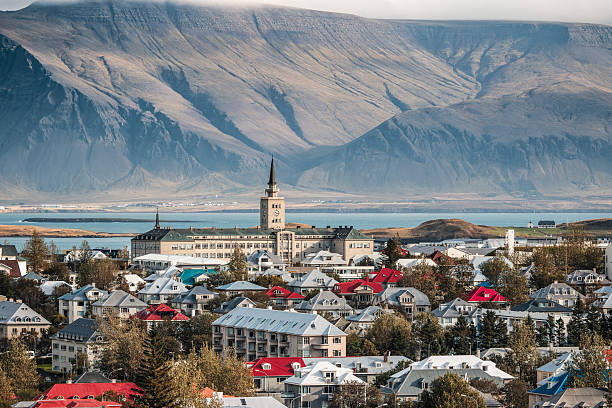
7The following looks at the fintech, digital and wider economic development of the Scandinavian nation of Iceland in 2026.
How a small island nation like Iceland with only over 400,000 people is building on trust, technology and financial resilience? When people think of Iceland, fintech is rarely the first thing that comes to mind.
More commonly, the Nordic island nation is associated with geothermal energy, dramatic landscapes, tourism and one of the world’s highest standards of living. Yet beneath this image lies an economy that has undergone one of the most remarkable financial transformations of the past two decades. In many ways, Iceland’s fintech story begins not with technology, but with crisis.
The collapse of Iceland’s banking sector during the 2008 global financial crisis fundamentally reshaped the country’s relationship with finance. The failure of major banks such as Kaupthing, Landsbanki and Glitnir triggered a period of economic restructuring that forced both policymakers and financial institutions to rethink the foundations of the financial system.
Nearly two decades later, Iceland’s financial sector looks very different. Stronger regulation, greater transparency and increasing digitalisation have helped rebuild trust. As financial services continue to evolve globally, fintech is becoming an increasingly important part of the country’s next chapter.
Today, Iceland is one of Europe’s most digitally connected economies. The country’s gross domestic product (GDP) per capita exceeds $80,000, placing the country among the wealthiest nations in the world. Key sectors include renewable energy, fisheries, tourism, technology, financial services and increasingly data-intensive industries such as artificial intelligence (AI) and data centres.
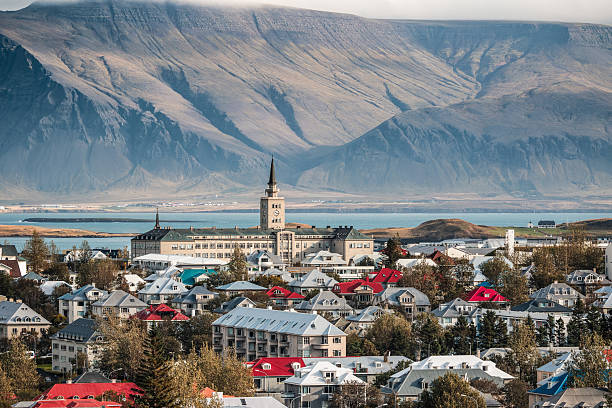
Reykjavík serves as the country’s financial and technology hub. While the domestic market is small, Iceland’s highly educated population, advanced digital infrastructure and strong institutional framework have created favourable conditions for financial innovation.
Unlike many fintech ecosystems around the world, Iceland’s development has not been driven by financial inclusion challenges. Banking penetration is already near universal, internet access is widespread and digital literacy levels are among the highest globally. The challenge for Icelandic financial institutions is therefore not access, but innovation.
This distinction has shaped the nature of the country’s fintech ecosystem.
Consumers have long embraced digital banking and electronic payments. According to the Central Bank of Iceland, cash usage has steadily declined over recent years as card payments, mobile payments and online banking have become dominant methods of transaction.
Indeed, Iceland has become one of the world’s most cash-light societies. The country’s payment infrastructure is highly developed, allowing consumers and businesses to conduct transactions seamlessly through digital channels.
This environment creates opportunities for fintech firms focused on efficiency, user experience and infrastructure rather than basic access to financial services.
The Icelandic government’s broader digital transformation agenda has also contributed to this evolution. Digital Iceland, a government-led initiative, has sought to modernise public services, expand digital identity systems and improve the online delivery of government services.
The importance of digital identity cannot be overstated.
Much like Estonia’s e-government model, Iceland has invested heavily in secure digital identification infrastructure. Electronic identification solutions are now widely used across banking, healthcare, taxation and government services. This creates a strong foundation for fintech innovation because customer onboarding, authentication and digital transactions can be conducted securely and efficiently.
One of the most important developments supporting Iceland’s fintech ecosystem has been the rise of open banking.
As a member of the European Economic Area (EEA), Iceland has adopted many of the same financial regulations as European Union (EU) member states, including PSD2. The implementation of open banking frameworks has enabled financial institutions to share customer data securely with authorised third parties, creating opportunities for new services in payments, personal finance and digital lending.
The Icelandic Financial Supervisory Authority, which now operates within the Central Bank of Iceland framework, has increasingly engaged with digital finance issues as innovation continues to accelerate.
The country’s fintech ecosystem remains relatively small but is steadily expanding.
According to Business Iceland, Iceland’s technology sector has experienced significant growth in recent years, supported by a strong startup culture and increasing international investment. While fintech represents only one part of this broader innovation landscape, it is benefiting from the same trends that have supported the growth of software, artificial intelligence and digital services companies.
Several Icelandic firms have become notable contributors to the financial technology ecosystem.
Companies such as Meniga have gained international recognition for digital banking and personal finance management solutions. Originally founded in Iceland, Meniga has become one of Europe’s leading providers of digital banking software, serving financial institutions across numerous countries.
Another example is Lucinity, which uses artificial intelligence to support anti-money laundering investigations and financial crime compliance. The company reflects a growing trend within Iceland’s fintech ecosystem towards regtech and AI-driven financial solutions.
These examples are significant because they illustrate how Icelandic fintech companies often focus on specialised, globally scalable solutions rather than large domestic consumer markets.
Artificial intelligence is becoming an increasingly important component of this strategy.
Iceland’s abundance of renewable energy, particularly geothermal and hydroelectric power, has attracted investment in data infrastructure and AI-related activities. As financial institutions increasingly deploy AI for fraud detection, customer service, risk management and compliance, Iceland’s broader technology ecosystem may provide opportunities for further fintech development.
Sustainability is another area where Iceland enjoys a natural advantage.
The country generates virtually all of its electricity from renewable sources. This has attracted environmentally conscious businesses and investors while creating opportunities for fintech firms focused on environmental, social and governance (ESG) reporting, climate finance and sustainable investment products.
At the same time, Iceland’s financial sector is closely connected to wider Nordic and European developments.
Cross-border collaboration within the Nordic region continues to create opportunities for Icelandic fintech firms to expand beyond their domestic market. Partnerships with institutions across Denmark, Sweden, Norway and Finland are increasingly important for companies seeking scale.
Challenges nevertheless remain. The country’s small population limits domestic market opportunities. Fintech firms often need to internationalise almost immediately in order to achieve meaningful growth. Access to venture capital, while improving, remains more limited than in larger European innovation hubs.
Talent availability can also be a constraint. Although Iceland possesses a highly educated workforce, companies frequently compete for a relatively small pool of specialised software developers, engineers and financial technology professionals.
Furthermore, fintech firms must navigate increasingly complex regulatory requirements related to cybersecurity, operational resilience, artificial intelligence and digital assets.
Yet Iceland’s strengths remain considerable. The country combines political stability, strong institutions, advanced digital infrastructure, renewable energy leadership and high levels of consumer trust. These characteristics provide a strong foundation for innovation.
What makes Iceland particularly interesting is that its fintech story is not centred on disruption. Rather, it is focused on building a more resilient, efficient and technology-enabled financial ecosystem. This reflects a lesson learned from the country’s financial crisis. Sustainable innovation requires strong institutions, transparency and trust.
Ultimately, Iceland’s fintech future may not be measured by the number of unicorns it produces or the size of its domestic market. Instead, its success may lie in its ability to leverage technology, sustainability and digital infrastructure to create specialised financial solutions with global relevance. For Iceland, fintech is becoming another example of how a small nation can compete internationally. This is not through scale, but through innovation, expertise and adaptability.
The post Fintech Landscape Scandinavia: Iceland in 2026 appeared first on The Fintech Times.
