
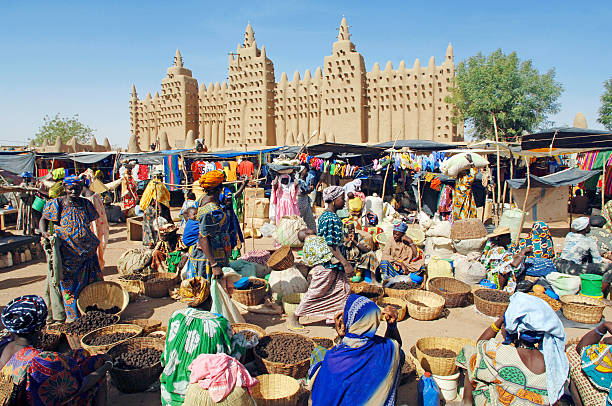
What has been the wider digital and fintech ecosystem like in the African nation of Mali?
Mali, a landlocked West African nation shaped by centuries of trade across the Sahara, has long balanced economic fragility with cultural and commercial resilience. The fintech ecosystem has remained nascent compared to other parts of Africa. This has been due to constrains in terms of its economic development. Saying that, much has seen the ecosystem grow, in particular with the rise of mobile money. By 2026, that trajectory has continued – less a story of rapid disruption and more one of gradual, necessity-driven digital adoption.
At a macro level, Mali’s economy is estimated at approximately $22 billion gross domestic product (GDP), with its GDP per capita around $1,000 in 2026. The country’s economic base is heavily reliant on gold mining, which Mali is one of Africa’s largest gold producers. The economy also produces agriculture, particularly cotton and livestock.
Fintech and the rise of mobile money
Much like in 2024, Mali’s fintech ecosystem in 2026 remains relatively small but functional, supported largely by telecom-led financial services. Estimates suggest there are around 25 fintech-related players operating across mobile payments, remittances, and microfinance platforms. The ecosystem is heavily influenced by regional West African dynamics, particularly through the West African Economic and Monetary Union (WAEMU), which provides a shared monetary and regulatory framework.
Key players in the fintech ecosystem include Orange Money Mali (A leading mobile money platform), Moov Money Mali (Providing digital financial services across urban and rural areas), Wave Mobile Money (Low-cost digital payments), and
In addition, organisations such as Association Professionnelle des Banques et Établissements Financiers (APBEF Mali) play a role in coordinating industry stakeholders and supporting financial sector development.
These entities highlight a key feature of Mali’s fintech landscape: telecom-led innovation supported by regional integration, rather than a large domestic startup ecosystem.
In many respects, Mali’s fintech evolution is inseparable from the growth of mobile money. With limited access to traditional banking infrastructure, especially outside urban centres, mobile network operators have become the primary drivers of financial inclusion. Services linked to regional telecom providers have enabled millions of Malians to access basic financial tools, from peer-to-peer transfers to bill payments.
Bamako is the country’s capital and financial hub. It hosts key institutions such as Banque de Développement du Mali (BDM), one of the country’s prominent banks with growing digital capabilities.
Central Bank of West African States and financial inclusion

The Central Bank of West African States (BCEAO), which serves as the central bank for WAEMU member states, has played a central role in shaping the regulatory environment. The past few years, the BCEAO has continued to advance regional payment system modernisation, promote interoperability, and strengthen oversight of electronic money institutions. These efforts have supported the expansion of digital financial services while maintaining financial stability across the union.
Financial inclusion remains both a challenge and an area of measurable progress. As of last year, approximately 35 per cent of adults in Mali have access to formal financial services, though this figure rises significantly when mobile money accounts are included, according to the World Bank. This underscores the importance of digital channels in extending financial access in a country where physical banking infrastructure is limited.
Digital economic transformation in Mali is being shaped not only by domestic policy but also by regional frameworks and international support. Government initiatives, often backed by institutions such as the World Bank and the African Development Bank, have focused on expanding digital infrastructure, improving connectivity, and supporting e-government services. These efforts are critical in laying the groundwork for a more robust fintech ecosystem.
From a payments perspective, Mali has seen steady growth in mobile-based transactions, though it has not yet reached the scale of some East African markets. Interoperability initiatives within WAEMU are gradually improving the efficiency of cross-border and domestic payments, supporting trade and remittance flows within the region.
Institutionally, Mali does not yet have a dedicated fintech association or a deeply developed startup ecosystem focused on financial technology. However, regional innovation hubs and development programmes are beginning to nurture entrepreneurial activity, particularly in areas such as agritech finance and small and medium enterprise (SME) lending.
Significant structural challenges remain. Political instability, security concerns, and infrastructure deficits continue to weigh on economic development and investor confidence. Additionally, low levels of digital literacy and limited access to reliable electricity in rural areas present ongoing barriers to fintech adoption.
Yet, markets like Mali illustrate that fintech growth does not always follow a linear or conventional path. Instead, it is often shaped by local realities. This is where mobile-first solutions, informal networks, and regional cooperation play defining roles.
The Malian fintech ecosystem in 2026 remains in its early stages, but it is not static. It is evolving within a complex environment. This is one where challenges are significant, but so too is the potential for inclusive digital financial growth.
The post The Fintech Ecosystem of Mali in 2026 appeared first on The Fintech Times.


